Some lives are changed by a single decision. Others are changed by a quiet accumulation of signs that become impossible to ignore.
For Charlie, the turning point wasn’t a dramatic break or a sudden collapse. It was a moment of recognition, delivered by the person whose opinion carried the most weight.
“Me dijo, hijo, ya entendí, ya sentí. Aquí está tu boleto para México… y siempre vas a tener mi apoyo.”
(He told me, “Son, I understand now, I felt it. Here is your ticket to Mexico… and you will always have my support.”)
Charlie describes it simply. That was the blessing. After that, it wasn’t about debating the logic. It was about responding to the truth of what he already knew.
In 365 Days of Tequila, I’m not chasing tequila as a product. I’m following it as a cultural thread, a way to get closer to the values that structure a life: family, identity, land, work, and the daily choices that either pull us away from ourselves or return us to what matters.
Charlie’s story is one of returning.
People Before Individualism
Charlie’s purpose is not presented as a brand statement or a motivational slogan. It is practical, relational, and grounded in the way he moves through daily life.
“Mi propósito de vida es siempre dar esa palabra de aliento a alguien…”
(My purpose in life is always to give someone a word of encouragement…)
He believes people arrive for a reason. Not in a mystical, vague sense, but in a concrete one, either you learn something from them, they learn something from you, or it’s mutual. That worldview shapes how he builds community and how he defines success.
It also shapes the place where he works and the kind of space he wants to create.
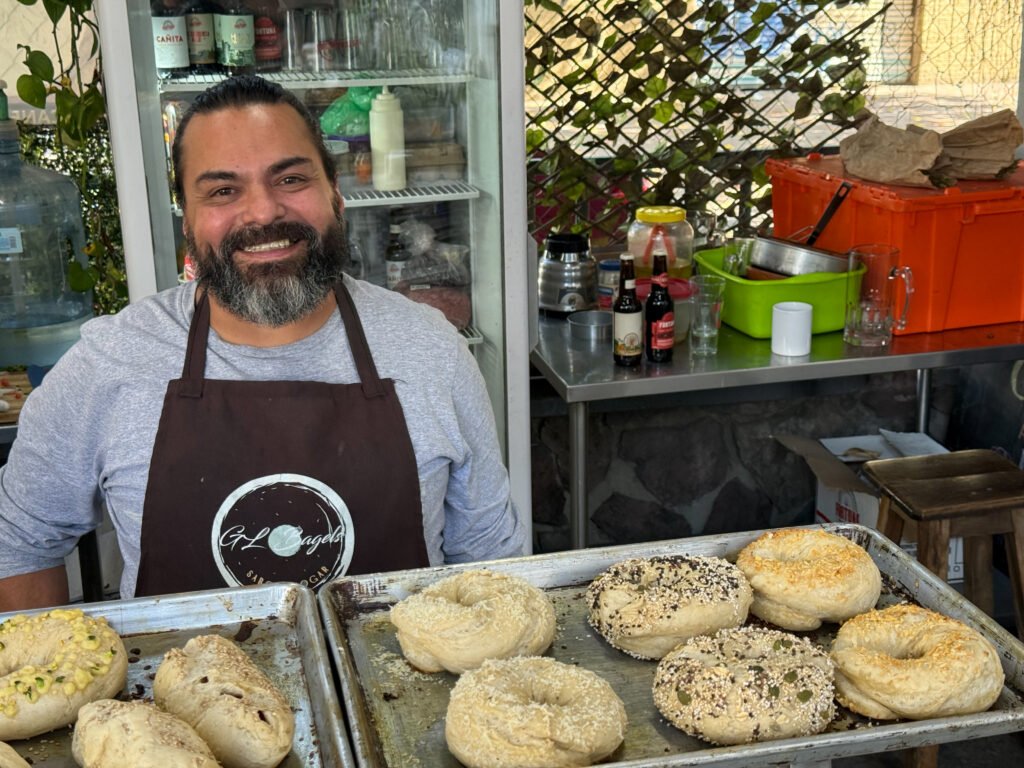
Charlie’s business lives inside a jardín gastronómico, a shared food garden in Guadalajara, right near the edge of Americana and Moderna. Different kitchens operate side by side. Vegan options, burgers, bagels, Japanese food, and everything in between. The point is not specialization. The point is belonging.
One shared space. Not competition, but cooperation.
In a culture that often pushes individual hustle, this is a different kind of success metric. It is community as infrastructure.
The “Trinity” of Decision Making
Charlie has a framework he repeats to his children, not as theory, but as guidance for how to live without losing yourself.
He calls it a “holy trinity,” thought, feeling, action.
Sometimes you think first, then feel, then act. Sometimes you feel first, then think, then act. But the order matters less than the presence of both. Because if you only feel, you can be deceived. If you only think, you can become disconnected from what is true.
This is one of the central themes of his interview: balance before speed.
Not rushing toward the next thing, and not forcing clarity before you have earned it. Taking the second to step back, breathe, and check what is actually happening inside you.
That is not soft. It is disciplined.
Two Cultures, One Identity
Charlie left Mexico at eleven. From eleven to twenty five, he lived in the United States, absorbing a different pace, different expectations, different opportunities.
He is clear about what that chapter gave him: education, comfort, possibility. It expanded him. It also revealed something else.
Distance can sharpen identity.
When you are inside your culture, you don’t always see it. You live it. You assume it. But when you step outside, you gain perspective. Charlie describes how adapting to one culture allowed him to see his “mother culture” from the outside, to recognize what was beautiful about it, and to name the roots that had always been there.
His takeaway is not that one country is better than the other. It is that growth comes from learning how to hold both.
You take what strengthens you. You release what doesn’t. You build your own criteria.
This is where Charlie’s language becomes sharp and useful.
What is good. What is bad. What is worth it. What is not worth it.
Not denial. Acceptance. Depth.
Spirituality That Arrives as Necessity
For Charlie, spirituality did not arrive as a trend. It arrived as a requirement for balance.
He describes a season of inner peace, a feeling of radiating energy, and then the deeper lesson: life gives signs every day, but you miss them when you over identify with thinking and abandon feeling.
He traces the arc through a simple question asked by a cousin, a workshop, and then a moment that cut through everything.
A Guatemalan shaman speaks to a room full of people, and somehow directs Charlie to translate. Everyone receives something personal. Charlie receives nothing, until he goes up afterward, and asks directly.
The answer he hears is not complicated.
You already know what you have to do. You just want to hear it from someone else.
And then: go.
That moment doesn’t “prove” anything in a scientific sense, but that’s not the point. It functions as a catalyst. It names what was already forming. It gives the final nudge toward the choice that had been waiting.
And eventually, Charlie brings it to his father.
The father’s response is the kind that changes a family story.
I understand now. I felt it.
Here is your ticket.
Angels in the Ordinary
One of the most striking parts of Charlie’s interview has nothing to do with tequila, Mexico, or identity as a concept.
It happens in the street.
A crash between a car and a motorcycle. A young woman injured, screaming, incoherent, deep in shock. People rush in to help. Charlie stabilizes her, holding her arms because her collarbone is broken.
Then a woman arrives, sits at the injured person’s head, and begins rubbing her hands. Charlie watches her calm the injured woman through presence, touch, breathing, and an energy that requires no words.
The injured woman relaxes, almost falls asleep.
Charlie turns and calls the stranger an angel. She hugs him. He says thank you. She tells him he does not need to thank her, this is why we are here.
Charlie’s point is not that this was magical. It is that it was clear.
A sign.
Not abstract, not metaphor, not theory. A sign that showed up in the middle of the street.
Here you are.
This is where you were supposed to be.
And that person too.
Work Without Romanticization
Charlie does not romanticize entrepreneurship. He describes it as pressure, labor, and choosing the hard thing for the right reason.
He explains why he and his family decided to stop living only for work. The “godín” schedule, eight to five, Monday through Friday, the feeling of being a number, the way people give their best years to companies, and then retire and realize they were never building a life.
So they chose something else.
They built a business rooted in simple values, healthy food, natural ingredients, no preservatives, and the idea that what you make with heart carries a different kind of flavor.
Charlie’s definition of “simple” is not minimalism for aesthetics. It is simplicity as alignment.
“Quiero mantenerme simple… que no me complique.”
(I want to stay simple… to not complicate life.)
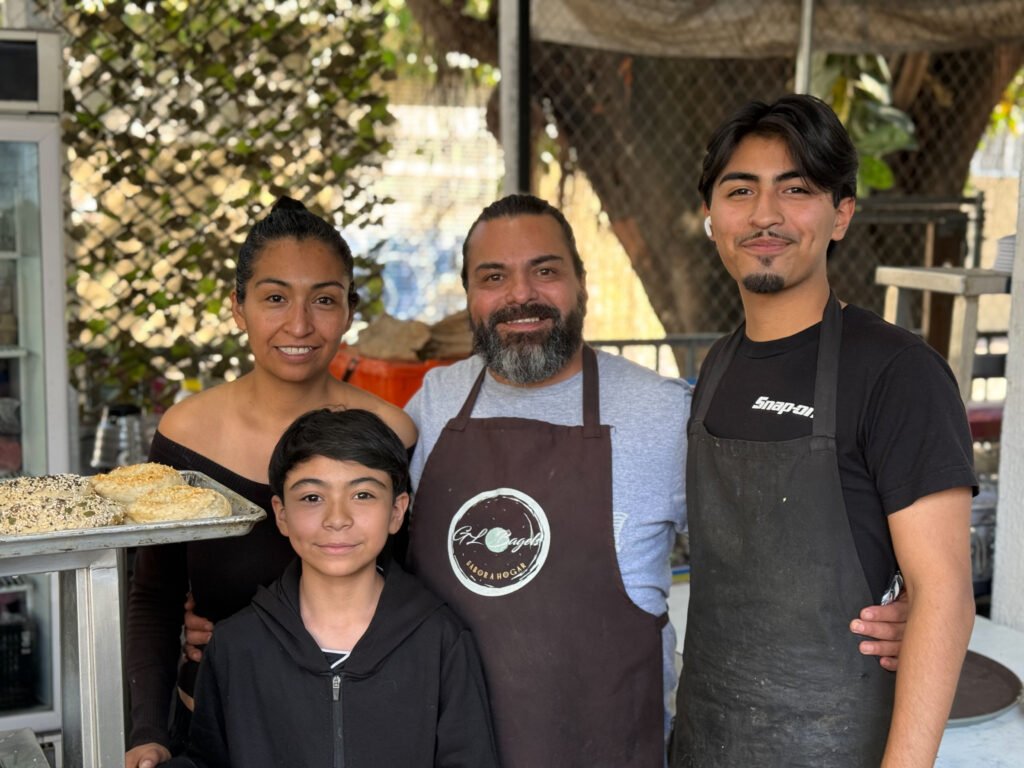
And that simplicity is not solitary. His wife makes the bagels, carrying forward what she learned from her grandmother, keeping roots alive through daily work. Their partnership is described as complicity, balance, teamwork.
Not a romance story.
A shared structure.
Family as the Center That Holds the Change
Charlie contrasts driving culture in the United States and Jalisco, and his critique is direct: rushing, getting in the way, selfishness. But he quickly returns to what he sees as the Mexican center.
Family.
Christmas, birthdays, posadas, Independence Day. The clan. The foundation. The bond that keeps a person solid when everything else shifts.
This is not nostalgia. It is architecture.
If the foundation is strong, you are strong.
Tequila Beyond the Bottle
Working at the start of the Tequila Route changes your perspective, because you see how tightly tradition and history are tied to land.
Charlie describes driving toward Tequila and noticing the volcano, the agave fields, the canyon. The view itself becomes a reminder that tequila is not simply a drink. It is a relationship between landscape, labor, and lineage.
He rejects the modern reduction of tequila as party fuel. He points back to pre Hispanic origins, drinks for gods, ceremony, honoring the volcano, the plant, the land.
And when he talks about the people behind agave, his language becomes reverent without becoming sentimental.
He sees roots.
He sees simplicity.
He sees how long the process is, and how in a single sip you receive what took years to grow. That is why tequila, in its best form, asks for attention.
It asks for presence.
It asks for someone across from you who understands why it matters.
What It Means to Be Mexican
When Charlie defines Mexican identity, he does not do it through politics or abstraction. He does it through character.
Strength. Honesty. Giant heart. Giant mind. Giant wisdom. Pride, not only in self, but in place.
And then the list that anchors his worldview: intelligence, heart, determination, power, roots, responsibility.
He ends with a cultural truth that many people recognize immediately: generosity is not optional, it is part of the structure.
Apapachar, holding others with care, expanding family, offering your heart.
And the phrase that captures the spirit of the welcome.
Mi casa es tu casa.
The Route Worth Following
Charlie’s story is not about tequila. It is not about bagels.
It is about remembering who you are and what you have learned.
It is about choosing depth, simplicity, and family over noise.
Some people chase success. Others come home and learn how to live.
And maybe that is the route worth following.