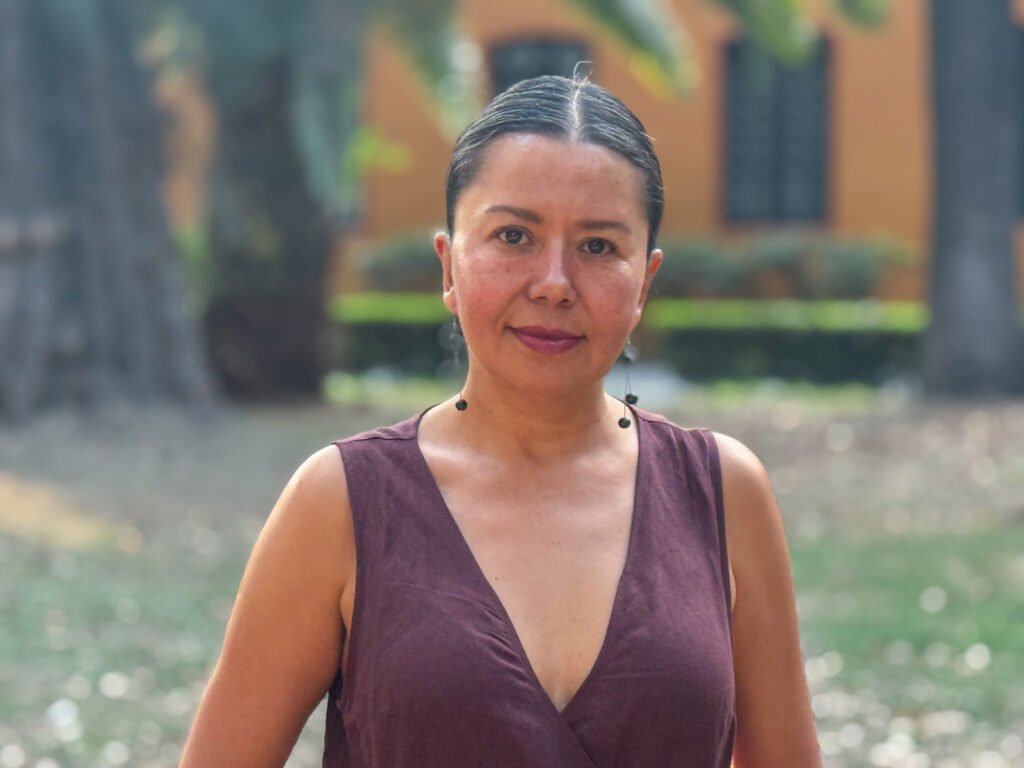
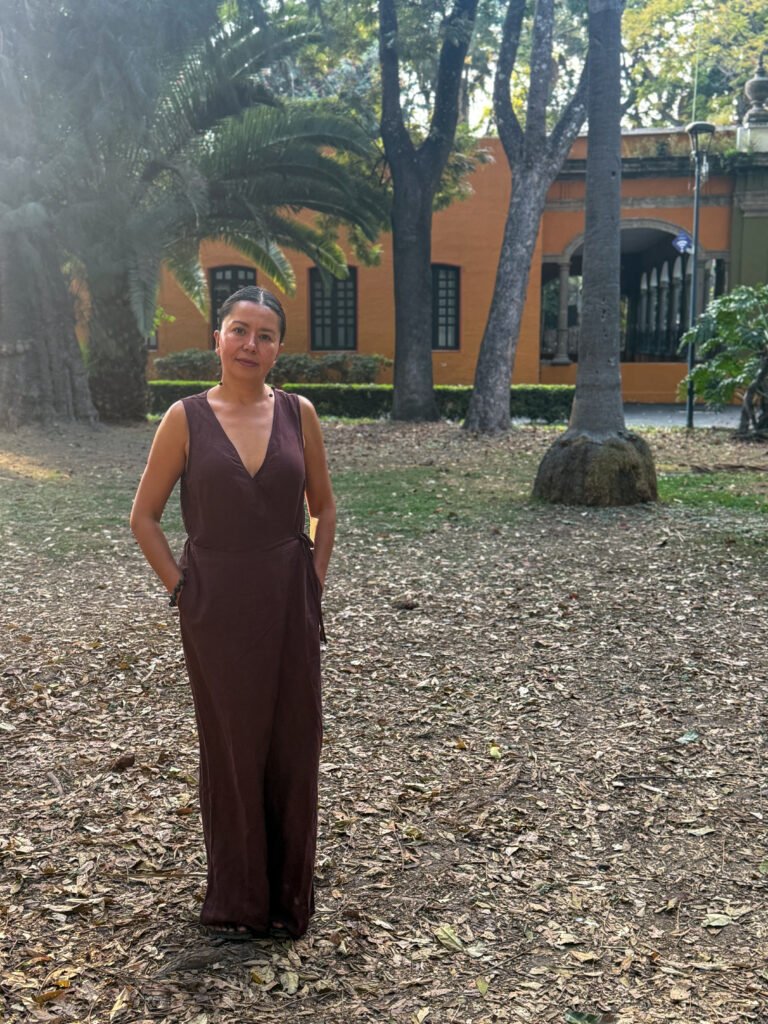
“What’s lost is that…
It’s like eating without salt.
Eat without salt and see how much you want to eat.
For me, if there isn’t apapacho
with my friends, with my family,
with the people who matter to me,
it’s like eating without salt.”
The Human Tension
Touch can heal. Touch can drain.
Work can sustain. Work can consume.
So what happens when your profession is to hold others, day after day?
In Guadalajara, Mexico, Alfa has built her life around a single word: Apapacho. Often translated as “to hug” or “to pamper,” its deeper meaning is to embrace someone with the soul.
For Alfa, apapacho is not sentiment. It is structure. It is discipline. It is work.
And it begins with a belief:
“We all have very rich lives…I believe that if we all dared to write, we could all create a delightful, nourishing, and incredibly rich autobiography.”
If you believe every life is rich, you treat people differently. That belief shapes her massage practice, her business philosophy, and her understanding of community.
Paxio: Building Peace in a Fast World
Her spa is called Paxio. The name itself was an accident that became destiny.
Originally, she wanted something playful with the word “spa.” Legal registration forced a change. When she removed the “s,” something unexpected appeared:
PAX in Latin means peace.
The suffix -io implies “relative to.”
Paxio became “relative to peace.”
“PAX in Latin means peace, tranquility…relating to tranquility, relating to peace, which is my reason for being.”
In a world obsessed with productivity and speed, Alfa built a space designed for nervous system regulation. Slowness is not laziness here. It is medicine.
Apapacho Is Skill
Apapacho is not vague warmth. It is professional closeness with boundaries.
Before every massage, she asks:
Have you received massage before?
Are you comfortable with touch?
Is there any area you do not want me to work on?
Consent is constant. Communication is precise. The body’s nonverbal language is respected.
“Everything must be done in a caring, respectful, and professional environment.”
Care is ethical. Care is structured. Care is mutual.
Two Nervous Systems, One Room
Alfa describes massage not as service, but as synergy.
“It’s like a synergy…the person’s breathing changes… and their breathing helps me as a therapist to regulate my own breathing.”
When the client’s breath slows, hers slows. When their body relaxes, hers responds.
Two nervous systems regulate together.
But closeness requires protection.
Before every session, she begins with a silent mantra:
“My energy is mine, and his or her energy is theirs. There will be no mixing of energies.”
She is not the healer. She is the instrument.
If ego enters the room, the integrity of care dissolves.
The Gift of Sustaining
For Alfa, the word sostener — to sustain — is a gift.
“The word ‘to sustain’ is a gift to me, it’s a tool. But like a knife, if you don’t know how to use it, you can cut yourself.”
To sustain others without losing yourself requires skill. Awareness. Ongoing learning.
At forty-nine years old, she says she is still learning how to hold without cutting herself in the process.
Care is not infinite. It must be managed.
Preparing for Old Age
Sustaining is not only about clients. It is about the future.
“If you don’t pay attention to how you’re going to age…it’s like not paying attention to your savings.”
Emotional savings. Spiritual savings. Relational savings.
She nourishes herself now so that her old age will have:
Meaning.
Loving bonds.
Community.
“Because it’s what gives meaning to my life.”
Independence, she insists, does not mean isolation.
Autonomy is choosing based on your values. Community is how she sustains herself.
Mexican Warmth and Cultural Apapacho
Alfa speaks proudly of Mexican warmth:
“Mexicans are warm…they love to show and be shown Apapacho.”
She jokes about being Oaxacan. Hot-tempered. Generous. Deeply communal.
Mexican culture, she believes, keeps elders close. Apapacho is cultural inheritance.
But she also recognizes tension.
Living six months in Palo Alto, she noticed love that rarely expressed itself physically. Apapacho exists everywhere, she says — but not everyone allows themselves to live it.
Tequila as Symbol
In 365 Days of Tequila, tequila is never the main character. It is a mirror.
For Alfa, tequila is:
“Sage of the earth, juice of the earth.”
The sap of the earth. The juice of the earth.
It connects her to Guadalajara, to memory, to relationships that shaped her.
Tequila, like care, requires consciousness.
“I respect it and take it in stride.”
Presence, not escape.
What Is Lost Without Apapacho?
And then she returns to salt.
Without apapacho, life still functions. There is intellectual exchange. There is productivity. But something essential disappears.
Flavor. Richness. Savor.
Care is not decoration. It is seasoning. Without it, life becomes technically nutritious — but empty.
The Deeper Meaning
Alfa’s story is not about massage.
It is about sustainable care. It is about holding others without disappearing. About boundaries that protect connection. About building community before you need it.
Apapacho is not softness. It is skill. It is discipline.It is cultural memory.
And it asks a question of all of us:
Where in your life are you giving care — and what helps you sustain yourself while doing it?