4. Nicolas: A Return to Roots: Bread, Belonging & the Fire Within

From ancient ovens built with thermodynamic precision to sacred dances rooted in resistance, Nicolás shares how a bakery, tradition, and community are deeply intertwined.

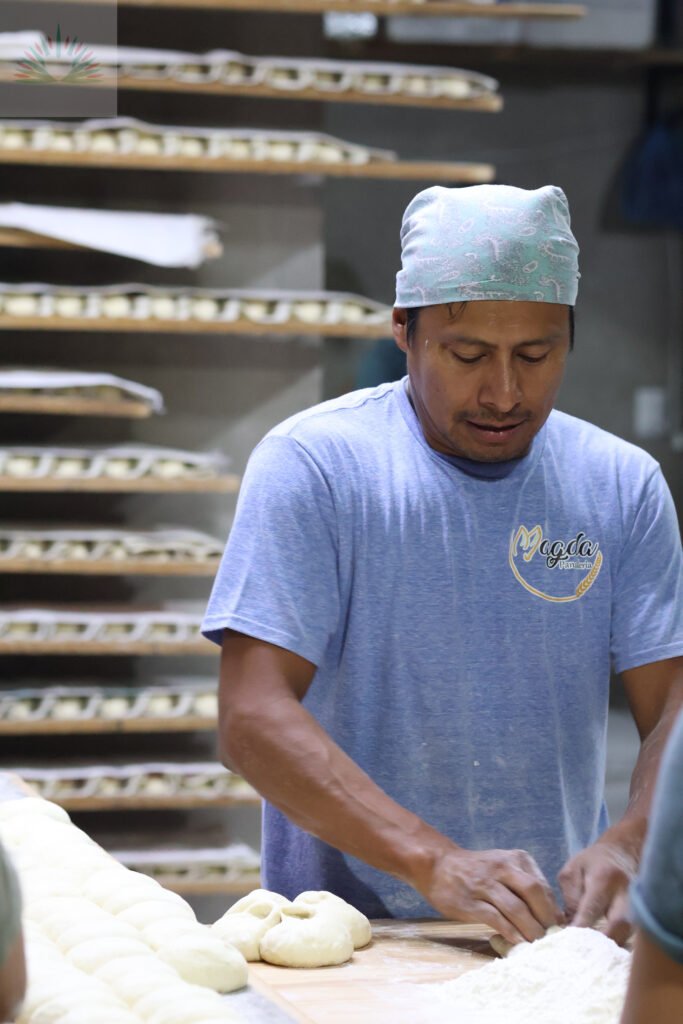
What does it mean to truly come home? To find your calling not in something new, but something deeply familiar—woven into your family, your history, your land?  I want you to meet Nicolás López—panadero, physicist, danzante, and son of Tuxpan. This is not just a story about bread. This is about legacy. Identity. Curiosity. Spirituality. And a return to the roots that continue to nourish an entire community.

Let Nicolás tell you—in his own words.

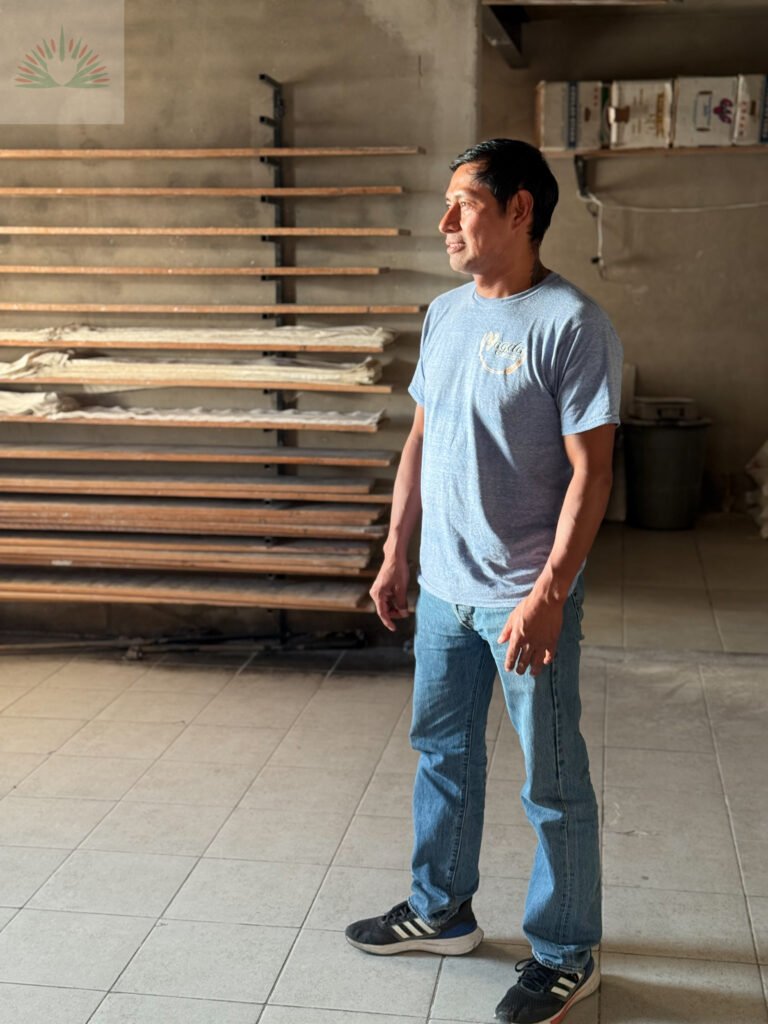
“I’m Nicolás López. Nicolás López Silva. I’m a baker—completely a baker. Ninety percent of my time is spent baking… I studied physics, and that’s led me to work in other fields like teaching, research, but dedicating myself specifically to baking has been one of the most important things, and one that I practically dedicate myself to now. That’s my full-time job, regarding baking… Combining my academic profession with my desire to explore the world, with my work as a baker for the family, has made me understand what I do now and how I share it with people, with my family. What processes I learned to be able to create a body of work that’s not only based on tradition, but also on research. And that part made me feel connected to my roots here in Tuxpan, with my family, with my ancestors.”


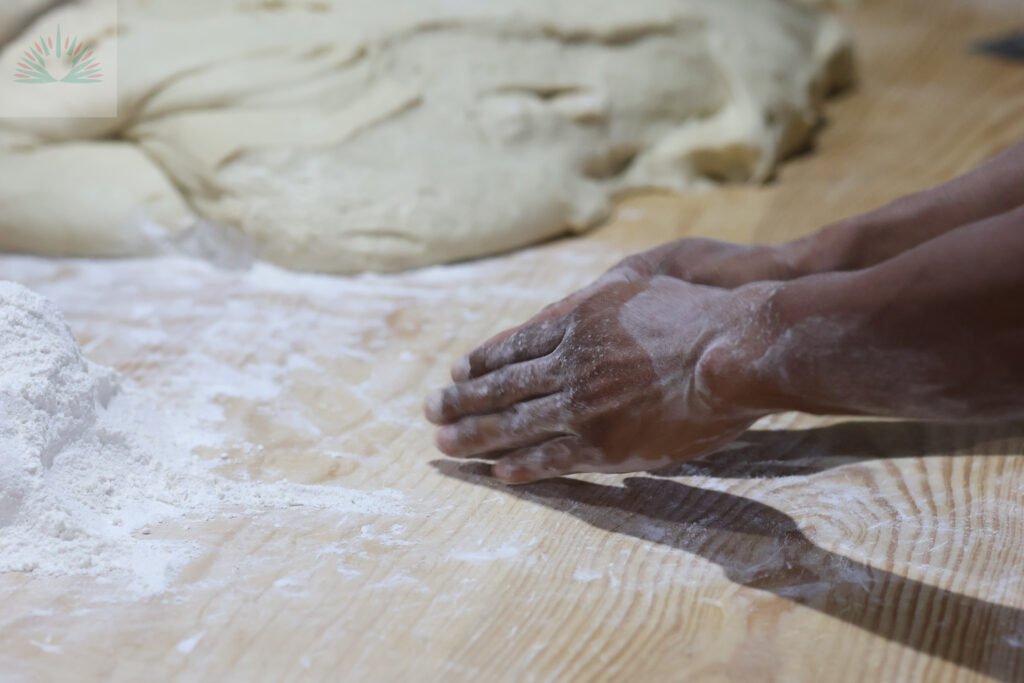
 Like many of us, Nicolás’ life didn’t follow a straight path. He studied physics because he wanted to understand the universe. He dreamed of math, physics, understanding the world. But his hands led him somewhere else—into the dough, the ovens, the family tradition.

“As a child, I didn’t dream of being a baker. It wasn’t something I wanted. My mother and father knew only a few professions, like doctor, lawyer, and architect, which were a useful subject back then. Most of them were the ones most people preferred to study. In my case, no. When I discovered that science was something that interested me, I didn’t want traditional careers like these. …In my case, science pushed me to understand it. I built the oven from geometry, from thermodynamics ot the use of materials—all of this has to do with my science, with, well, with my study of physics.”


Behind every great story is a great mother. Behind every tradition—someone who never let it die.

“What is the significance of the name Magda?”


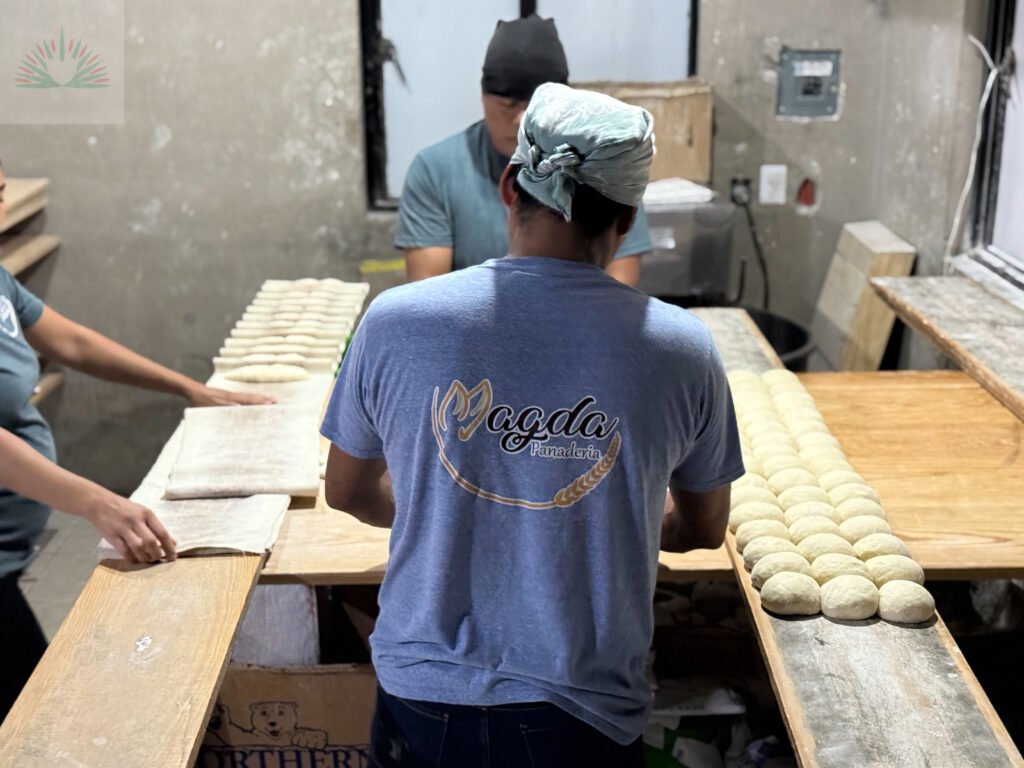
It comes from Magdalena, who was my mother. Um, okay, my mother pushed me into all of this, and it’s a way of paying homage to what I learned from her….she had a lot of faith, a lot of confidence that one day I would have something that would mean more than just a job, right? And indeed, I do. It’s more comfortable for me to say I enjoy this than to say I work in a bakery, right? I really enjoy my job, and I think that’s thanks to that, well.”


Before bread ever touched his hands, before science gave him answers, Nicolás López was just a curious kid in Tuxpan, playing dangerously close to flame and fate.
It wasn’t just bread that shaped Nicolás. It was fire—literally.

“One day we were playing “little train”…we were standing one by one, one by one, right? We formed like a line. And we were on top of the flour. Like over there, you see? There are piles of the flour stacked. And we were on the highest part of the pile.

“And we had some blankets to keep from going down, all covered in flour. And suddenly it started to smoke. And I said to my siblings: “Oh look! It’s even very realistic because the engine is smoking.” And suddenly it lights up. I mean, the fire starts. Because we had tried to turn on the lights and they didn’t turn on, but we saw that…and the fire started. And I was in front of the line, in risk of death.  This came about and made me directly connected to the bakery. I was a child of about 3, 4 years old. I couldn’t do that jump because if I jumped, there was only a little space where I could hit my head. No, I just waited for someone to help me. 

“And sure enough, my dad arrived. He quickly picked me up, folded blankets, and put out the fire like that. So that anecdote has been stuck in my mind since then. It’s probably the beginning of the connection between physics and baking.”

Sometimes, we don’t understand our roots until they almost take us out. A game gone bad as a child ignited something deeper.  His connection to craft, to community, to history—was forged in both flame and flour.


And one day, his parents—went on a pilgrimage to a town called Talpa de Allende, and while they were gone, he thought, 

“‘Now is the right time to learn.’” So, it was my first week of learning at 8 years old.

“And after the first week, I got sick, and I didn’t touch dough or anything again until two years later, because my father told me, “No, that’s why I don’t want you to work, because you’re too young and because it’s something you probably won’t like.”

“But I did like it, and I began to understand something different about it. Right? My father perhaps wanted to keep us away from this trade because he thought there was more future in a profession like being a lawyer or a doctor.

“That curiosity forced me to learn many things about baking. Little by little, I started getting involved when my dad wasn’t aware, and I learned one thing, then another… and when my dad finally agreed, it was because the workers told him: ‘Oh, well, he knows what he wants to work on, let him work.” So, thanks to the support of the workers, my dad let me start working. And a little while later, my brothers, seeing that I was working, wanted to learn too. Right?

“So, now we’re all dedicated to the bakery, the whole family.”


Tuxpan isn’t just a place—it’s a living culture. A town of 54 traditional festivals, where memory lives in movement, flavor, and faith.  It isn’t just where Nicolás is from. It’s the center of a deeper struggle—identity, history, and acceptance.

“Tuxpan is a very traditional town in many ways… we know that it’s a pre-Hispanic settlement.

“That makes us a town that is very….that is forced to maintain its history, its tradition, even though many don’t see it that way or accept it that way. But Tuxpan has very significant roots. People who know Tuxpan know that it’s very likely that 80 percent—I don’t have the exact figures—but 80 percent of the people are brown-skinned and have indigenous features.

“I struggled a lot with that. And I always used to ask myself, ‘why do I have to be this way? Why do I have to go through this? Why me? Why am I not like so-and-so? Why am I not him? Why not…?’

‘And it was difficult to accept… and not see that this isn’t a punishment nor is it a benefit. But the problem was basically with other people, that they don’t accept each other  because they see them a certain way. And maybe it’s humanities struggle, ‘the other’. Not accepting that there are different people. That there are people who don’t think the same.”

“That made me fight. And it made me struggle in many areas of my life. The first battle was my own. Accepting who I am. It took me 17 years. After that battle, and after having won the battle,  I now feel very proud—my family, my people, Tuxpan. I even boast about it.”


Through bread, through dance, through spiritual connection and scientific thought, Nicolás returned to where he began—and found something more.

“What is so important, is that my life made me come back here and understand that no matter where you go, the important thing is to be satisfied in a life that gives you peace and tranquility.

“In that way, I can define happiness. And I feel like my happiness is here now, with my family, with my wife, with my children, with my work, with my siblings. This community has embraced me again.

“I believe that when you feed, or are part of that process in the chain that develops food so that someone else can eat and feed themselves, for me, it is so important, because we all need to eat. That little bit that you offer something to someone, that’s what makes me feel like I’m on the right path.”


In the heart of Jalisco, bread isn’t the only thing made by hand and passed through generations. Tequila is another sacred craft—one that shares much with baking. Both require patience. Fire. Transformation. And the belief that time reveals flavor, strength, and soul.

“So, I prefer tequilas with a stronger, more natural flavor. 

“We have a mezcal plant nearby. It’s named, based on the process, Tlachica, similar to the place where it’s distilled. And it’s La Chicero that makes it.

“So, trying a mezcal distilled from here, which is also known as ‘Raicilla’, has a very different flavor than tequila in this case. It tastes more like wood, because when they’re making the distillate, the smoke also envelops itself with the flavor of the distillate. And you get a slightly smoky flavor. I love that.”

Whether it’s poured during a celebration or sipped in silence, tequila—like Nicolás’s bread—reminds us of where we come from and who we share the journey with.


Nicolas’ story is one of curiosity, family, and fire, reminding us that tradition isn’t frozen in time—it’s alive in every movement, every loaf, every ritual. 

But that was only the beginning. 

After a night of festival, dance, and connection, he was lit up from the inside out, and we sat down again, the morning after. The energy of community still lingering in his voice.

“I went to University in Guadalajara, and after studying and doing various things, I decided to return precisely on the date of the dance and began to document everything.

“When I finished, I said, ‘okay, the battery’s dead, I’m done with this,’ I put everything away, and decided to go precisely to an altar close to where I was at that moment. ‘Today, I’ll just enjoy myself—I’m not even going to get involved over there, or anything…’ Well, I took a chair that was nearby and sat in front.

“When they (the dancers) came back in front of the altar, I stayed in front of it, exactly where they turned around. And it was one of the rattles, not even one of the chayacates(traditional rattles). So I’m sitting, and suddenly the drum started and they began to dance. They go and do the first turn, when they come back, about halfway between them, me and the altar,  half of them came… and the chair began to vibrate. And my feet started to feel the vibration. 

“And I started to cry. And I realized exactly what they had been telling me: “These are  your roots, right? What you’re here feeling now… this is your community, this is your story.”

‘What need do you have to be searching for something else?

“And I quickly connected to that vibration, that sound of the drum, that flute. And they quickly connected me to the heart of this tradition. So now when I listen… not to the drum, not to the rattles, when I hear: “Hey, we’re ready. Let’s start now!”… my heart begins again…(beats chest as if it were a beating heart)”

What happens when a drumbeat becomes a heartbeat? When dance becomes a prayer?

“Every time when I end up at an altar, I ask for several things. But the first thing I ask for is energy. I always, always ask, ‘Help me. I would like to end the day dancing. I want to dance my way to the last altar.’

“And honestly, on a couple of occasions, I’ve felt as if someone embraced me and lifted me up. I don’t know who it is, haha. I don’t know if it’s something religious… I don’t know if it’s God or maybe the local gods from around here.  I don’t know who it is. But I’ve felt it—yes, I’ve felt it.

“From being on my knees… and sometimes I find it hard to get up from that position…I feel like someone comes—like, under my armpits—and as if they lift me up. And they say to me: ‘Keep going. We’re here helping.’”

For Nicolás, dance is not performance—it’s presence. The altar is the heart of it all. The tradition is sacred. A way to carry forward memory, meaning, and reverence.  For Nicolás, it’s not just about dancing. It’s about who carries the story next.


“I think a lot of people dance just for the sake of dancing.

“And when it comes to what needs to be done, it’s about finding people who are interested in spreading this information—but it probably shouldn’t be just us.

“And suddenly, people ask: ‘And who are you?’ You… how do you know about this?’

“Well, we also find ourselves having to explain to them,  ‘Ah, so who am I? I’m someone who has truly taken an interest in understanding the foundation, the origin, the root of this entire celebration.’”

 Tradition without understanding becomes repetition. But Nicolás sees potential in each movement, each offering, to carry cultural memory forward.

“I think it’s important to understand the fundamentals, to understand the roots. And if you have a particular contribution, add it, but with your own experience and information. Don’t let it go against all that simply because you’re a rebel, because you’re a revolutionary. Right?”

The next generation will shape what remains. But Nicolás asks for thoughtful transformation—not abandonment.  For the next generation to carry the torch, they must first understand what lights it.

“So, you can create your own dance, and you can dress however you like. But if you tell me it comes from this—from the roots—I mean, it’s not enough to just say:

‘Oh, all the chayacates go dressed, they go hidden with a mask, and the mask can be anything.’

And where does it come from?

If you maintain solid roots in what you’re doing, and even if it’s new, even if it’s your own creation, if you have a solid reason and argument for what you’re doing—then keep doing it!”

Tradition can be remixed. But it must be rooted. In the details—masks, costumes, altars—there is power. Because when the form carries meaning, the ritual becomes alive.


The dance of Tuxpan is not just movement—it’s resistance, memory, and a living history. For Nicolás, each step carries the strength of ancestors and the coded language of revolution.

The sound of rattles. The shimmer of ribbons. The stomping of feet echoing like thunder on the earth.

These aren’t just performances—they’re memories in motion.

“In particular, The Dance of the Sonajeros (Dance of the Rattles) is much older.

“The Sonajeros (Rattle Dancers), their rattle, it’s a stick that used to be the club that people would go to war with, right? So, this dance is a warrior dance.

“Their vest, it’s a protective breastplate. These ribbons were different types of colors that they used both for camouflage and to identify which squadron you were in…

“This dance is a very striking one. It’s, ‘I’ll show you who I am. I’ll show you this power I have. I’ll show you this energy I bring. I come to fight. I am very powerful. And my army is very big…”

“It has to do with something that many people don’t know—that Tuxpan was oppressed by “Caciques”, by people with other kinds of power, specifically the colonizers.

“This dance is not just a local expression, it’s practiced in many places. And what everyone agrees on—a shared trait—is that the dancers have to dress like the oppressors, right? The white people.

“That’s why the masks are of white people: light-colored eyes—blue, green—blonde, white, or flashy hair. We use golden hair. And dress elegantly, right? This dance was born to mock them and to say what you didn’t dare say to them. Because when you wear a mask, they don’t know who is dancing.

“It was also forbidden to remove your mask to avoid problems afterward. Because as long as you were masked and within the festivities, nothing would happen—but once you left, yes, you could get into trouble.

“So, this dance is about ridiculing the oppressor, not ourselves…”


It’s loud. It’s proud. And it holds deep meaning for a people who refuse to forget where they come from. Through satire and symbolism, dancers reclaim their dignity. Their history.

“Realizing that dancing isn’t just about going to hang out—going to drink punch, have beers, eat. No.

“It involves tradition. It involves preserving a manifestation of who you are. And who you are must be respected.

“The essence of being from Tuxpan isn’t just about saying, ‘Oh, I have so many festivals. I’m like this because of that. When May festivals come around, we act this way.’ Rather, it’s more about saying that a social organization—a community—must be respected. It must maintain unity.

“We are not just any town. We don’t come from just two or three years ago, or even two or three decades ago. Tuxpan is very old.

“And I believe that respecting who we are, respecting all this history, is not just about going out to dance. It’s about expressing the deeper meaning of what it means to develop this tradition, to expand the knowledge of our entire history.”

Nicolás doesn’t want to be a star.

 He wants to be a seed. In sharing his story, Nicolás is not just protecting tradition—he’s inviting others into it. Into the mystery, the movement, the memory.


“I’m very grateful that people from other places, other cultures—people who aren’t from here or don’t live right next door— are showing what I’m talking about now: this curiosity to know, this curiosity to see, this curiosity to preserve.

“But I keep insisting that if we accept ourselves as we are, we will be much better off than we’ve been. Accepting that someone else exists who is not me is very important, because we’ve all become too individualistic everywhere, right?

“ ‘Only me.’  ‘Only me.’  ‘Only me.’ ‘Me.’

“’I don’t care what the other person wants.’  ‘I don’t care who the other person is.’ ‘I don’t care what the other person creates.’

“In the end, we all live in the same world.  And if I don’t respect what someone else does,  I’ll share in the blame in the future.”

 Respect, curiosity, and community. This is what Nicolás stands for.


In Tuxpan, tradition isn’t an artifact—it’s alive.

And Nicolás is one of its many storytellers, bakers, dancers, and keepers. From the heat of the oven to the rhythm of the danza, Nicolás lives at the intersection of tradition and transformation. He is one of many keepers of Tuxpan’s spirit.

This is what 365 Days of Tequila is all about—listening deeply, celebrating widely, and honoring the richness of Mexico through its people.
3. Ana Gabriela – Empowering Community and Celebrating Cultural Heritage Through Resilience, Food, and Tradition

3. Ana Gabriela – Empowering Community and Celebrating Cultural Heritage Through Resilience, Food, and Tradition

Discover how one woman’s passion for food and tradition brought her community together and sparked a journey of resilience and empowerment.

“I love being Mexican. I love being Mexican because I have that cunning or that way of being able to create, without many tools, but doing what I can with what I have, doing it well, and making sure it turns out well.”


In the heart of Zapopan, Mexico, where the warmth of community and the rich flavors of Mexican tradition are celebrated daily, I met Ana Gabriela, the proud owner of Tía Petunia, a woman whose story intertwines resilience, food, and culture. Her journey is a powerful reminder that through adversity, we can build something that not only empowers us but our communities as well. 

Food, for many of us, is a simple necessity. But for some, like Ana Gabriela, food is much more—it’s a gateway to understanding, connecting, and celebrating one’s heritage, family, and each other. Ana Gabriela is a living testament to the resilience of Mexican traditions, and through her restaurant, Tía Petunia, she shares that resilience with the world.

But more than just serving incredible food, she has created a space where every meal is an experience—an opportunity to celebrate the legacy of strong women, the power of community, and the beauty of Mexico’s rich food culture. From the vibrant flavors to the heartfelt recipes passed down through generations, we’re about to explore how food can unite, heal, and empower.

“I started Tía Petunia, it’s my space, it’s a place of food, it’s a space that pays tribute to all the women in my family, for being strong, for being resilient. I started it 10 years ago. Every gordita is named after an aunt, and that aunt gave me her recipe. It’s a tribute to the important women not only of my family but also in my life in general, especially my aunts, through food. Because in my house, like good Mexicans, it is customary to pamper each other through food, through meals.”

Through the dishes she serves, Ana Gabriela honors the women who came before her—her mother, grandmothers, and aunts—using food as a medium to transmit love, tradition, and resilience. It’s a reminder that no matter the challenges we face, there is always a way to connect and uplift those around us through the simple yet powerful act of sharing a meal.


I asked Ana Gabriela what inspired her to create Tia Petunia and how this reflected her personal history and her answer didn’t disappoint.

“What inspired me? Well, necessity. You know, when you’re in a vulnerable situation, you have to be very attentive to creativity and not just focus on the drama. Don’t just cry because your situation isn’t going as you expected or thought. Behind a strong situation or a situation where you feel things are going wrong, there’s always a gift behind it, and it’s very important to be attentive. I remember being left without a job, with two kids, and with the help of a very good friend, we began to create this project, and she always told me: ‘In your house, we’re always here with guests, you always cook for us and always make us laugh.’ That’s how Tía Petunia started, and an aunt gave me a big gift box, and when I opened it, there was a wooden gordita maker, and it said, ‘Gift for my goddaughter, a machine to make money.”

What started as a humble endeavor to make ends meet quickly blossomed into something more significant—a business that’s not only about food but about connection, community, and shared purpose. In a world where food brings people together, Tía Petunia is not just a restaurant;—it’s a sanctuary for Mexican tradition and a space where everyone feels like family.


Ana Gabriela also faced a number of challenges when starting her business from scratch and overcoming those challenges took was only possible through her loved ones. 

“Well, the number one challenge was the lack of liquidity, the lack of money, the lack of finances. So, I had to be very creative to do what I could with what I had. A very important resource I also used was love, because I surrounded myself with love, with people who added to me and looked at my project and looked at me, and in a very loving way, they came to help me. My sisters gave me forks, other spoons, other friends gave me tables. So, it was a project that I say is not just mine, but also of the desire to unite with a good purpose many people. But there have been ups and downs, but I repeat, my formula has always worked for me so far: seeing that behind the drama, there’s a gift, we have to take it.”

Ana Gabriela’s resilience wasn’t just tested in her business journey—it was tested in her health struggles as well. She faced surgeries, a life-changing diagnosis, and the challenge of her body rejecting medical implants. Through it all, she maintained her belief that behind every struggle is a hidden gift.

“I have a condition called craniofacial fibrous dysplasia. This part of my skull and part of the bone beneath it is a bone that grows and presses the organs or whatever it finds around it. I was diagnosed with it around the age of 8, but my first surgery was at 13. They removed part of my frontal bone and put in a plate. At 17 and 19, they removed a little more bone and replaced it with pieces of plate. And well, at 19 it seemed like everything had been fixed, even though I was aware that part of the dysplasia remained. It seemed like it was dormant. 

“About a year and a half ago, I got a small hole in my skull, or part of the plate, and cerebrospinal fluid was coming out. It was my skin rejecting the plate. So, after 30 years, the prosthetic plate was changed, from methyl methacrylate to the most modern material called PIC, and unfortunately, I was operated on all of last year because the PIC didn’t work… my skin didn’t accept it. It wasn’t so much the material, but what they explained to me is that last year, the last surgery was on November 20th, 2024. They operated on me 5 times last year and put a graft, well, a lot of grafts from my legs in my head. It was a tough year. A tough year where I had to learn to be resilient the hard way, but with my motto: ‘No, behind this drama, behind this problem, there is a gift.’ And I think that’s what’s important. I’m so glad to be alive. They finally removed the plate because my skin isn’t ready to have a different object inside.

“Of course, physically, it’s not harmonious because it looks sunken. There are parts of my scalp where my hair won’t grow back because it’s from my leg…

“But I’m alive. I learned a lot in the hospital, I learned with… it was very gratifying to meet the life of a doctor there because my son wants to be a doctor. I would see and say, ‘Are you sure you want to be a doctor?’ People don’t live… And I saw my roommates also fighting for their… fighting against death, to be alive, to be healthy. I saw how the nurses, the doctors handled things, but I went to see this human and vulnerable part that they are also complicit in.”


Ana Gabriela’s experience in the hospital was a true test of resilience. As she fought for her health, she saw the way doctors and nurses came together as a team to heal people. It was here, in the midst of so much uncertainty and pain, that Ana Gabriela understood more than ever the power of food to heal not just bodies, but souls.

“So they removed my prosthesis. We have to wait a few years to see if my skin will accept another prosthesis, and if not, well, it’s viable to live like that, with my precautions. And the aesthetic part… well, honestly, at this point… I think it’s the least important. I think I’ve valued my life like never before. I stopped thinking that just working was living. I realized I had worked a lot and that my children had grown up quickly. And I realized I was selling a product at Tía Petunia that I didn’t enjoy as I should. Because life, and that’s what I learned: life is today. We don’t know what will happen tomorrow. Life changes you on a Tuesday at three.”

Amidst these challenging health battles, Ana Gabriela found an incredible way to connect with others through her food. During her hospital stay, she knew the power of a warm meal. One day, she decided to bring food to the entire medical team.

“Well, I ordered a lot of gorditas, a lot of gorditas. I called here, I said, ‘Send me 100 gorditas for the doctors, 100 gorditas for the nurses, and bring me 100 gorditas for the patients.’ And it was so beautiful to see everyone arrive, thanking me and their faces transformed. Even my roommates could eat a gordita that didn’t taste like hospital food, and when they bit into it, they could fill themselves with hope because someone else was waiting for them outside. That’s something that stayed with me and confirmed that I’m going down the right path.”

Her time spent in the hospital, surrounded by the care of medical staff and the support of her loved ones, reaffirmed her belief in the healing power of food. During her surgeries, Ana Gabriela reflected on how food—specifically, the warmth and comfort of meals shared—could bring people a sense of peace even in the toughest moments. Moving forward, we’ll explore how these powerful lessons extend beyond her health and helped her overcome life challenges that she faced. 


There have been a few moments in Ana Gabriela’s life that have taught her about resilience and hope. 

“Híjole, I think a divorce is very hard. Uhm. I got divorced many years ago. I remarried. A divorce is very tough, and especially as a Mexican, because you live within a structure where judgment is very present. So, that part hurt me. However, I was full of hope because I was going to have the opportunity to tell myself a new life story for me and my children. Another… another situation where I had to be resilient… well, maybe also in the separation of my parents, even though they separated when I was older, already had children, it was also hard for me. Breaking this part, and I think I never spoke about it. Actually, I think it’s the first time I say it. For me, it was… it was significantly hard, but I repeat, this formula always comes back, and I’m very loyal to it: there’s a gift here, and there’s a gift here, and I have to discover the gift.”

Ana Gabriela’s journey not only highlights the power of food to create community and heal wounds but also reflects the deeply rooted Mexican traditions of resilience and joy. From personal battles to community-building, she has always embraced the idea that food is a way to connect people, uplift their spirits, and share a sense of belonging.

But Ana Gabriela’s story is not just one of overcoming health challenges and building a restaurant—it’s also about the legacy of culture, family, and the enduring importance of Mexican traditions. Through Tía Petunia, she has created a space where those values live on, and where every meal served carries the weight of love, history, and purpose.

“I love being Mexican. I love being Mexican because I have that cleverness or that ability to create, without many tools, to do what I can with what I have, and to do it well, and for it to turn out right. And that’s something being Mexican has given me, because now, when I was in my health situation and in the hospital, I saw how the doctors themselves did what they could with what they had to rescue their patients. Just like the patients and their families did what they could with what they had, whether it was money, tools, contacts, whatever. I believe Mexicans are capable of creating many things, and if we set our minds to it, we can do it.”


As Ana Gabriela shares her reflections on what it means to be Mexican, we see how these values of creativity, resilience, and resourcefulness have shaped not only her personal life but also her vision for Tía Petunia and how it will be remembered in the future.

“I love that my business is remembered by the joy with which we welcome people, by the fun we have, by the jokes, the teasing, the camaraderie within… the same team, colleagues, and the customers who come here, and end up becoming our friends and turning into family.”

For Ana Gabriela, Tía Petunia is more than a restaurant. It’s a space where people come together, feel cared for, and become part of a larger family. Food isn’t just sustenance—it’s a way to connect, to heal, and to celebrate. 


“I hope they learn and understand that there is always something important to convey through food. It’s always super important to know that Mexico has an amazing culture, that you said earlier, the Mexican is always celebrating, yes. It’s true, it’s true, we are always happy, we are always joyful, and there is always this comforting feeling for the soul, where we can come together once again.”

Ana Gabriela’s journey is a beautiful example of how we can use food and culture as tools for empowerment. In her story, we see the power of community, the strength that comes from embracing tradition, and the resilience that makes us who we are.

“You know, young people have a great mindset now. Something good I see in this generation is the non-judgment aspect, where everyone can have their own preferences, and there’s no mocking or pointing out. I think they’ve also looked for ways to rescue certain Mexican roots, like dialects, clothing, and even drinks, like tequila.”

Through the resilience of entrepreneurs like Ana Gabriela, and the strength of our cultural traditions, we learn that our heritage is not something to be lost—it’s something to be shared and celebrated, passed down to future generations.


This connection to tradition naturally extends to one of Mexico’s most iconic elements: tequila. Ana Gabriela’s personal memories of tequila are intertwined with her family’s joyful celebrations, where the drink was more than just a beverage—it was a symbol of togetherness and heritage.

“Yes, my paternal grandfather would go to Arandas, Jalisco, to fill his barrel with white tequila. And then, he always had his barrel of tequila. And well, he would have all the kids his age, his grandchildren, playing tequila, playing bingo, and in a bottle cap, he would put a little tequila and let us drink. Haha! And you know, that was many years ago, 40 years ago, and today I think of tequila, and it reminds me of that childhood where we had a great time.”

Tequila, for Ana Gabriela, is more than just a drink—it’s a symbol of the joyful moments shared with family. It connects her deeply to her roots and culture, a theme that echoes throughout her life and business.


When I asked her what advice she would give other women who were experiencing difficult moments in starting businesses, she said, “Generally, and I believe statistically it’s proven, we start businesses when there’s great need. When the water reaches your socks, and you have to run to get out of it, hope always has to be your flag, and always remember that behind drama, behind conflict, there’s always a gift. There’s always an opportunity. There’s always a way to move forward, always, always.”


Ana Gabriela’s story is a testament to the power of resilience, the beauty of Mexican food and culture, and the importance of community. Through Tía Petunia, she has created more than a restaurant—she’s created a space where people can feel the warmth of family and the spirit of Mexico.

If there’s one thing we can learn from Ana Gabriela’s journey, it’s that no matter the challenges, there is always a gift to be found—whether in food, community, or the traditions that bind us together.

2. Maria de la O Teresita: Celebrating Heritage, Traditions & Community Through Storytelling

2. Maria de la O Teresita: Celebrating Heritage, Traditions & Community Through Storytelling

One woman weaves personal stories and Mexican traditions into a powerful tapestry of history, culture, and the timeless spirit of tequila.

“There’s no place like Mexico. A Mexican who doesn’t sing wasn’t born here. For me, Mexico is another world. I can go to Europe, the United States, Chile, Argentina—anywhere—and I’ll always want to come back to Mexico. You miss your country, its freedom. Mexico is a free country.”


Today, we dive deep into the heart of Mexico, exploring the roots of resilience, storytelling, and tradition through the eyes of Maria, a passionate historian, storyteller, and educator. Through her stories, we’ll see how history isn’t just something we learn—it’s something we live, breathe, and carry with us.
Maria’s days are filled with activity, from teaching to community involvement, and caring for her beloved pets. But at the heart of it all, she finds joy in the simple moments. 

“Every day always brings me something beautiful. If today has been sad, I try to turn it around and find something beautiful because I don’t like to be sad.” 

That resilience, that ability to find beauty in every day, is something deeply rooted in Mexican culture.

Maria’s childhood was shaped by the voices of elders, carrying the wisdom of the past. Sitting at the feet of her grandparents, she absorbed every word, every legend, every piece of history of Mexico they could offer. To her, history wasn’t just something in books—it was something alive, something she had to preserve.


“For me, it was very beautiful to see the elders. They were my grandfather’s brothers, and they’d welcome me by saying, ‘Hello, little comadre, come in,’ and they’d teach me how to shell corn, to listen to their stories. I would think, ‘Don’t forget them, don’t forget them.’ Friends of my grandparents would also visit, greet me, and tell me stories.” 

These stories, passed down through generations, became part of Maria’s identity. They shaped her love for history and her mission to preserve Mexico’s traditions.

Maria’s connection to history runs deep. One of her biggest inspirations was her great-uncle Cirilo, a revolutionary whose life was intertwined with the very fabric of Mexico’s past.

“He was a revolutionary, and the most incredible thing was that my grandmother’s father was also a soldier, but in the army. He wasn’t a revolutionary—he was against them. My great-grandfather was killed, and when that happened, they went to my uncle Cirilo’s big house and took him because he was the only one who knew how to write. They told him, ‘You’re coming because you’ll write down the names of all the dead.’”

Her uncle Cirilo then became a man that inspired her story: “He was a very tall man with a wide hat. He wore cotton pants, a cotton shirt, and a poncho… and he told me stories. You wouldn’t believe it—he had this tired, raspy voice like the old men of that time. When he started telling his stories, he transported me to that era, and I lived it. So, when I tell stories, I want people to feel what I felt with him—to live the story and feel part of it. That’s why I like to narrate stories that way.”

These intertwined stories remind us that history isn’t just something we read in books—it’s something our families lived, something we carry with us.

Her passion for history has led her to collect and narrate Mexican legends. Maria isn’t just a historian—she’s a bridge between generations. She even hosts storytelling nights at cafes, bringing people together through oral tradition. Her words bring the past to life, turning history into something tangible, something deeply felt. In a world where traditions fade, she stands as a guardian of memory. 

“We’ve had around 30-60 people every time we go to a café and we have a great time.”

But like many great storytellers, Maria’s journey has not been without hardship. A recent fall forced her to pause her events, yet her community eagerly awaits her return.


For Maria, being Mexican is something profound—something that exists in our blood, in our voices, in our songs.


“There’s no place like Mexico. A Mexican who doesn’t sing wasn’t born here. For me, Mexico is another world. I can go to Europe, the United States, Chile, Argentina—anywhere—and I’ll always want to come back to Mexico. You miss your country, its freedom. Mexico is a free country.”


And that freedom, that deep love for one’s homeland, is something that binds all Mexicans together, no matter where they are in the world.


Maria is passionate about preserving traditions—through language, music, and cultural symbols. “Mariachi music is essential, indisputable, and recognized around the world. But today’s music should have meaning… Just like they had the creativity to make songs like Cielito Lindo, they should have the creativity to create works that are worth it, that endure. I’d love it if good music wasn’t lost. I’d love for the charro suit to continue being respected. I want the typical dress of Mexico—whether it’s the charra or campirana style—to be worn without judgment. People should say, ‘Wow, what a beautiful dress,’ instead of, ‘Look at that crazy person!’ It’s your Mexico, your Jalisco, your city. Wearing a tapatía dress is a source of pride, and it should be a source of pride for everyone.”

For Maria, traditions aren’t just about the past—they shape the future. By wearing traditional clothing, by speaking with respect, by passing down legends, she ensures that the essence of Mexico lives on.


Maria’s storytelling transports us to the past. Some stories remind us of history, others serve as cautionary tales, but all are deeply embedded in the culture of Jalisco.


Legend of the Fuente Seca

Legends carry the spirit of a place, preserving the essence of the people who once walked its streets. One of Guadalajara’s most intriguing stories is the legend of Fuente Seca, a tale of excess, celebration, and an unexpected turn.

There was going to be a baptism, but I’m talking about many, many years ago, like around the 1800s. So, they built a fountain, and this fountain had little angels pouring out jugs like this. Well, the legend says that when they finished building the basin, the man who had it built, his wife gave birth to a baby. So, the man, very proud, went and told his compadre, ‘Compadre, you are going to be my son’s godfather.’ ‘Ah, very well. And I’m so happy,’ said the compadre, ‘I’m going to fill the fountain you made with pure tequila.’ ‘Great!’ So, they filled it with tequila—a lot of tequila. People came and drank and drank, the tequila kept going down. ‘Pour more,’ they’d say, and they poured more, and people kept drinking from the fountain.”

Then the wives—the comadres—were angry because their husbands were completely drunk, and so was the whole town. So, they said, ‘What do we do, comadre, so they stop drinking like these fools?’ ‘Let’s make a hole in the fountain.’ And there they went, making a small hole at the base of the fountain. They made a little hole, and through that hole, the tequila began to escape, and the fountain dried up. Then they said, ‘Oh, compadre, the fountain dried up.’ ‘Well, pour more.’ But it wouldn’t fill up anymore; the tequila just spilled out. And then they said, ‘Oh, this fountain dried up.’ And since then, that fountain has been called the Fuente Seca (The Dry Fountain), because the women made that little hole so the tequila wouldn’t stay in it. Otherwise, everyone would have ended up completely wasted.”

A story of indulgence that reminds us that even the most joyous moments can come with consequence. This is an unforgettable part of Guadalajara’s folklore, and a clear display of how tequila has always been woven into Mexico’s history and celebrations.


Legend of the Stone Dogs

Guadalajara is a city rich with history, but some stories leave behind more than just words—they leave behind mysterious relics. One such story is the legend of the Stone Dogs:

“They said that a long time ago, a man came from Europe, and among the cargo he brought to his house were some bricks—blocks marked with red numbers. But those marks weren’t paint. They were blood. And it was children’s blood. He arrived in Guadalajara with his cargo and wanted to build a house—the most beautiful house in Guadalajara. So, he started constructing his house and hired bricklayers. The bricklayers followed his instructions: ‘Place this brick here. No, not that one. This one. Then this one. Then this one.’ They had to arrange the blocks according to the shape or number they had.

When the house was completed, and he thought it was very beautiful, he brought in dogs from France—the same place where the Eiffel Tower, the Statue of Liberty, and the Guadalajara kiosk were made. He imported Neapolitan Mastiffs. He placed one dog at one end of Guadalajara, facing the Cathedral, and the other at the other end, facing the Sanctuary.

They say those dogs weren’t statues originally. They were real dogs. Then the man settled down and said, ‘Now I’m going to marry the most beautiful woman in Guadalajara.’ While searching, he fell for a neighbor, a young woman whose family made high-quality clothing. He liked one of the sisters and married her. He took her to live in his house and told her that she would live there under one condition: she was not allowed to go to church. ‘No church at all,’ he told her. She agreed: ‘Okay. No church at all.’

They had two children. But deep in her heart, she couldn’t let go of her faith. Being from Guadalajara, with such deep Catholic roots, she said, ‘No. I must make sure my children are baptized, confirmed, and receive their First Communion.’

But how could she do it without her husband finding out? So, she said to her mother, ‘Mom, we’ll take the children to Tonalá, to the Cerro de la Reina, so they can receive their First Communion without him knowing. You’ll take the kids in the carriage, and they’ll have their First Communion there.’ Her mother agreed: ‘Yes, that’s fine.’

The mother took the children toward Tonalá. But on the way, the dogs that belonged to the man attacked the carriage and killed the children. The mother-in-law returned with the dead children and said, ‘Look what happened. The dogs attacked us, and the children are dead.’ The woman wept bitterly. Then her husband asked, ‘Where did you go? Why did the dogs attack?’ ‘It’s because the children were going to have their First Communion,’ she confessed. ‘But the dogs attacked us on the way.’ The man replied, ‘Woman, what have you done? I told you: no church.’

That night, they held a wake for the children and buried them. But the next night, the children’s bloodied clothes appeared on the dining table. The man said, ‘This can’t be.’

He called his servants and said, ‘Tomorrow, take the whole day off. Don’t come. I’ll pay you for the day, but I don’t want anyone here.’ The cooks and servants all left. He stayed alone with his wife.

The next day, when the servants returned, they found the man and his wife dead. The dogs had bitten them. Realizing that the dogs were responsible for killing the couple, the servants grabbed machetes, pitchforks, and other tools to kill the dogs. But the dogs ran and climbed to the roof. The servants chased them, but when they reached the roof, the dogs stood at opposite corners… and turned to stone.”

Even today, those stone dogs stand as silent sentinels, keeping watch over Guadalajara, a lingering reminder, standing in plain sight, of stories that refuse to fade.


Legend of Mayahuel, the Goddess of Tequila

The roots of tequila run deeper than we can imagine, stretching into the sacred myths of ancient Mexico. One legend tells the story of Mayahuel, the goddess of agave, whose fate became intertwined with the drink that defines Jalisco.


There is a story called the story of Princess Mayahuel. It’s a sad one, but it’s related to mezcal, which is like mezcal—the close cousin of tequila. So, the story goes that Princess Mayahuel was captured by the enemy tribe and held as a prisoner to ensure that her father would not declare war on them. Because if he did, it would end very badly. So, they kept her as a hostage to guarantee peace between the two tribes. This happened in Oaxaca. She respected their terms, but her heart already belonged to someone. She was in love, but since she was taken away, they could not be together.

At night, he would sneak in to see her, and after their time together, he would leave again. They only saw each other at night. One day, the girl’s father, Mayahuel’s father, said: ‘We can’t continue like this, with them holding my daughter. We are going to get her back, and we will declare war.’ So, they declared war and marched forward. When the soldiers—well, the indigenous warriors—arrived to attack, Mayahuel was in her room. Her captors came in and killed her. They said: ‘Your father broke the agreement, and now your father is coming for you. But since he was bad, this agreement no longer exists.’ And they killed her.

The young man came looking for her and found her dead. The man who loved her took her body and buried her in a secret place only he knew. After everything was over, people began asking for her: ‘Give me my daughter.’ But they replied, ‘She is dead.’ ‘I don’t care—give me my daughter.’ But they said, ‘No, we don’t know where she is.’ ‘What do you mean you don’t know where she is?’ ‘We don’t know where she is.’ What happened to her?

The young man said nothing. The other tribe grew angry because they didn’t have the princess’s body. And the story goes that a tree grew where she was buried. From the maguey, a pure white flower blossomed. When the chief of the other tribe saw the flower, he understood that it was a sign of his daughter, Mayahuel. What does ‘white flower’ mean? They dug there, lifted the maguey, and found Princess Mayahuel.

And from that maguey, mezcal was born.”

Even today, with every sip of tequila, we honor the legacy of Mayahuel—the goddess who lives within each bottle, whispering her story through the taste of the agave.


But Maria reminds us that tequila is more than just a drink—it’s a story, a history, a cultural symbol.


“Look, if you don’t talk about tequila, you’re not talking about Jalisco. Because Jalisco’s most representative symbol… well, aside from mariachi and the charro, is tequila. They say tequila, a horse, and a woman are not to be shared. Others added the pistol to that list, right? But most of my family says it’s tequila, because you don’t drink tequila from someone else’s glass. It’s your tequila, ha ha. Tequila tells its story through its color, its agave, its barrels, and how many years it’s been aged. The tequila itself is already telling you a story.”


To Maria, tequila is not just a drink—it’s a story in liquid form. It carries the essence of the land, the strength of the agave, and the resilience of a people. With every sip, we taste centuries of history, of struggle, of triumph and the resilience of a people who have carried their traditions through generations.


Maria’s story is one of resilience, tradition, and community. Through her words, we rediscover what it means to be Mexican and find that legends are more than their echoes of the past. 

“Many stories remain in the inkwell, stories that have yet to be written… “If people did what they enjoyed, like you, they would be happy. Because many people do what they don’t enjoy, but if you do what you love, you’ll always have enough—and even more.”Stories do not die. They live on in those who listen, those who remember, and those who choose to pass them forward. They teach us who we are, where we come from, and what we should never forget. In a world that changes quickly, these stories remain,—not just through history books, but through the voices of those who lived it –  reminding us of the values we hold dear.