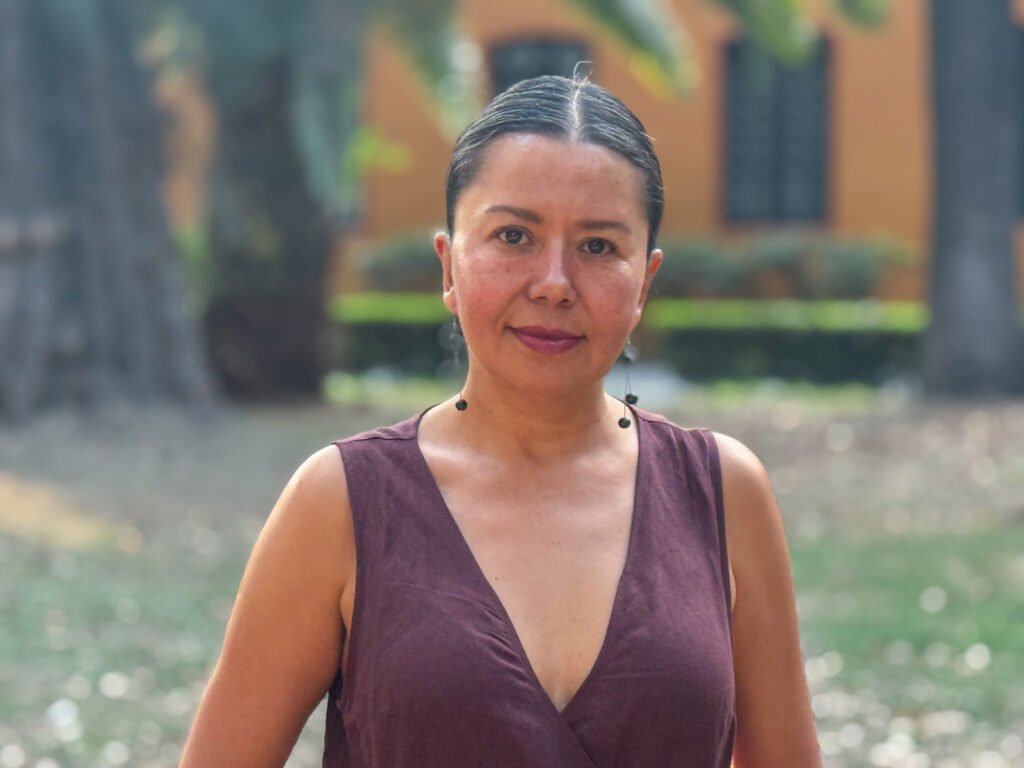
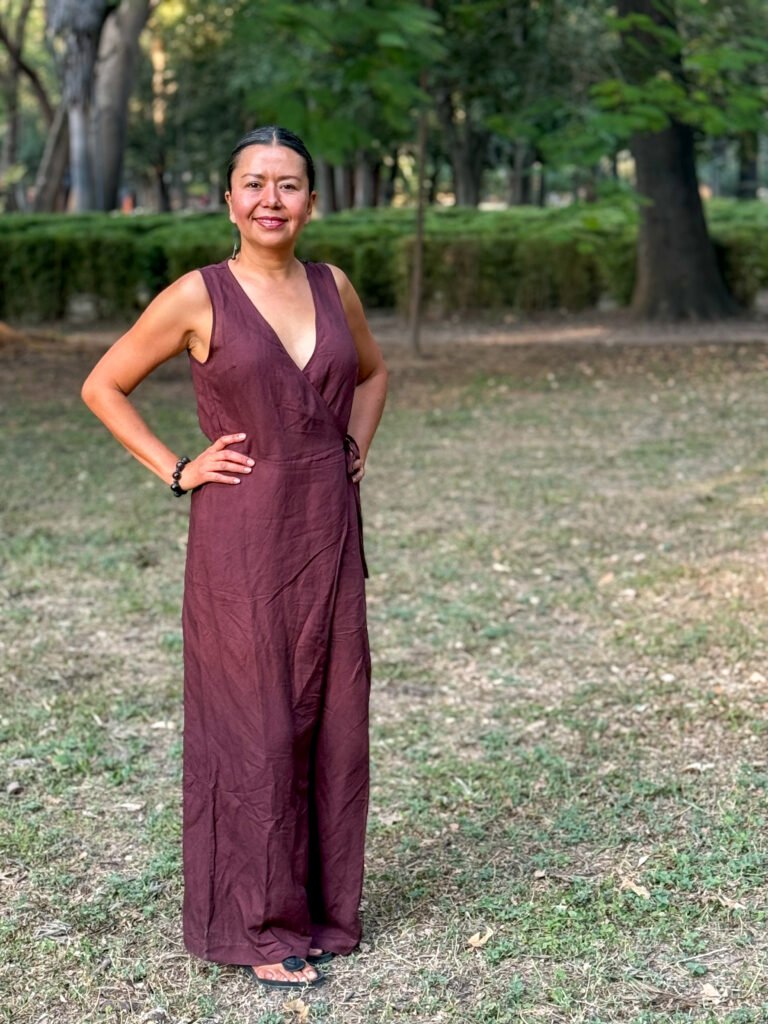
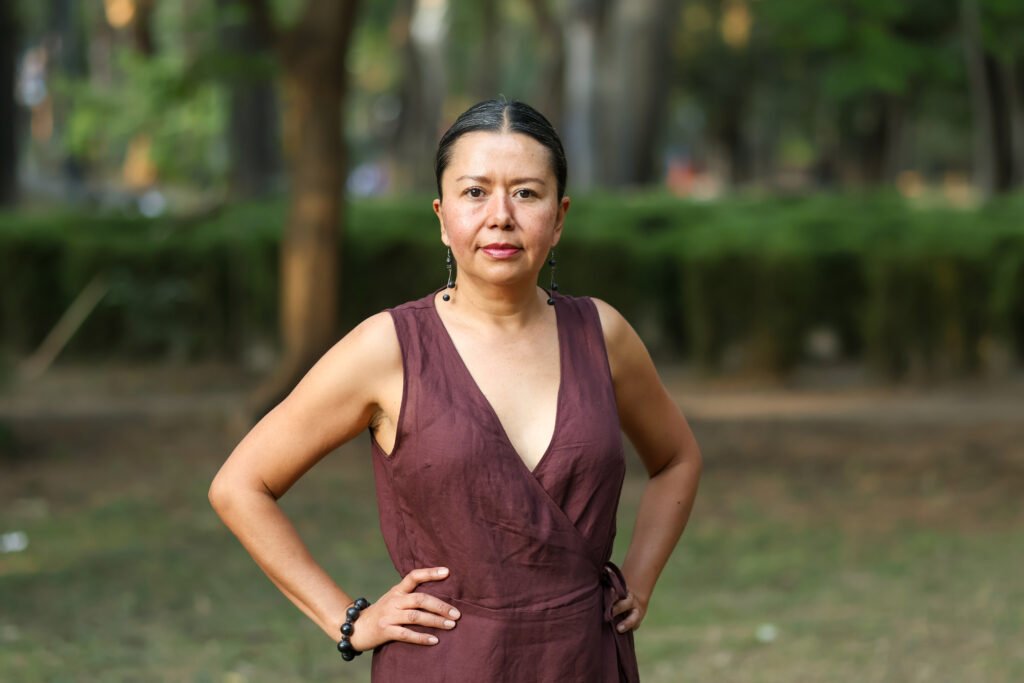
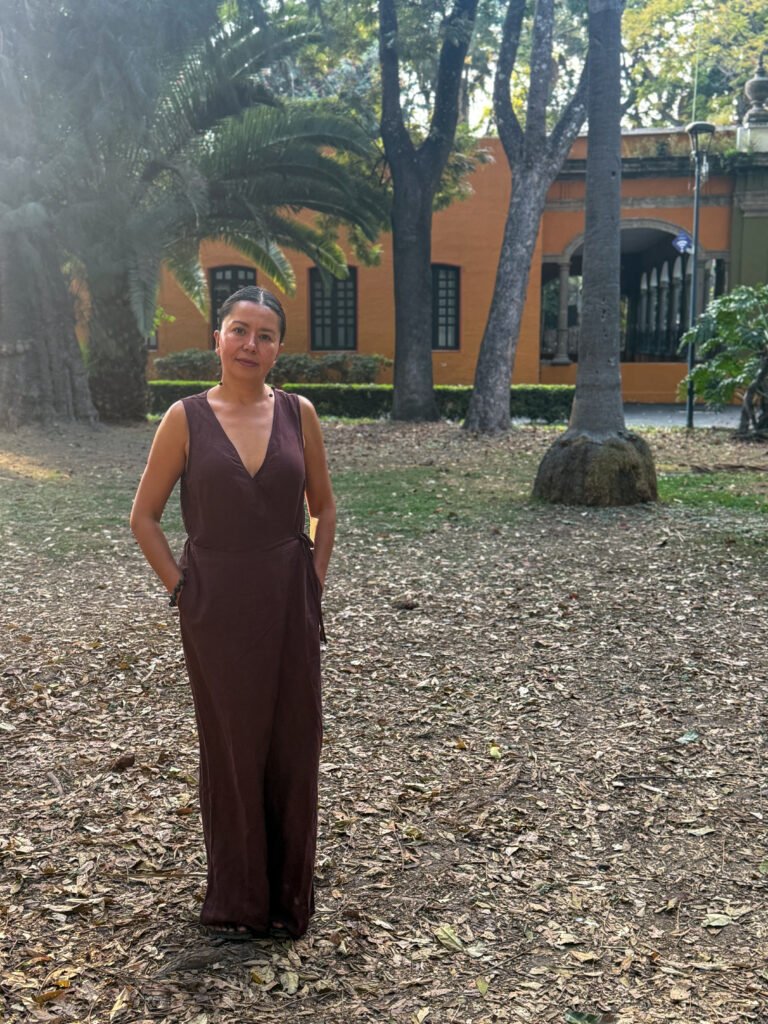
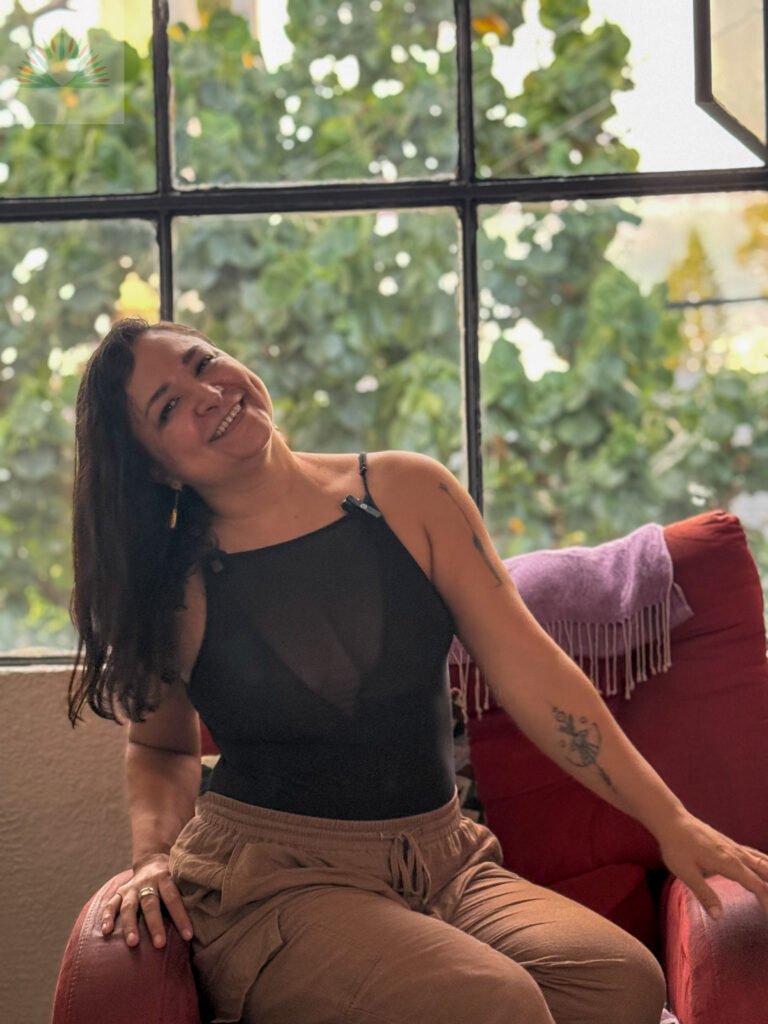
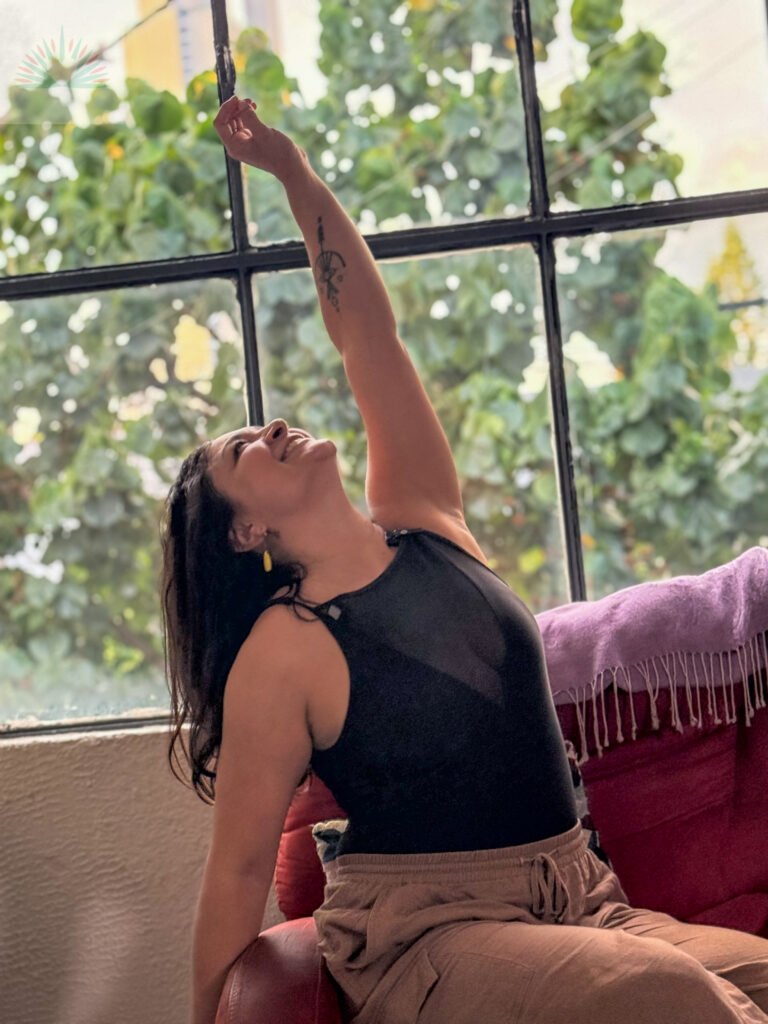
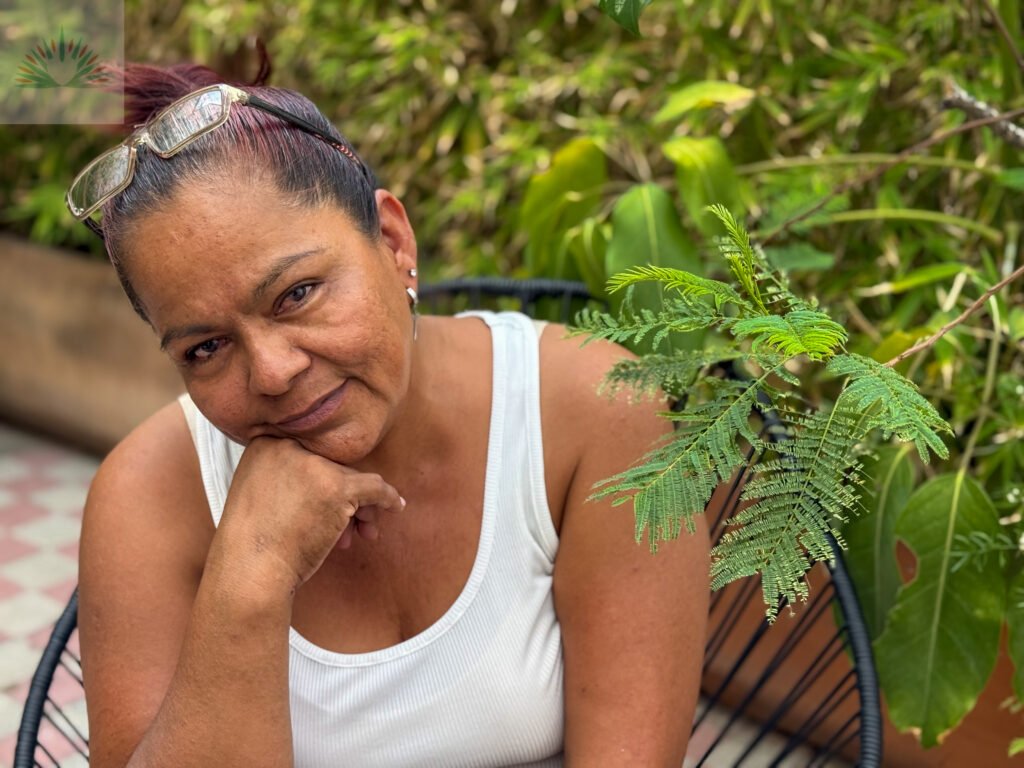
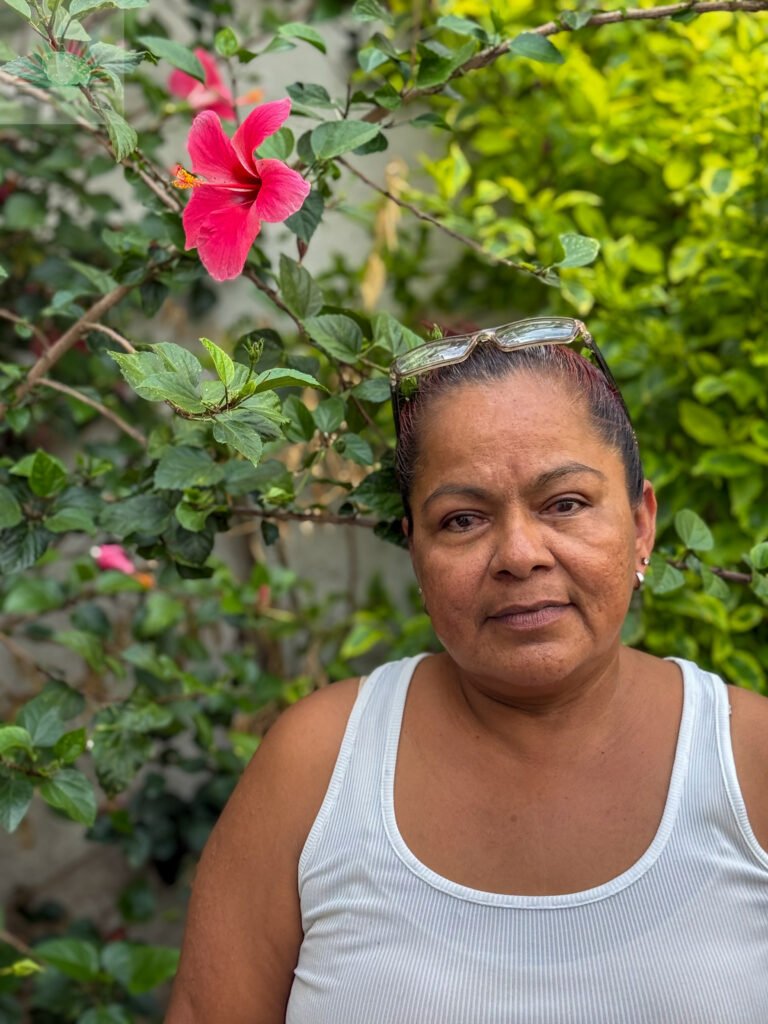
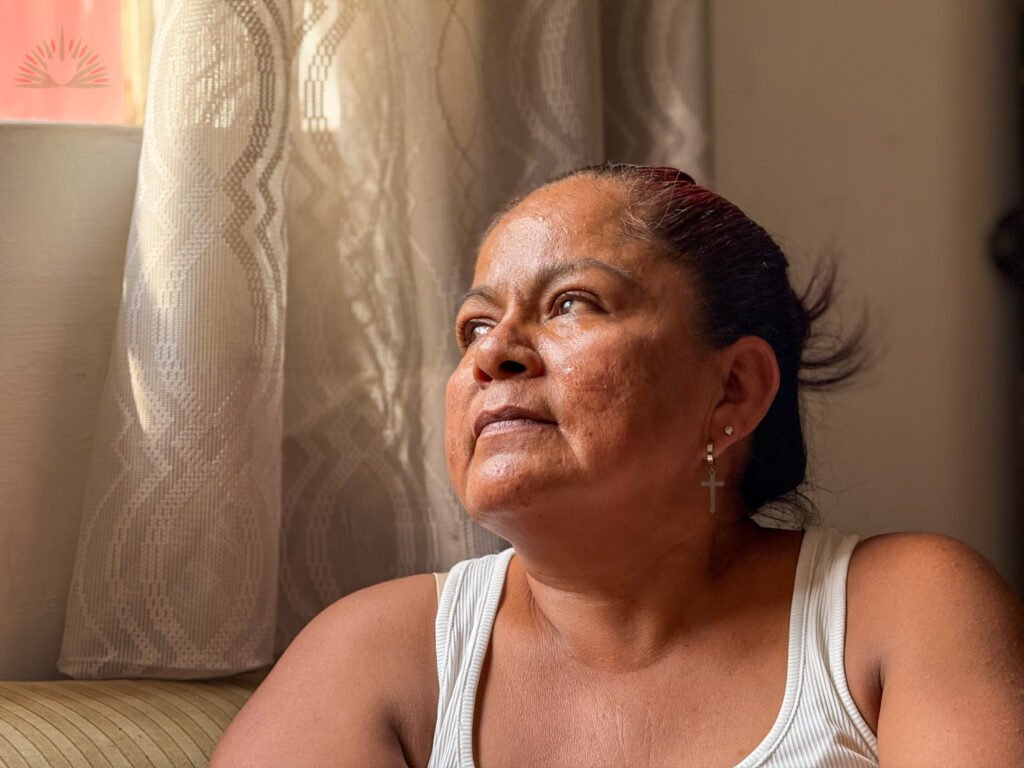
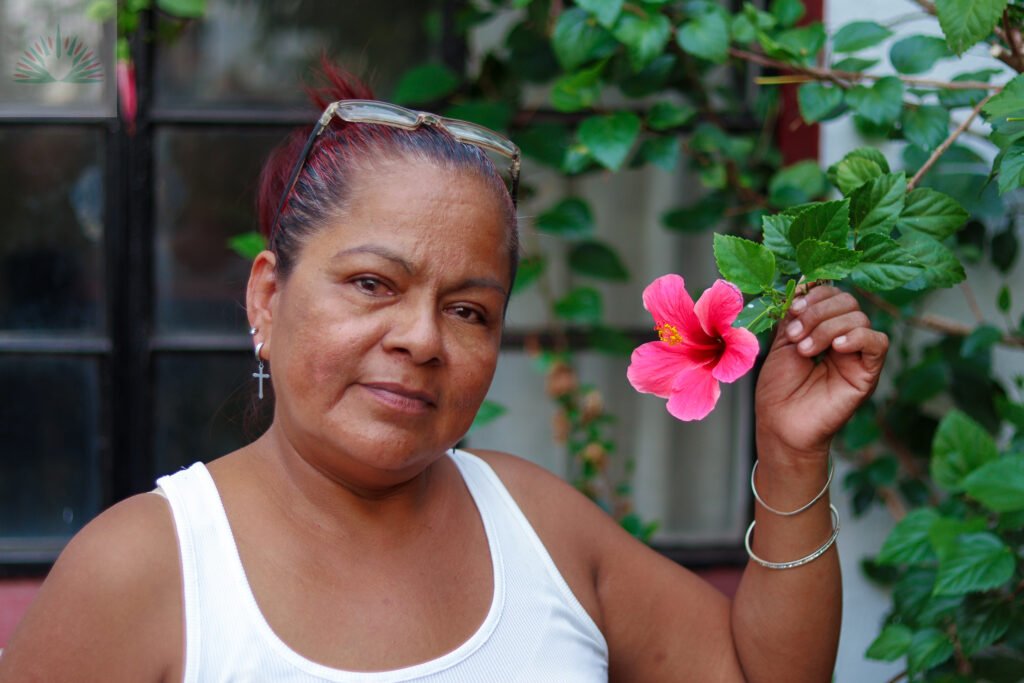
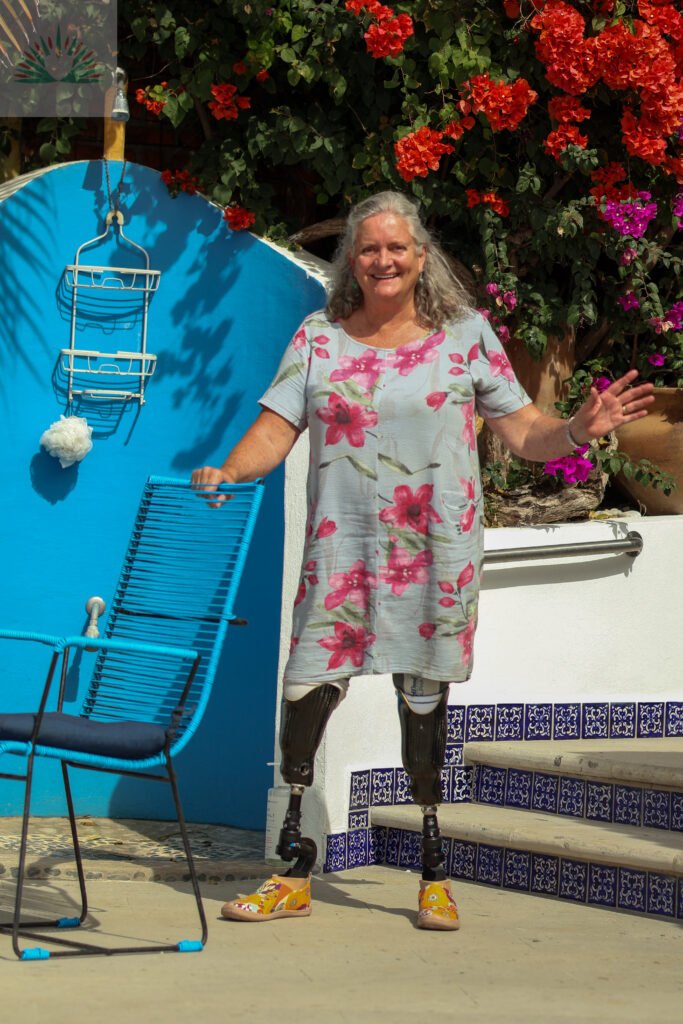
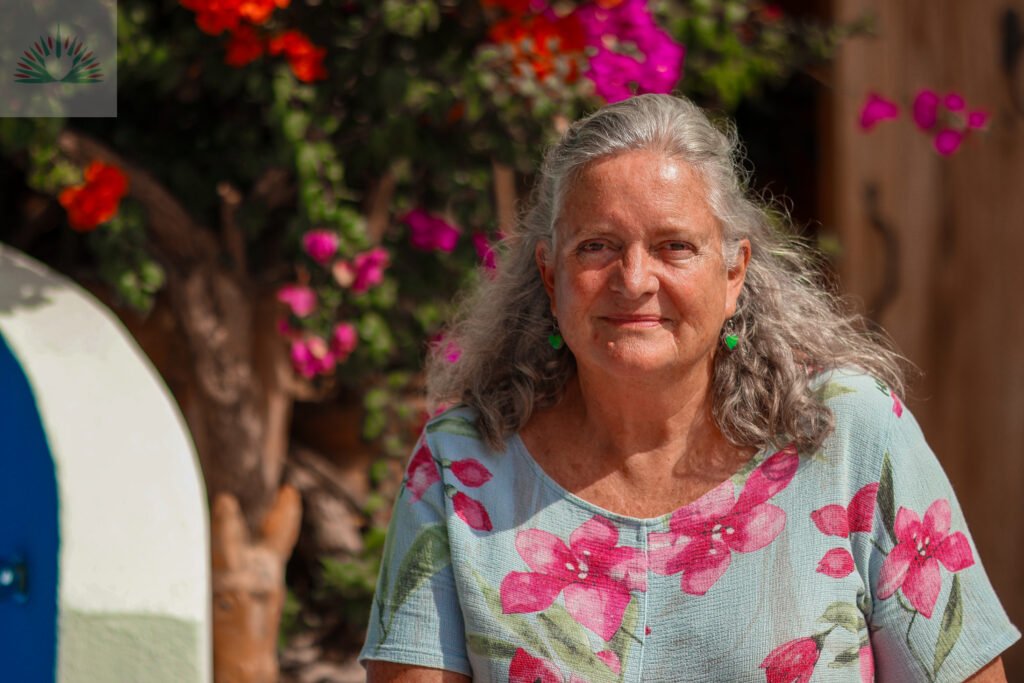
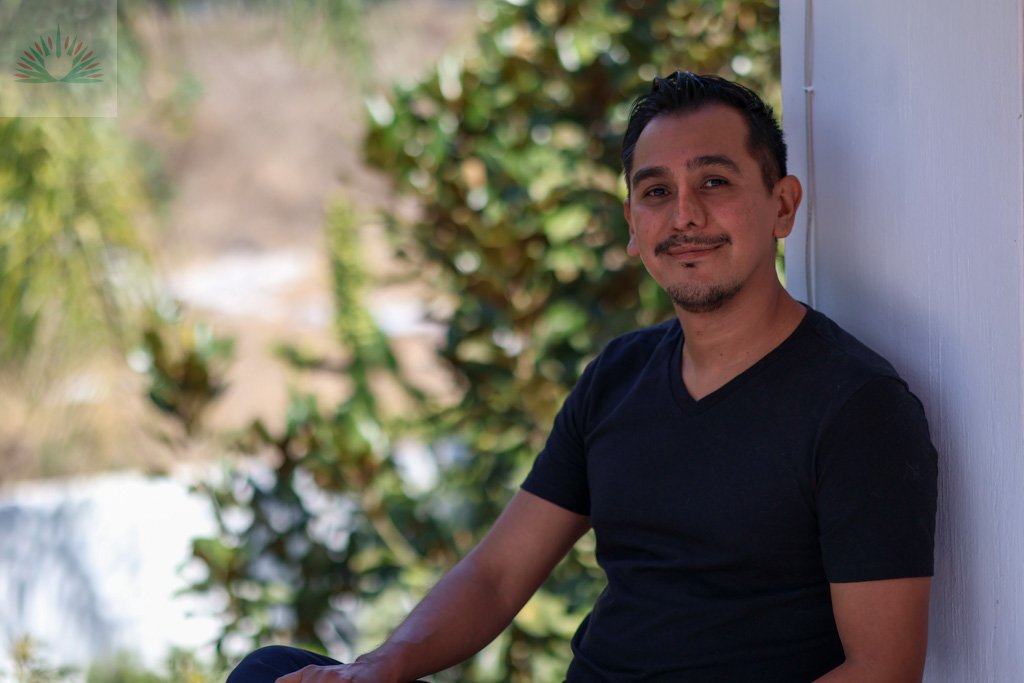
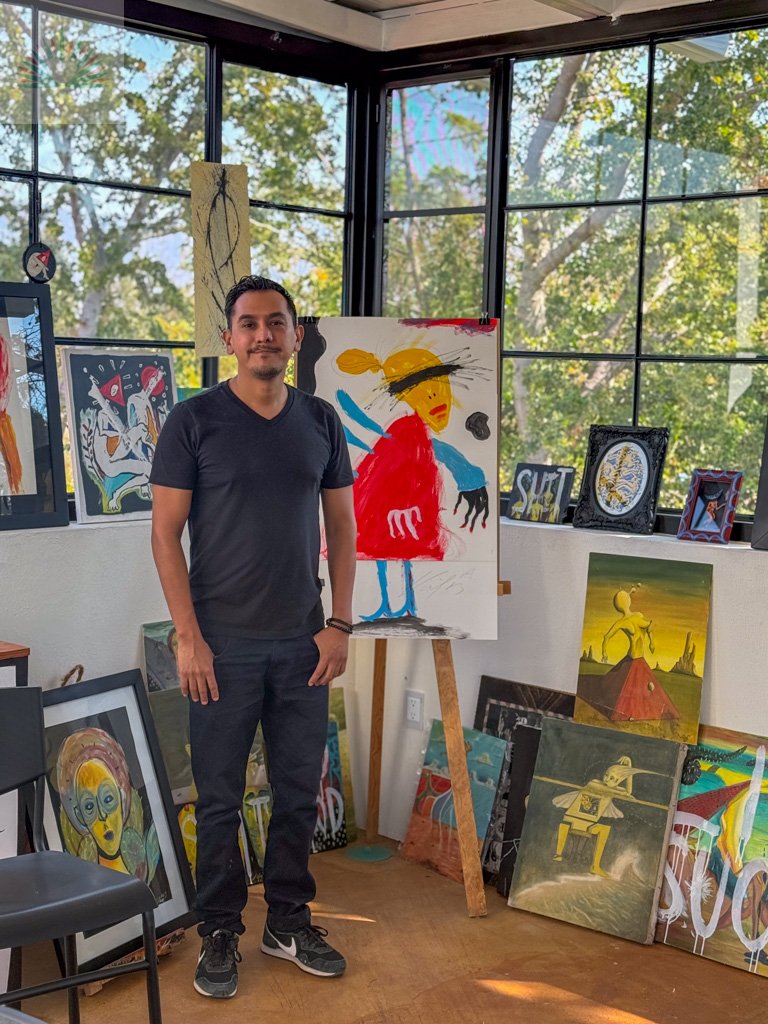
“What’s lost is that… It’s like eating without salt. Eat without salt and see how much you want to eat. For me, if there isn’t apapacho with my friends, with my family, with the people who matter to me, it’s like eating without salt.”
The Human Tension
Touch can heal. Touch can drain.
Work can sustain. Work can consume.
So what happens when your profession is to hold others, day after day?
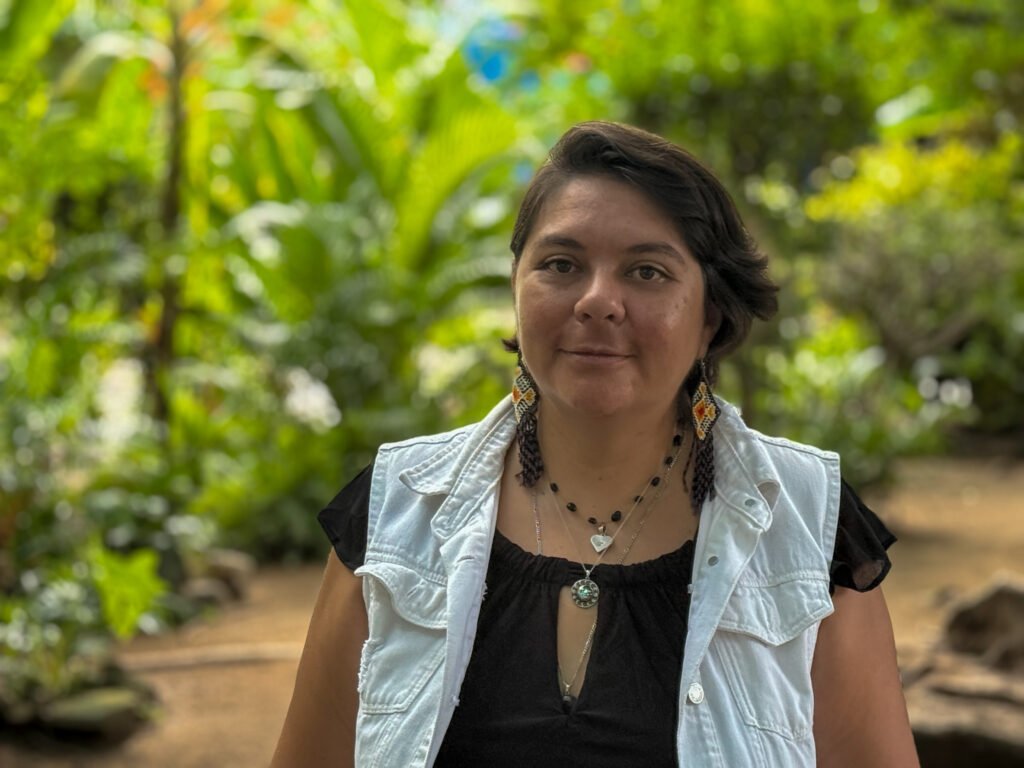
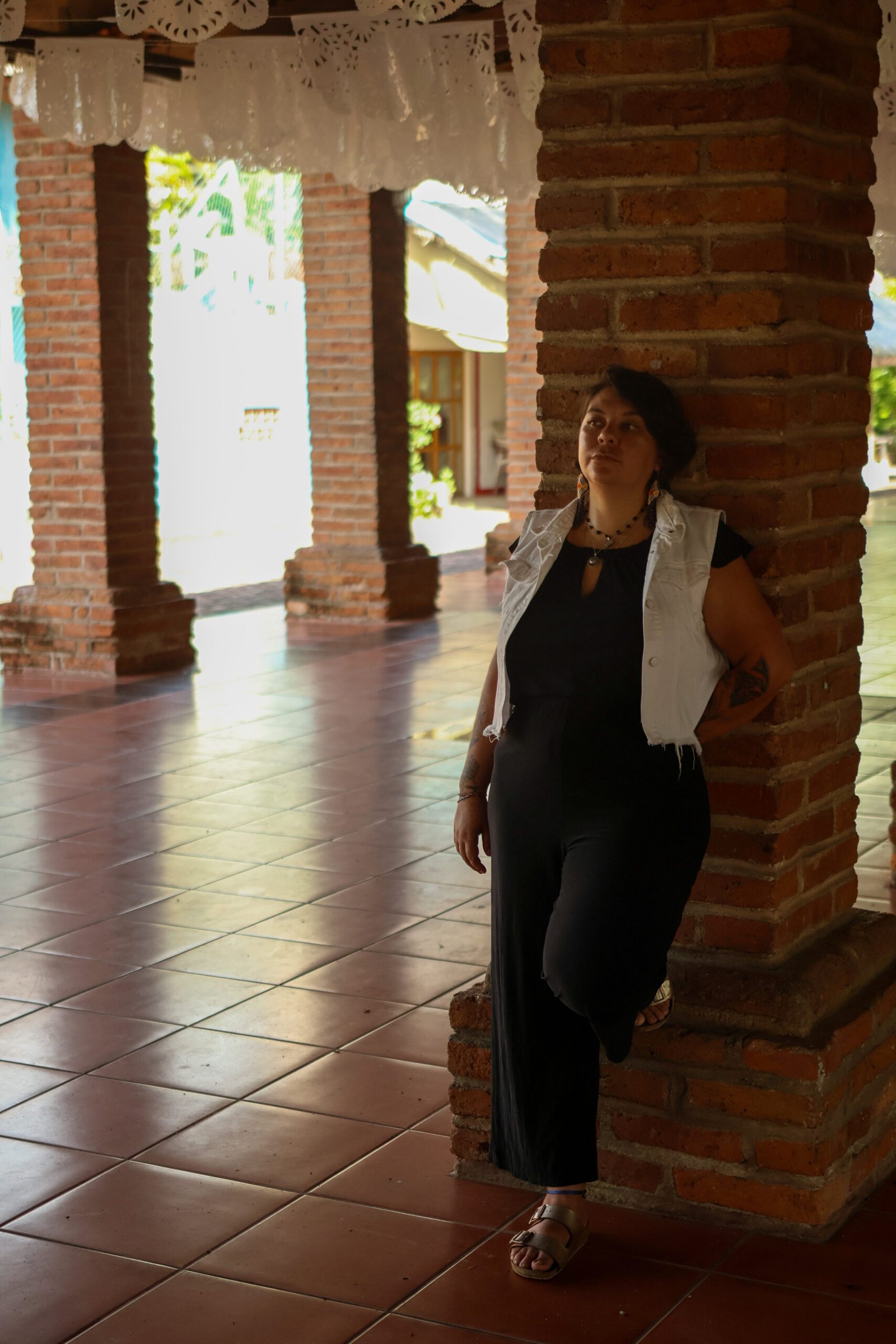
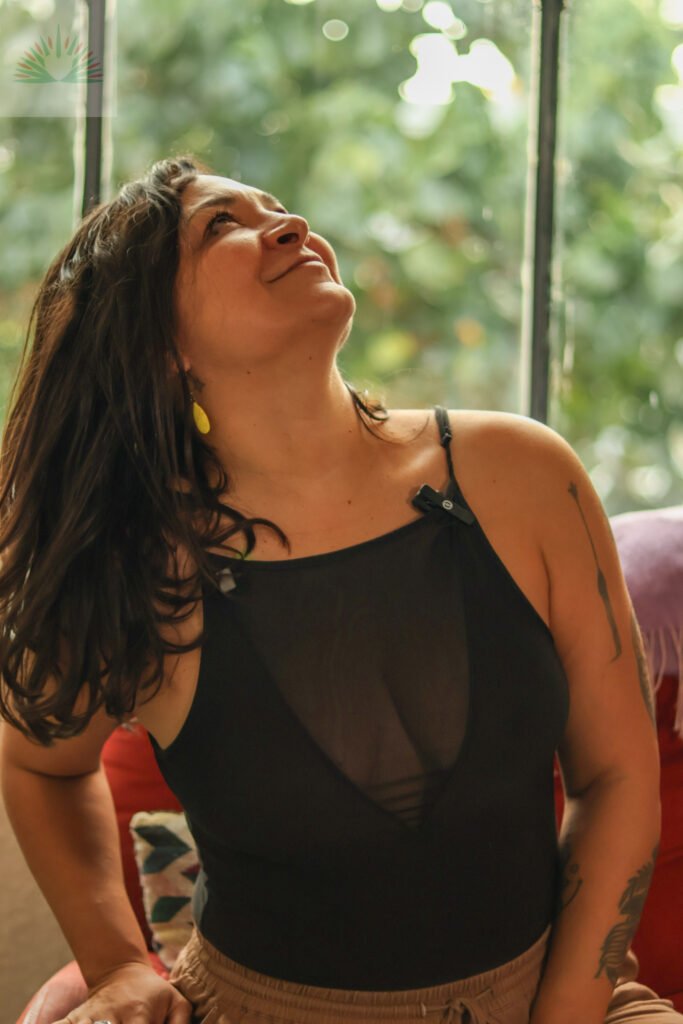
In Guadalajara, Mexico, Alfa has built her life around a single word: Apapacho. Often translated as “to hug” or “to pamper,” its deeper meaning is to embrace someone with the soul.
For Alfa, apapacho is not sentiment. It is structure. It is discipline. It is work.
And it begins with a belief:
“We all have very rich lives…I believe that if we all dared to write, we could all create a delightful, nourishing, and incredibly rich autobiography.”
If you believe every life is rich, you treat people differently. That belief shapes her massage practice, her business philosophy, and her understanding of community.
Paxio: Building Peace in a Fast World
Her spa is called Paxio. The name itself was an accident that became destiny.
Originally, she wanted something playful with the word “spa.” Legal registration forced a change. When she removed the “s,” something unexpected appeared:
PAX in Latin means peace. The suffix -io implies “relative to.”
Paxio became “relative to peace.”
“PAX in Latin means peace, tranquility…relating to tranquility, relating to peace, which is my reason for being.”
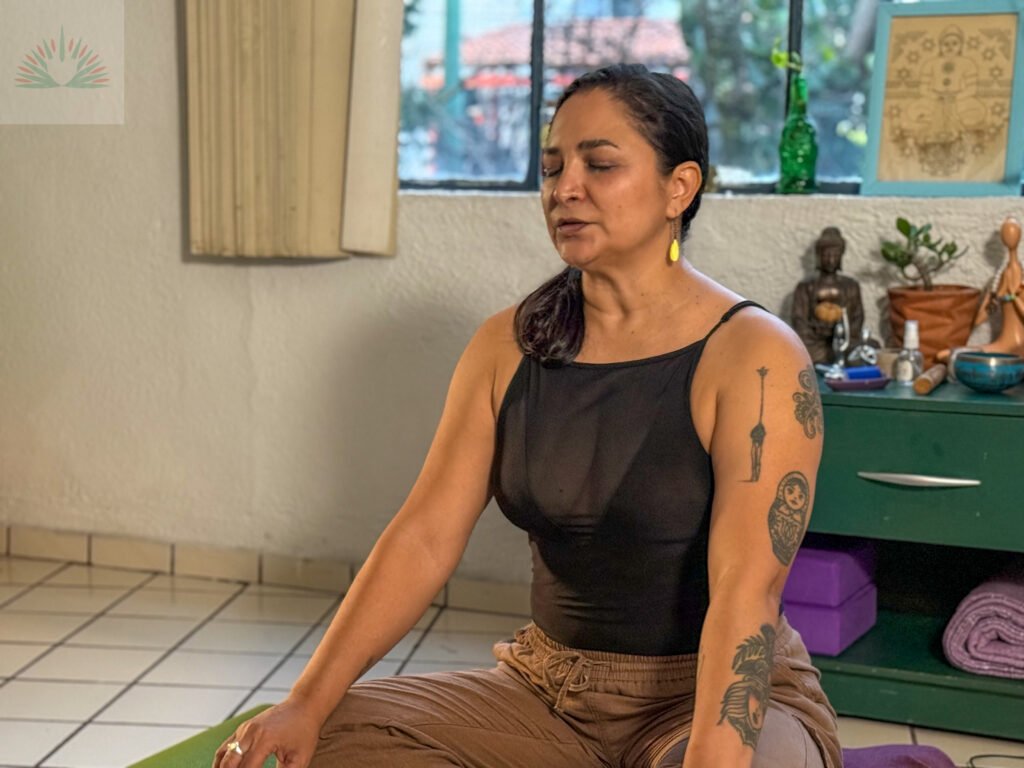
In a world obsessed with productivity and speed, Alfa built a space designed for nervous system regulation. Slowness is not laziness here. It is medicine.
Apapacho Is Skill
Apapacho is not vague warmth. It is professional closeness with boundaries.
Before every massage, she asks:
Have you received massage before? Are you comfortable with touch? Is there any area you do not want me to work on?
Consent is constant. Communication is precise. The body’s nonverbal language is respected.
“Everything must be done in a caring, respectful, and professional environment.”
Care is ethical. Care is structured. Care is mutual.
Two Nervous Systems, One Room
Alfa describes massage not as service, but as synergy.
“It’s like a synergy…the person’s breathing changes… and their breathing helps me as a therapist to regulate my own breathing.”
When the client’s breath slows, hers slows. When their body relaxes, hers responds.
Two nervous systems regulate together.
But closeness requires protection.
Before every session, she begins with a silent mantra:
“My energy is mine, and his or her energy is theirs. There will be no mixing of energies.”
She is not the healer. She is the instrument.
If ego enters the room, the integrity of care dissolves.
The Gift of Sustaining
For Alfa, the word sostener — to sustain — is a gift.
“The word ‘to sustain’ is a gift to me, it’s a tool. But like a knife, if you don’t know how to use it, you can cut yourself.”
To sustain others without losing yourself requires skill. Awareness. Ongoing learning.
At forty-nine years old, she says she is still learning how to hold without cutting herself in the process.
Care is not infinite. It must be managed.
Preparing for Old Age
Sustaining is not only about clients. It is about the future.
“If you don’t pay attention to how you’re going to age…it’s like not paying attention to your savings.”
She nourishes herself now so that her old age will have:
Meaning. Loving bonds. Community.
“Because it’s what gives meaning to my life.”
Independence, she insists, does not mean isolation.
Autonomy is choosing based on your values. Community is how she sustains herself.
Mexican Warmth and Cultural Apapacho
Alfa speaks proudly of Mexican warmth:
“Mexicans are warm…they love to show and be shown Apapacho.”
She jokes about being Oaxacan. Hot-tempered. Generous. Deeply communal.
Mexican culture, she believes, keeps elders close. Apapacho is cultural inheritance.
But she also recognizes tension.
Living six months in Palo Alto, she noticed love that rarely expressed itself physically. Apapacho exists everywhere, she says — but not everyone allows themselves to live it.
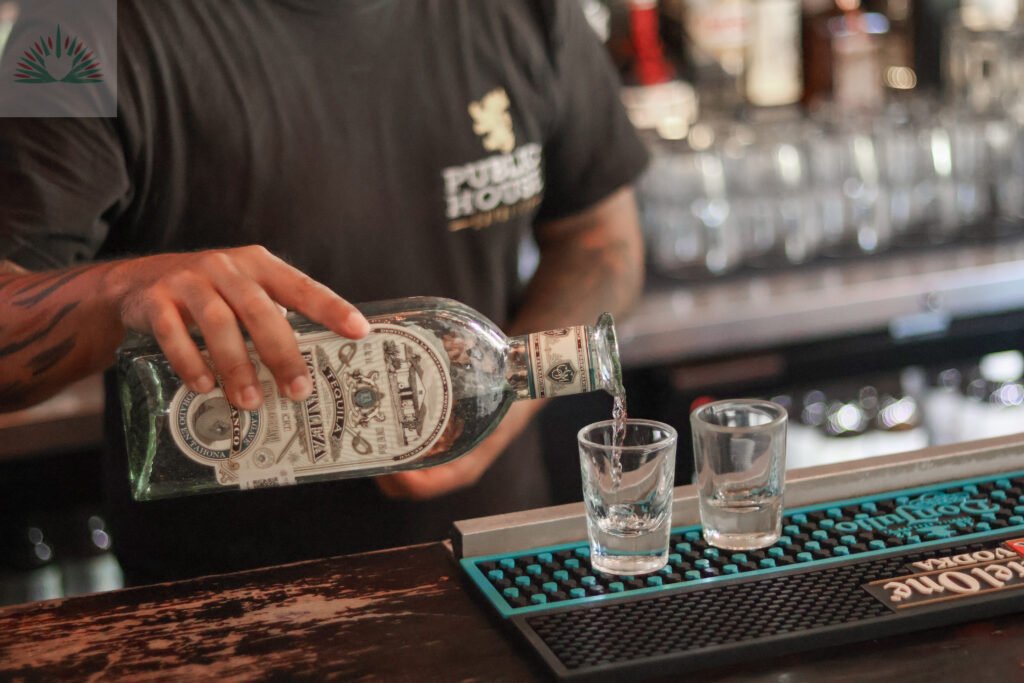
Tequila as Symbol
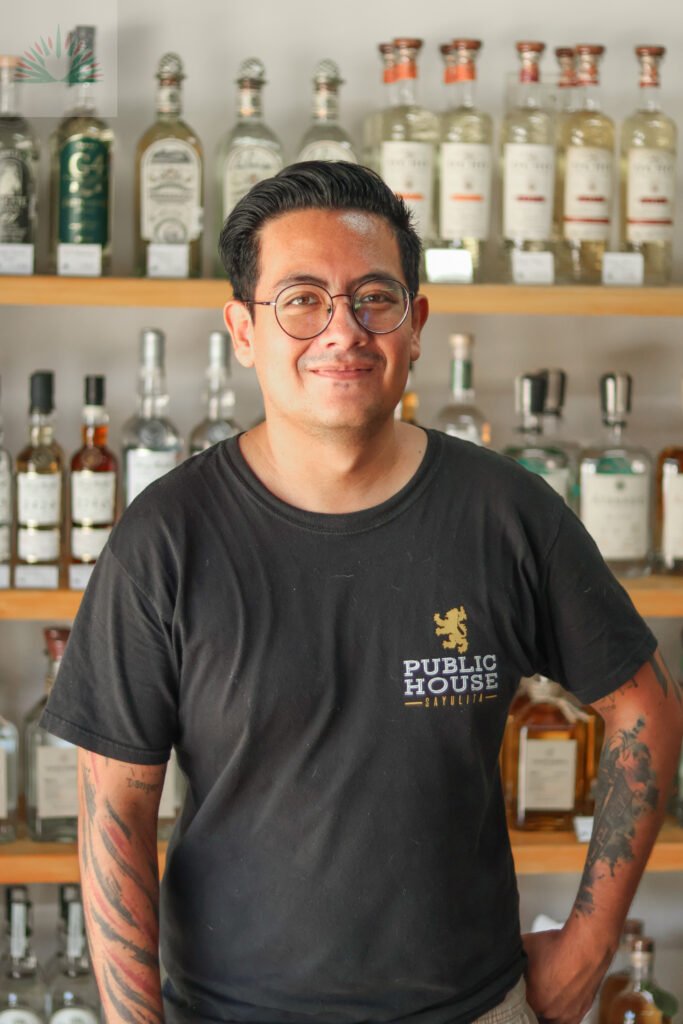
In 365 Days of Tequila, tequila is never the main character. It is a mirror.
For Alfa, tequila is:
“Sage of the earth, juice of the earth.”
The sap of the earth. The juice of the earth.
It connects her to Guadalajara, to memory, to relationships that shaped her.
Tequila, like care, requires consciousness.
“I respect it and take it in stride.”
Presence, not escape.
What Is Lost Without Apapacho?
And then she returns to salt.
Without apapacho, life still functions. There is intellectual exchange. There is productivity. But something essential disappears.
Flavor. Richness. Savor.
Care is not decoration. It is seasoning. Without it, life becomes technically nutritious — but empty.
The Deeper Meaning
Alfa’s story is not about massage.
It is about sustainable care. It is about holding others without disappearing. About boundaries that protect connection. About building community before you need it.
Apapacho is not softness. It is skill. It is discipline.It is cultural memory.
And it asks a question of all of us:
Where in your life are you giving care — and what helps you sustain yourself while doing it?
Some lives are changed by a single decision. Others are changed by a quiet accumulation of signs that become impossible to ignore.
For Charlie, the turning point wasn’t a dramatic break or a sudden collapse. It was a moment of recognition, delivered by the person whose opinion carried the most weight.
“Me dijo, hijo, ya entendí, ya sentí. Aquí está tu boleto para México… y siempre vas a tener mi apoyo.” (He told me, “Son, I understand now, I felt it. Here is your ticket to Mexico… and you will always have my support.”)
Charlie describes it simply. That was the blessing. After that, it wasn’t about debating the logic. It was about responding to the truth of what he already knew.
In 365 Days of Tequila, I’m not chasing tequila as a product. I’m following it as a cultural thread, a way to get closer to the values that structure a life: family, identity, land, work, and the daily choices that either pull us away from ourselves or return us to what matters.
Charlie’s story is one of returning.
People Before Individualism
Charlie’s purpose is not presented as a brand statement or a motivational slogan. It is practical, relational, and grounded in the way he moves through daily life.
“Mi propósito de vida es siempre dar esa palabra de aliento a alguien…” (My purpose in life is always to give someone a word of encouragement…)
He believes people arrive for a reason. Not in a mystical, vague sense, but in a concrete one, either you learn something from them, they learn something from you, or it’s mutual. That worldview shapes how he builds community and how he defines success.
It also shapes the place where he works and the kind of space he wants to create.
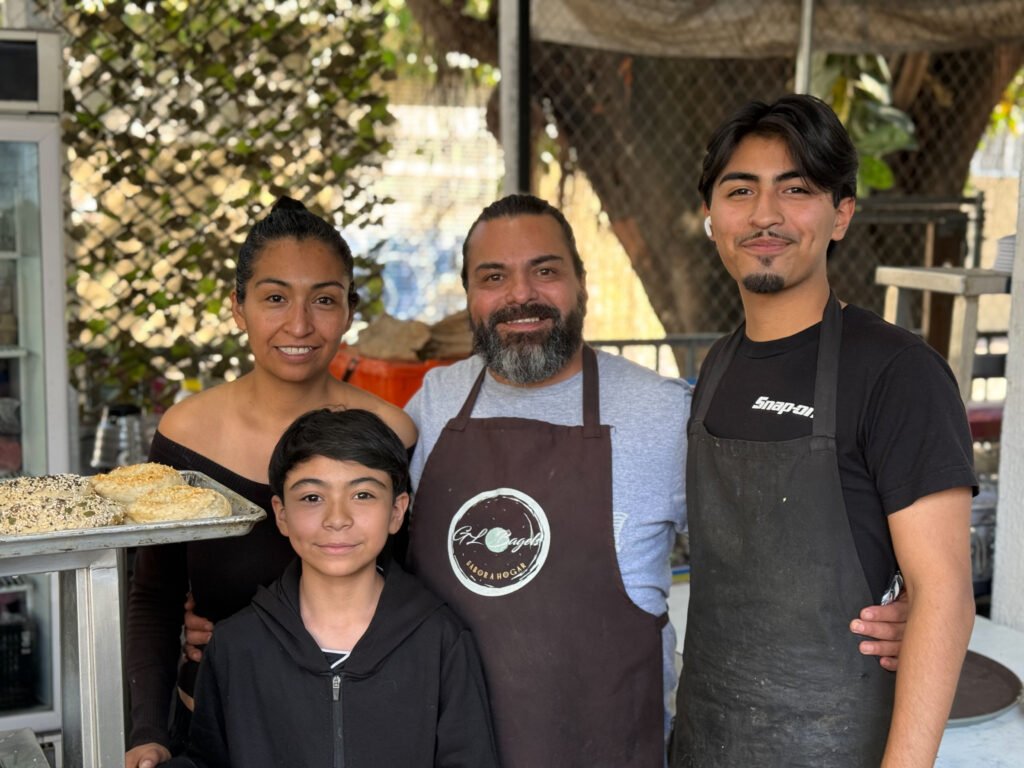
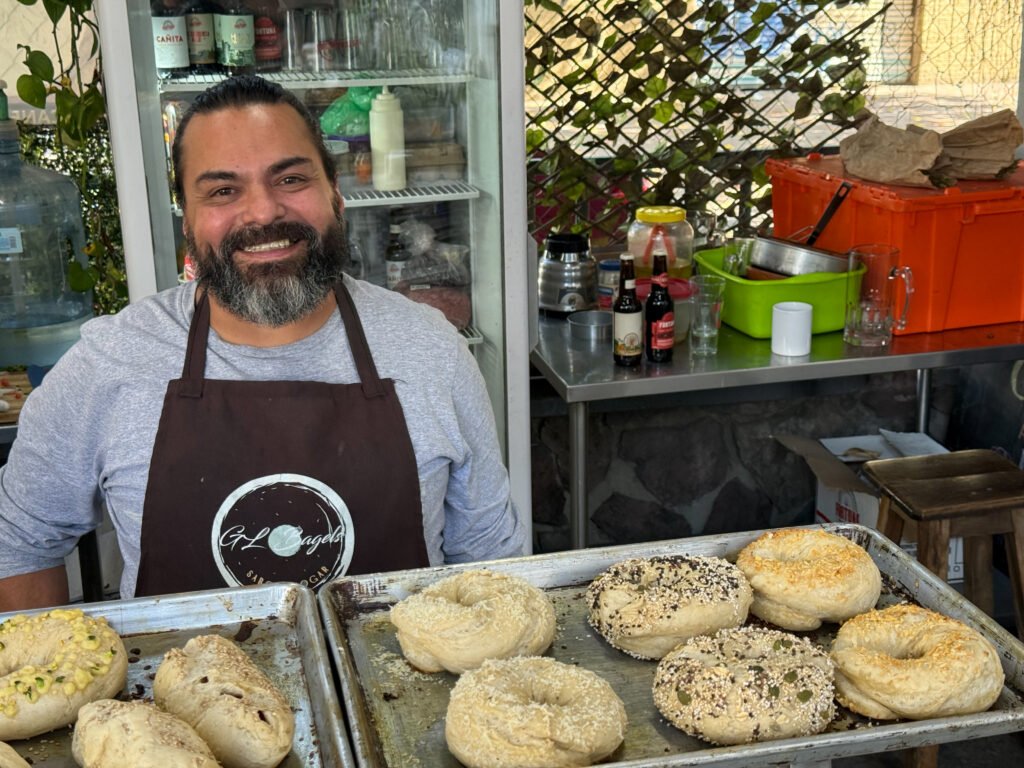
Charlie’s business lives inside a jardín gastronómico, a shared food garden in Guadalajara, right near the edge of Americana and Moderna. Different kitchens operate side by side. Vegan options, burgers, bagels, Japanese food, and everything in between. The point is not specialization. The point is belonging.
One shared space. Not competition, but cooperation.
In a culture that often pushes individual hustle, this is a different kind of success metric. It is community as infrastructure.
The “Trinity” of Decision Making
Charlie has a framework he repeats to his children, not as theory, but as guidance for how to live without losing yourself.
He calls it a “holy trinity,” thought, feeling, action.
Sometimes you think first, then feel, then act. Sometimes you feel first, then think, then act. But the order matters less than the presence of both. Because if you only feel, you can be deceived. If you only think, you can become disconnected from what is true.
This is one of the central themes of his interview: balance before speed.
Not rushing toward the next thing, and not forcing clarity before you have earned it. Taking the second to step back, breathe, and check what is actually happening inside you.
That is not soft. It is disciplined.
Two Cultures, One Identity
Charlie left Mexico at eleven. From eleven to twenty five, he lived in the United States, absorbing a different pace, different expectations, different opportunities.
He is clear about what that chapter gave him: education, comfort, possibility. It expanded him. It also revealed something else.
Distance can sharpen identity.
When you are inside your culture, you don’t always see it. You live it. You assume it. But when you step outside, you gain perspective. Charlie describes how adapting to one culture allowed him to see his “mother culture” from the outside, to recognize what was beautiful about it, and to name the roots that had always been there.
His takeaway is not that one country is better than the other. It is that growth comes from learning how to hold both.
You take what strengthens you. You release what doesn’t. You build your own criteria.
This is where Charlie’s language becomes sharp and useful.
What is good. What is bad. What is worth it. What is not worth it.
Not denial. Acceptance. Depth.
Spirituality That Arrives as Necessity
For Charlie, spirituality did not arrive as a trend. It arrived as a requirement for balance.
He describes a season of inner peace, a feeling of radiating energy, and then the deeper lesson: life gives signs every day, but you miss them when you over identify with thinking and abandon feeling.
He traces the arc through a simple question asked by a cousin, a workshop, and then a moment that cut through everything.
A Guatemalan shaman speaks to a room full of people, and somehow directs Charlie to translate. Everyone receives something personal. Charlie receives nothing, until he goes up afterward, and asks directly.
The answer he hears is not complicated.
You already know what you have to do. You just want to hear it from someone else.
And then: go.
That moment doesn’t “prove” anything in a scientific sense, but that’s not the point. It functions as a catalyst. It names what was already forming. It gives the final nudge toward the choice that had been waiting.
And eventually, Charlie brings it to his father.
The father’s response is the kind that changes a family story.
I understand now. I felt it.
Here is your ticket.
Angels in the Ordinary
One of the most striking parts of Charlie’s interview has nothing to do with tequila, Mexico, or identity as a concept.
It happens in the street.
A crash between a car and a motorcycle. A young woman injured, screaming, incoherent, deep in shock. People rush in to help. Charlie stabilizes her, holding her arms because her collarbone is broken.
Then a woman arrives, sits at the injured person’s head, and begins rubbing her hands. Charlie watches her calm the injured woman through presence, touch, breathing, and an energy that requires no words.
The injured woman relaxes, almost falls asleep.
Charlie turns and calls the stranger an angel. She hugs him. He says thank you. She tells him he does not need to thank her, this is why we are here.
Charlie’s point is not that this was magical. It is that it was clear.
A sign.
Not abstract, not metaphor, not theory. A sign that showed up in the middle of the street.
Here you are.
This is where you were supposed to be.
And that person too.
Work Without Romanticization
Charlie does not romanticize entrepreneurship. He describes it as pressure, labor, and choosing the hard thing for the right reason.
He explains why he and his family decided to stop living only for work. The “godín” schedule, eight to five, Monday through Friday, the feeling of being a number, the way people give their best years to companies, and then retire and realize they were never building a life.
So they chose something else.
They built a business rooted in simple values, healthy food, natural ingredients, no preservatives, and the idea that what you make with heart carries a different kind of flavor.
Charlie’s definition of “simple” is not minimalism for aesthetics. It is simplicity as alignment.
“Quiero mantenerme simple… que no me complique.” (I want to stay simple… to not complicate life.)
And that simplicity is not solitary. His wife makes the bagels, carrying forward what she learned from her grandmother, keeping roots alive through daily work. Their partnership is described as complicity, balance, teamwork.
Not a romance story.
A shared structure.
Family as the Center That Holds the Change
Charlie contrasts driving culture in the United States and Jalisco, and his critique is direct: rushing, getting in the way, selfishness. But he quickly returns to what he sees as the Mexican center.
Family.
Christmas, birthdays, posadas, Independence Day. The clan. The foundation. The bond that keeps a person solid when everything else shifts.
This is not nostalgia. It is architecture.
If the foundation is strong, you are strong.
Tequila Beyond the Bottle
Working at the start of the Tequila Route changes your perspective, because you see how tightly tradition and history are tied to land.
Charlie describes driving toward Tequila and noticing the volcano, the agave fields, the canyon. The view itself becomes a reminder that tequila is not simply a drink. It is a relationship between landscape, labor, and lineage.
He rejects the modern reduction of tequila as party fuel. He points back to pre Hispanic origins, drinks for gods, ceremony, honoring the volcano, the plant, the land.
And when he talks about the people behind agave, his language becomes reverent without becoming sentimental.
He sees roots.
He sees simplicity.
He sees how long the process is, and how in a single sip you receive what took years to grow. That is why tequila, in its best form, asks for attention.
It asks for presence.
It asks for someone across from you who understands why it matters.
What It Means to Be Mexican
When Charlie defines Mexican identity, he does not do it through politics or abstraction. He does it through character.
Strength. Honesty. Giant heart. Giant mind. Giant wisdom. Pride, not only in self, but in place.
And then the list that anchors his worldview: intelligence, heart, determination, power, roots, responsibility.
He ends with a cultural truth that many people recognize immediately: generosity is not optional, it is part of the structure.
Apapachar, holding others with care, expanding family, offering your heart.
And the phrase that captures the spirit of the welcome.
Mi casa es tu casa.
The Route Worth Following
Charlie’s story is not about tequila. It is not about bagels.
It is about remembering who you are and what you have learned.
It is about choosing depth, simplicity, and family over noise.
Some people chase success. Others come home and learn how to live.
Healing through voice, ceremony, and community in a Mexico shaped by silence, resilience, and contradiction
Some stories don’t begin with tequila. They begin with silence. With the moments when speaking feels riskier than staying quiet. With the thought, “¿Y si mi voz no vale?”
Paola’s story begins there. In the space between pain and expression, between being unseen and finally being heard. She is a psychologist, ceremony guide, and community builder who believes that voice, personal and collective, can be a form of medicine.
Paola and the Power of Listening
Paola works with people who are learning how to listen to themselves again. She guides ceremonies, facilitates circles of dialogue, and creates spaces where speaking and listening are treated with care. Her work is not about performance or confidence. It is about dignity. About what happens when someone finally has permission to say what they have carried alone.
“I like the idea of being able to share knowledge, and also the importance of being heard and of voice. One of my goals, or my life mission, is to encourage people to use their voice. Something I work with a lot, and that is kind of one of my goals or my life mission, if you want to label it that way, is to encourage people to use their voice.”
For Paola, using her own voice is not leadership. It is an invitation.
The Power of Your Voice
“The simple fact of being able to use your voice is perfect—whatever way you’re able to use it. And that people feel empowered to share what they know, no matter what it is they want to say. I feel like, in the end, sometimes we don’t share because we think, “Oh, I’m going to offend,” or “I might hurt someone,” or “Maybe what I’m saying isn’t very… educated or important.”
Listening to her, it becomes clear that silence is not neutral. Silence shapes people. Sometimes it protects them. Sometimes it harms them. And Paola’s work with voice began long before she guided others. It began in her teenage years, during a period marked by depression and the feeling that her existence had no purpose.
“From a very young age, like from around 13, I had very negative thoughts, and also suicidal thoughts. It was like, in the end, I would say, ‘No, I don’t think my being really has a purpose in this life.’ And I felt like what I did wasn’t good enough, or that I was never really going to accomplish anything.. And I spent a lot of time in my own head, and sometimes it was also hard for me to connect and share with other people.”
Healing Through Hongos:
Her healing did not come from avoiding pain, but from learning how to face it. Through psychology, ceremony, and work with non ordinary states of consciousness, Paola describes an experience not of forgetting, but of contact.
“I mean, I first encountered mushrooms in a kind of… well, semi-recreational way. We went to the mountains, a friend invited me. I was about 21, and he invited me to go pick mushrooms in the mountains in the state of Veracruz. And I had never tried them before, but it was something that caught my attention. And I did it, and… I mean, it turned out perfectly that from the moment I ate them, I had a period of more than six months without having those intense or suicidal thoughts, and I was much calmer.”
This didn’t mean that she was running from her problems and escaping into psychedelic experiences, but using those experiences to embrace what she had been feeling and find voice again.
“It wasn’t about forgetting. It was more like… actually feeling my pain and realizing it, and no longer rejecting it or seeing it as ‘something bad,’ but rather as ‘something I can face and work with.’ It wasn’t about rejecting the pain. It was about seeing it from a more loving perspective, and realizing I could face it.”
That shift, from rejection to observation, stayed with her. Voice, she realized, works the same way. Pain that is never spoken does not disappear. It becomes invisible.
Ancestry and Return
As Paola continued her path, another layer of the story emerged. Her great grandmother had been a curandera in Catemaco, Veracruz, a place known in Mexico for traditions of spiritual healing and ceremony.
“I feel like this desire to accompany someone through medicine or through the spiritual side comes from much earlier. It’s something that has been carried in my family lineage. I mean, in the end, even if you don’t see it, there are many things that exist in us from the past.”
The inheritance was not announced. It revealed itself slowly. Even unseen, it had been there.
Speak, and Listen
Today, Paola guides circles of dialogue, spaces where people gather to speak, listen, and witness one another. Some cry. Some stay silent. Some speak for the first time.
“Many people had never been listened to. And when they are in a space where someone listens to them, something inside changes.”
For Paola, healing is not individual or dramatic. It is relational. It happens in community, through warmth, ritual, memory, and voice.
Even tequila, in her story, is not an escape. It is a family archive. A reminder of gatherings, of presence, of choosing consciousness over disappearance.
Watch the full episode here:
Paola’s story leaves a quiet question behind: Where in your life are you holding back your voice, and what would change if you let it be heard?
Because sometimes healing doesn’t begin with answers. It begins when someone says, “Aquí estoy.” And someone else answers, “Te escucho.”
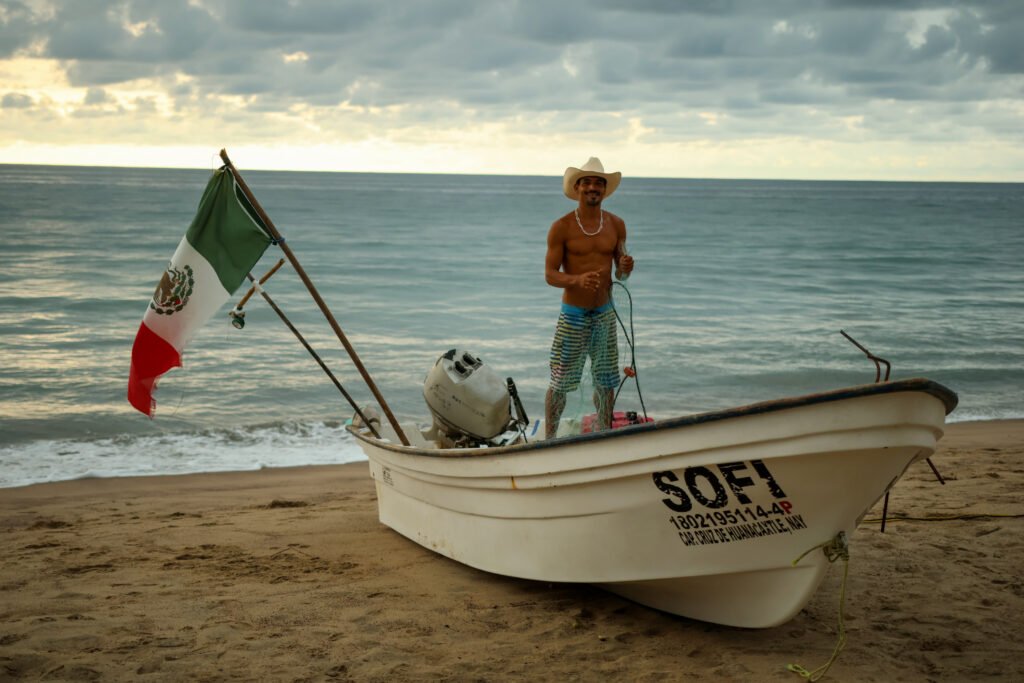
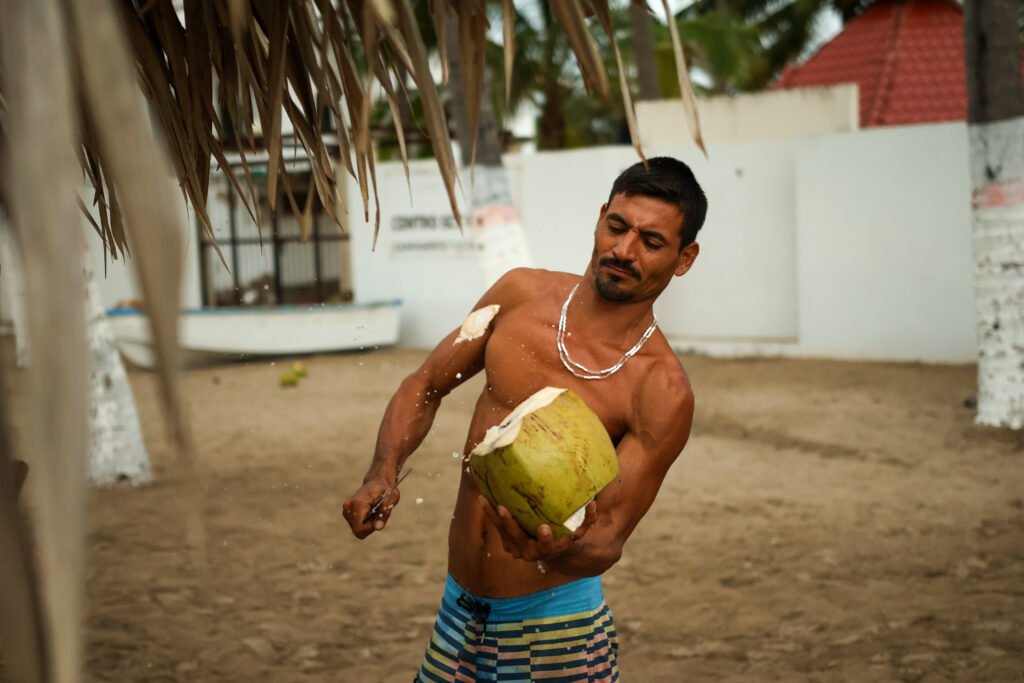
We travel to Lo de Marcos, Nayarit — a coastal village where tradition, family, and the sea still define everyday life. Meet Beto, a coconut cutter, fisherman, and storyteller whose voice captures the soul of real Mexico. Through laughter, danger, and quiet reflection, Beto reminds us that resilience grows from roots. From saving a crocodile in the surf to honoring elders and raising his children with the same values he learned from his mother and sisters, his story is a living portrait of Mexican identity — grounded in family, land, sea, and spirit.
In Mexico, some stories are carved by the ocean and held together by family. They come from the smell of salt and soil, the rhythm of the tides, and family names carried like prayers. It is waking up with the sun, working with your hands, honoring elders, and keeping traditions alive even as tourism and modern pressures roll in.
There are people whose strength does not come from ambition or wealth, it comes from the earth itself. Meet Beto, coconut cutter, oyster diver, fisherman, neighbor, storyteller, a man who believes that joy comes from the land and courage comes from the heart.
Who Beto is
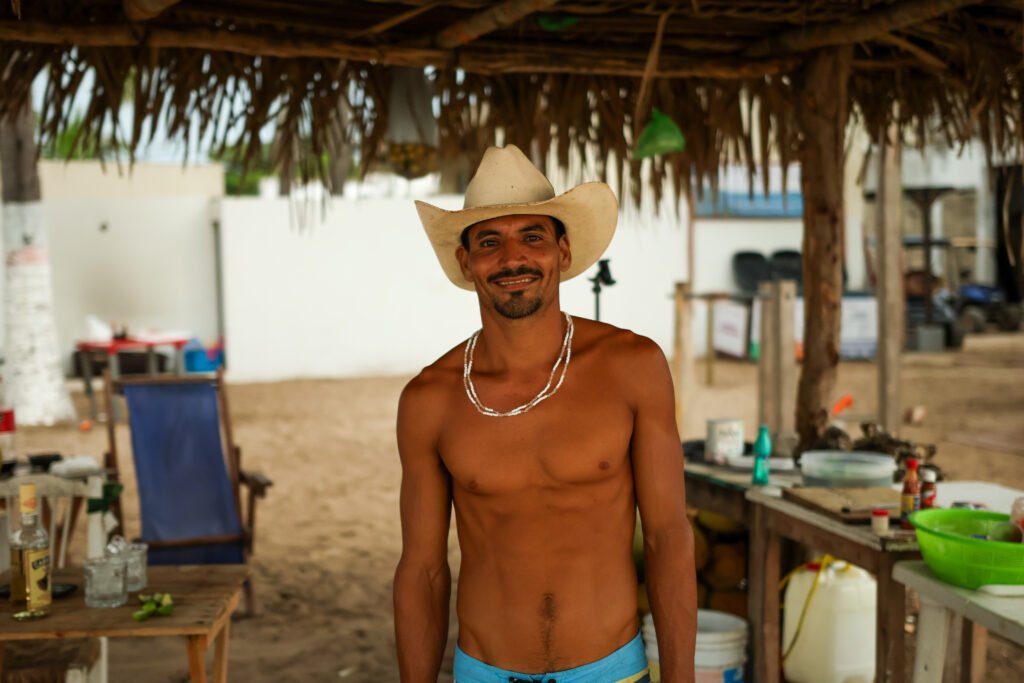
Beto lives in Lo de Marcos, Nayarit, a quiet stretch of Mexico’s Pacific coast where mornings start early and life moves with the sea. He cuts coconuts, collects oysters, fishes, and looks out for the people around him. He is the kind of person who makes you feel, quickly, that a community is not just a place, it is a practice.
“My days, as always, are wonderful. The kind of day you have depends on you. The difference between a good day and a bad day is your attitude. So, up to now, my days have been wonderful.”
For Beto, resilience is not a concept, it is a decision made before the day even begins.
“So, it’s up to you to make the day good for yourself and sometimes for others, or to make it bad. Just as you treat others, they can treat you the same. So don’t complain…don’t complain.”
Listening to him, you realize how much of life is shaped by what we choose to carry, and what we refuse to spread.
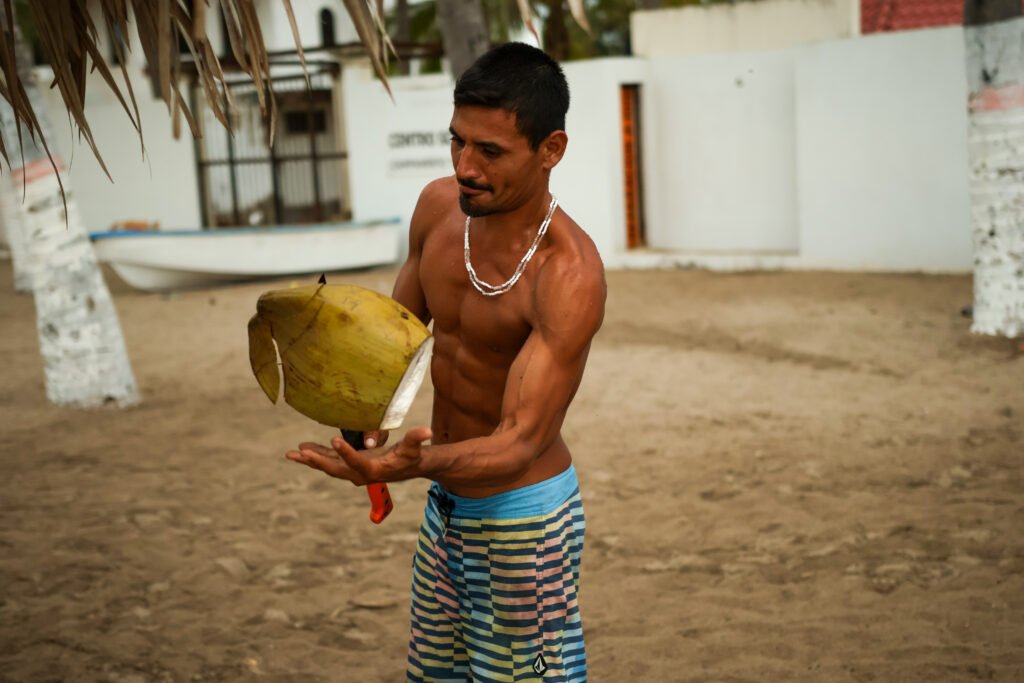
“My main work, what I dedicate myself to, is cutting coconuts and selling them. The other is collecting oysters and selling those too. What does that have to do with Mexican culture? A lot. Why? Because we still have that art, climbing the palm tree, cutting your own coconut, opening it, and if you want, adding a bit of tequila. Life gets even happier with tequila. That’s one of the connections we have. And fishing, we’re fishermen. Fish is an incredible food, and with it, everyone ends up happy.”
His work is not just a way to survive, it is a living connection between land, sea, tradition, and joy.
The Paradise and the Crocodile
Beto calls his town a paradise, not because it is perfect, but because it gives you everything you need, work, nature, and time. And then he tells a story that makes you understand the kind of responsibility that comes with loving a place.
One morning, a call spread across the beach. A crocodile had washed ashore, weak and tangled near the surf. Most people would stay back. Beto stepped forward.
“My reaction was to grab the crocodile and pull it out, because in the sea, you can’t really check how it’s doing. But when you see an animal that’s hurt, like all Mexicans, you just want to help, right? Even if it’s injured.”
What could have been just a wild moment becomes something else in his telling, a picture of service, courage, and the kind of community where people do not watch from a distance when something is struggling.
But paradise is fragile. Modernization and tourism can bring jobs, and they can also erode traditions, privatize beaches, and price locals out of their own home. Beto is clear-eyed about that reality, and he is equally clear about what still matters most.
“The real heart of Mexico lives in the family. That’s where people should start, right there.”
If you watch Beto’s episode, listen for how often he returns to the same idea, protection is not only politics, it is people choosing each other, again and again.
Watch the full video here:
Beto’s invitation is simple and unmistakably his, “Everyone is very welcome here in Lo de Marcos. Here’s your friend — they call me Beto Palmas. And whenever you want to come, we’re here. We’re Mexicans. And well, come buy a coconut, huh? We’ve got coconuts, oysters, pineapples, fish — everything. Remember that Mexico is 100% natural. And if you don’t believe me, take a sip of tequila… and then we’ll talk. Salud otra vez. [laughs] Salud.”
Psychologist, former national gymnast, yogi, and proud Tapatía. From the discipline of Olympic-level gymnastics to facing an autoimmune diagnosis, Nadia’s journey is one of resilience, empowerment, and defying societal expectations placed on Mexican women. Instead of following the traditional path of marriage, motherhood, and family duty, Nadia chose independence, self-love, and leadership.
In Mexico, tradition often carries weight. For women, the path has long been defined by expectations: marriage, motherhood, and family duty.
So what happens when you decide to build your life outside of the roles tradition has written for you? What does it mean to choose independence instead?
I want to introduce Nadia, a psychologist, athlete, and yogi from Guadalajara. From Olympic-level discipline to facing an autoimmune diagnosis, from rejecting societal pressures to embracing independence, her story is about courage, empowerment, and redefining what it means to be a Mexican woman.
“For me, being a woman, I suppose it’s a privilege. I think women have a much more fun life. So to me, that feels like a privilege: that we allow ourselves to feel any emotion more easily, that we allow ourselves to dress more freely, that we allow ourselves to use colors, that we allow ourselves to express emotions. Everything, everything is allowed to us in a freer way, and that definitely makes life more fun. On top of that, I’m a curious woman, and well, being a woman has helped me to do all of this without fear of being judged.”
Nadia remembers realizing early in life that she didn’t want the traditional path.
“When I was a little girl training in gymnastics and traveling, I actually lived in the Olympic committee for many years. I got used to living with many other girls and my coaches, or with my sisters and my mom—we were a team. When I started my teenage years, my mindset was: I don’t want to get married, I want to build teams—I always said that. No, I don’t want a family, I want to live in community.”
“This independence I have now, in a way, came when I realized that I was truly renouncing—by choice and by decision—that I didn’t want to be a mother.
“And living alone definitely requires having many tools to be independent.
“I’ve spent the past three years fully depending on myself.
“I think it’s so important for those of us already here to share and to help these younger women understand that this is a new way of living—and yes, it really is a good option, it’s super cool. Discovering your independence, discovering that you are enough. And I really love living it.”
Instead of being defined by what she lacks, Nadia highlights what she has built — a life of autonomy, strength, and leadership. Her independence challenges stereotypes
And this story begins with gymnastics. As a child, she didn’t just play — she trained. For nearly a decade, she represented Mexico’s national gymnastics team.
“The fact that I had the opportunity to be on the National Olympic gymnastics team for about 10 years, mostly during my childhood and adolescence, gave me so many experiences—experiences of learning about myself and about the world through a methodology completely different from a normal education. Because, honestly, I can hardly say that I attended a traditional school.
“Still, because of the intensive training, I developed very strong cognitive skills thanks to the methodology of sport. Learning the discipline of Olympic gymnastics, learning training methods, along with all the values you need in order to be not just an athlete but a high-performance athlete, made my way of understanding life very special. Now, as an adult, it has made me a very resilient woman, very positive, very methodical, resistant to the difficult things in life, very curious, and very brave.
“It teaches you that there are cycles, just like in life.In sports—and specifically in gymnastics—everything works in cycles. Gymnastics is cyclical, and these cycles are divided into the four Olympic years. Within those four years, there are a series of evaluations where you have to prepare so that when this stage of evaluations ends, you’re at your best at the right time, which is almost a year before the Olympic Games.
“You learn to live with this four-year methodology. Four years—it sounds simple—but counting every day, where each day matters so that you make it, takes a lot of patience, discipline, tolerance, resilience, teamwork, and sacrifices. In the end, you understand that all this effort produces results, and the positive comes, the achievements arrive.
“I really like the idea of sowing and harvesting—it’s the same. In every process, whether in gymnastics or in life, I’ve learned that it works with this methodology.“
Training for years in four-year Olympic cycles taught her that life, like sport, requires sowing, watering, and waiting before you reap.
But her journey was shaped by both inspiration and pain. Nadia reflects on her father:
“I think my father was someone who, if he helped me in something positive, it was that he pushed me to be brave. To not have this feeling that… because I didn’t have money, because I didn’t have privilege, I should feel shy or insecure. That—yes—that may have helped me.”
But it was also complicated:
“My father was diabetic and also an alcoholic, though no one ever diagnosed him. But now that I’m a psychologist and I remember his attitudes, his failings, his actions… I can understand that my father was both an alcoholic and someone with a very advanced case of diabetes. So, as an example of a person, well—it’s very hard for me to accept him. It was difficult, it was difficult to have a relationship with a machista (chauvinist)… What’s more, then we are three women, the daughters, we are three women. My sisters will have their story and their memories. In my case, I deeply regret not having had a protective father figure, a healthy father, a father who was present as part of the family. I don’t have memories of much security with him; we weren’t friends, and I regret that very much now.”
Her mother, though shaped by traditional roles, later became a role model.
“When my parents separated and my mother began her life as a single woman, let’s say, she started setting many, many examples for me—examples that I now want to remember her by and thank her for, because they have helped and shaped me.
“My mother, at this moment, at 70, now 71, almost 72, is working as an actress and as a painter, after having gone through depression.
“If there’s something I have to acknowledge about her, it’s that she is a very tenacious woman. From her, I learned to be curious, to not give up, to be kind, to move, to keep moving. And she did just that and discovered a part of herself full of talent, joy, and tenacity, which she’s now enjoying—and my sisters and I are very proud of her. That, that gives me a lot of peace.
“I’ve always told my sisters and my mom that if there’s one thing we can do among ourselves to show love, it’s to take care of each other—and we’re doing that very well. My two sisters are also great people, each of whom I admire in their own way. They’re making good stories out of their lives, both of them are very, very beautiful, very hardworking, very family-oriented. My family is a great support.”
But for Nadia, family isn’t just blood. It’s community, chosen bonds, and shared purpose.
“For me, family does not mean this group of people who come to you naturally. Family is those people who nurture you along the path of life and who don’t necessarily share your last name. It’s not something you can take for granted, it’s something that is fed, cared for, sought out.
“Family, even, are people who unite for a common purpose. We are more than family, we are a team.”
This redefinition of family reflects her larger philosophy: love, resilience, and empowerment are choices. And in a world still shaped by patriarchal structures, her life itself becomes an act of resistance. And life tested Nadia again in 2019. Without warning, she collapsed, experiencing paralysis and vision loss.
“5 or 6 years ago, In 2019, I had a crisis in which, without warning, one day I fainted. They took me to the hospital, and I began experiencing what doctors call diplopia—which is like the vision of flies, fragmented —along with paralysis of the tongue and half of my body on the left side. I was diagnosed at that moment with a minor stroke, and I left the hospital 15 days later with a possible diagnosis of multiple sclerosis…
“The official diagnosis is neuromyelitis optica.
“Neuromyelitis optica is a very, very little-studied autoimmune condition, and so, because of that lack of research, there’s very little information about it. And I think that was
“Once I had this diagnosis, and I understood that tobacco could have been one of the causes for why it happened, I definitely quit. And now that I’ve gone six years without smoking, I feel super proud—super proud. And it’s one of the things I can actually thank the diagnosis for, because it made me aware of the importance of taking care of my body.
“At the beginning I was very scared, because this lack of information makes you uncertain.
“However, with this treatment that works like chemotherapy—not as aggressive as cancer chemotherapy, but it is an immunosuppressive chemotherapy, that’s what it’s called—which lowers the amount of protein that causes this inflammation in me. It has to be applied every six months, and depending on the lab studies they also do every six months, they decide if they give you one or two applications each semester.
“At first, it could be seen as a negative situation. But right now, honestly, for me it’s an indicator of how I should observe myself in order to know how to make decisions that keep me balanced—in my mental health, in my physical health, and in my professional decisions. Thanks to this autoimmune condition, I’m working on what I’m most passionate about. Now I can actually give thanks to this condition, which might sound really strange, almost like Stockholm syndrome—but it’s not. In reality, it’s not about falling in love with the diagnosis itself, but about falling in love with, or giving thanks for, what it provoked in me—in my personal growth and development.”
As part of her healing, Nadia found strength through Yin yoga and psychology:
“I discovered Yin yoga as a form of therapy for myself, since this autoimmune condition is connected to a weakness in my central nervous system. With this weakness, sudden crises appear without warning, and my body develops inflammations. These inflammations are what cause me problems like losing my vision, losing movement, feeling heat, pain, burning in my limbs like my legs, or severe stomach discomfort, chronic fatigue—everything related to extreme sensitivity in the central nervous system.
“So, yoga has been helping me a lot, physically at first, and later also in a deeper way. It has become a way to understand both the diagnosis and life in general in a simpler way. Yin yoga creates a meditation, a contemplation inward, that helps you get to know yourself and face life more calmly.”
As a psychologist, she practices Acceptance and Commitment Therapy, blending science with mindfulness.
“This approach invites you not to see psychology only as mental processes, but also to integrate into this work the part of meditation and mindfulness, bringing a lot of awareness to the fact that mental processes are also joined with spiritual processes.
“So, this type of psychology, which is the one I use to accompany my clients, helps a lot to go inward, to know yourself, and with a lot of compassion begin to accompany your nervous system, your wounds, your ego, all those actions and thoughts that trip us up in the present, to start letting go, lowering your guard, in order to learn new methods to be able to exist in this world. So…Imagine that self-knowledge is a country, and these two practices that guide my life are like a language I’ve learned to enter that country and make myself known there. That’s how I feel it. It’s a very easy way to live with my inner self and to communicate with it. That’s how I feel it.”
Her work and her practice became more than careers—they became survival tools. Nadia’s strength isn’t only discipline — it’s spiritual. She found peace not in religion, but in daily rituals of gratitude and mindfulness.
“Spirituality is not solely understood under any religion, but spirituality is understood through the values of deep gratitude—every day, connecting with this gratitude for who I am, for everything I already have, and for the joy of living it. And above all, also, what is important for a woman to be successful as a Mexican: much compassion, a lot of patience, recognizing that I am an imperfect person and that with calm and trust in myself, I will be able to overcome everything that each day brings as a challenge. I believe those two things, which are spiritual, are what right now keep me very peaceful and happy: gratitude and trust.
“And how to train it? Well, as simple as that—just start breathing, for example. It might sound like a cliché, but it’s something super important: to connect with your inner self, to practice breathing techniques. Every time you feel overwhelmed, it helps you relax, and that is spirituality: going inside yourself and giving yourself permission to receive a little care. Allowing yourself five minutes to be with yourself and to tell yourself, whatever comes, even if it’s very difficult, you’re going to do the best you can.”
No story of empowerment in Jalisco is complete without tequila — a cultural symbol deeply tied to Mexican identity. Even in lighter moments, tequila becomes a symbol of celebration, connection, identity, and joy.
“For me, tequila is definitely the alcohol I like the most. I don’t know if it’s because I’m tapatía (from Guadalajara), but definitely, if it’s about spending many hours drinking, it’s what I like the most. Because you can drink it straight and it tastes delicious, because you can mix it with something refreshing and it’s also delicious. Because the mood it puts you in—the alcohol—it’s for partying, for dancing, for shaking off shyness, for forgetting your limitations. So, tequila definitely has to do with my personality.
“I know that everyone gets a hangover the next day, but tequila is the one that physically has allowed me to say, ‘When are we having the next one?’ Okay, that’s what I really like. Tequila—for the most part, I drink it straight. I like to take a little shot glass (un caballito) and some sparkling water. That’s how I enjoy it the most.”
For Nadia, tequila is more than a drink—it’s Mexico’s spirit distilled:
“Tequila has become famous because, around the world, people associate it with love, with fun, with partying—with the very same feelings I just told you about, which it really does provoke in me. And I think that in other countries, when people look for those kinds of emotions, they think of tequila. They always link it with these reactions—of celebration, of love, of joy.”
Her favorite?
“White tequila. White tequila, the brand… lately I’ve been drinking Cascahuil because I have a friend who owns bars, and she was the one who recommended the brand to me. I decided that the one that tastes best to me, just on its own, is blanco tequila.”
Tequila reflects how Mexico is seen around the world — vibrant, festive, and full of life. For Nadia, it’s a reminder that joy is also part of resilience. It’s part of her pride
“I think being Mexican is something to feel proud of. I believe that every place, every country, every foreigner I’ve lived with, speaks about Mexico in a very beautiful way. Honestly I think I am that definition of being Mexican: I give love, I bring fun, I bring warmth, I’m empathetic, I’m affectionate with people. That’s how I was raised, and I love it. I love to celebrate anything, I love that we show affection, that we give each other security. I like that definition and those values I was raised with as a Mexican.
“On top of that, the country itself is beautiful. I lived in India for five months, and I realized that countries with as many hardships as they have—and like we Mexicans do—also hold so much richness inside the country. That’s what makes us really special: our food, our delicious climate, the tourist areas, mountains, rivers, beaches, sands, jungles, animals… we are rich. Mexicans, we are rich.”
Her pride in being Mexican blends with her pride in breaking molds. By traveling, working abroad, and comparing roles of women worldwide, she realized she could choose—choose independence, choose joy, and choose empowerment.
“The profile of Mexican women, who are now shaping ourselves with this new clarity about all these positive values we carry and about how resilient we are—I believe we’re a great profile for any part of the world. We could be very good leaders, speaking about leadership in families, in work groups, in communities. We could be part of their teams—of any kind of team—to create better projects.”
And her message to younger women is clear:
“A lot of self-love, a lot, a lot of self-love. And within that self-love, to have this patience and this tolerance so that, little by little, the experience of the years will show you which things are truly important in life. When you allow yourself this patience and this trust, it’s enough, it’s enough.”
Nadia’s story is about breaking boundaries—choosing independence, embracing resilience, and showing that empowerment is possible outside tradition.
Her voice reminds us:
“The truth is that our central nervous system—with this capacity it has to see what you want to see, both the negative and the positive—if you decide to see the positive, you really see it, you really do. And I’ve experienced it, so every time something happens in my life I try to see the positive side of it, and yes—it’s worked.”
A declaration that empowerment isn’t just about personal triumph. It isn’t just about saying no to tradition, it’s about saying yes to yourself, proving that strength, independence, and resilience are not exceptions but powerful ways of beingThis is the essence of 365 Days of Tequila: stories of resilience, joy, and identity that define modern Mexico.
A soulful local voice standing firm against the erosion of culture, tradition, and meaning in a rapidly changing Mexico. 🇲🇽 Aldo opens up about the pressures of commercialization, the ethics of tequila production, and the quiet power of living simply and authentically. From his philosophy on slow living and daily joy, to his insights on artisanal vs. industrial tequila, this is a heartfelt dive into Mexican identity, sustainability, and ancestral wisdom.
In a rapidly changing world, simplicity often feels like a lost art.
Today, in the vibrant coastal town of Sayulita, Mexico, we meet Aldo, a man embracing a beautifully simple life amidst the pressures of modernity and globalization. Through Aldo’s eyes, we’ll explore what it truly means to preserve integrity and find happiness in simplicity.
This is a story about resisting the loss of meaning, about choosing simplicity with integrity, and about seeing Mexico beyond the clichés.
“When I see that identity—our identity as Mexicans—gets generalized, or is taken up by other cultures as something stereotypical… on one hand, I feel… it makes me laugh, but not in a critical way. In fact, I actually find it—through my sense of humor—a little funny.
“If I see some gringo wearing a sombrero and saying ‘Happy Cinco de Mayo!’—not knowing that it’s not our Independence Day—it makes me laugh. But at the same time… I see it as an opportunity. An opportunity for them to learn something different.”
The humor is real. But so is the misunderstanding.
Cinco de Mayo isn’t Mexican Independence Day. It commemorates the Battle of Puebla, where Mexico defeated the French in 1862. Yet it’s often reduced to dollar margaritas and fake mustaches.
“No, we don’t eat Taco Bell. But that’s one thing—laughs—that’s the one rule: never mention Taco Bell. Cinco de Mayo? Okay, that’s understandable. But Taco Bell? No. laughs Still, I find it really funny, and honestly, it feels like a little show of affection.
“Because we also believe that all Americans have guns in their homes. I mean, that’s something we generalize too.”
We laugh—because it’s easier than getting angry. But beneath the laughter lives something sacred: a desire for depth, not decoration. A hunger for meaning over noise, for slow beauty in a rushed world.
“For me, living a simple life means moving at your own pace, taking your own steps—no matter how long it takes. Whether it’s choosing to make breakfast at home, or walking five kilometers with a señora just because you enjoy her company. Getting back home might take you two hours… it’s not fast, it’s not efficient, but it’s your way of doing things.
“That’s what makes it simple. And you like it that way.”
But living simply isn’t without conflict. Even Aldo has faced pressures to abandon simplicity for more conventional success. Yet, he resists.
“Yes. In the past, I felt pressure to give up a simple life—mainly because of work. They needed me to work 10 hours a day, for less than minimum wage, and to commute to the other side of the city.
“That was about 6 or 7 years ago. And it wasn’t something I liked. I didn’t enjoy that typical routine. I’d rather work here with these people.
“I don’t know what next week will look like, but that’s something I enjoy now. I don’t have much free time, but I’m not being chased around by someone with a clipboard. I still feel pressure—but I don’t like it.”
“And what made you resist?”
“Mmm… happiness, I think. I’d rather feel mentally at peace than have money and be stressed. [laughs] Yeah.”
This mindset didn’t appear from nowhere—it’s deeply rooted in Aldo’s upbringing.
“I feel like it comes more from the values I was taught at home—by my parents. Because yeah, my parents had their own pet business. They could’ve expanded, made more money, but they chose instead to live a more relaxed and simple life that still supported all of us—me and my siblings. We had food on the table, didn’t pay rent, and we were able to take vacations regularly—sometimes even more than once a year. They could have done more, but they chose to take a step back.
“And I think that’s where my mindset comes from: doing things… How do I say this… if, I have a formula that already works— why change it?
“I decided to come visit them because it had been a long time since I’d seen them, and I just wanted to stay for three weeks. And honestly, I think I’m still in those “three weeks.” I arrived with a backpack, a couple changes of clothes… and never went back.”
Aldo recalls a legendary story his father told him, illustrating the essence of simple living.
“There was a fisherman on the beach. Every morning, he’d go out to pull in his nets and come back on his boat, with his cooler full of ice, and he’d sell the fish to the people nearby. He’d save a couple for himself—for lunch and dinner. And the rest of the day, he’d just chill in his hammock.
“One day a gringo comes along and says, “Hey, why don’t you open your own store and start putting all the fish in there? You could buy more refrigerators and have everything available for a lot more people. And then, after like 20 years, you’ll have saved enough to retire.”
“And the fisherman says, “Well… I’m already doing that. I’m already saving for myself. I relax every day in my hammock with my caguama (a big beer).”
“You don’t need a luxurious life. Just a simple one.”
“As Mexicans, we almost always end up doing what we want. That’s something I feel others will never fully understand. I’ve seen it—not with everyone—but I’ve seen some Americans try to change certain customs. They’ve tried… but they won’t change.
“Like the fireworks, for example—people say they bother animals. I’m sorry, but in small towns, on farms, in our traditional Mexico—things like that aren’t going to change anytime soon. It’s not something that’s going to “progress.” It’s something that will always stay with us.”
There’s a friction here. Foreign values versus cultural rhythm. Sometimes things don’t need to be fixed, they need to be accepted.
So where does someone begin—if they really want to know the true heart of Mexico?
“You have to understand—we’re very open people. We can welcome a lot of people with open arms. But to tell someone ‘I love you,’ ‘you’re family to me’—that’s hard. There are steps. These things take time.
“You’ll always be welcome, but there are things that can’t be rushed.
“And it has happened to me a lot with foreigners, that I meet them and they’re telling me: ‘Ah, I love you, I love you.’ And I say: ‘Thank you… but I don’t feel the same. I’m sorry, but I need time. I need to get to know people.’
“We’re passionate people. That’s something you’ll need to get used to—these kinds of things take time. It’s not like a telenovela.
“And we’re dramatic. We live for the drama.”
This isn’t a telenovela. It’s real life—unpolished, passionate, and beautifully slow.
And while some stereotypes sting, others? We claim them with a smile.
“At the end of the day, I feel like most of us… yeah, we are a stereotype. If you ask me, ‘What’s your favorite food?’ Tacos. Tacos! [laughs] ‘What do you like to drink?’ A Coca-Cola.
“I like spending time with my family. I like going out dancing. I like watching and singing along with mariachi.
“So when someone caricatures us, I say, well, As a Mexican, you put your boots on and say: ‘Yes. Yes, I am.’ We’re not all the same, but yeah—I am.
“For example, I might be listening to Banda one moment and Metallica the next. But in general, if someone stereotypes us… well, yeah. We are.”
When the world around you changes, what stays?
“I feel like something I’ll always protect about my identity is my values. I’m always going to be the one saying, “¡A chingar! To hell with it—let’s take a shot of tequila!”
“That’s my style.
“I’m the kind of person who says what I think, straight up. And I’m not afraid to offend someone with my opinion. That’s something I’ll never lose—no matter how much things change.
“I’ve seen that a lot of people who come from abroad… they can’t say certain things because someone might get offended or feel insulted. But I tell them: it’s not about what we say—it’s about the intention.
And for us Mexicans, everything is a joke. It’s always going to be a joke. We have a really dark sense of humor. That… I feel like that’s part of our identity, and it’s never going away.”
There’s freedom in contradiction, and pride in being exactly what you are—without apology.
And for Aldo, nowhere does that contradiction feel more alive than in a bottle of tequila—especially when the lesson came from a gringo in Denver.
“So this gringo from Denver shows up and starts asking me about raicilla. I tell him, ‘Okay, I have a bottle, but I don’t know anything about it. Try it and tell me what you think.’ He says, ‘Sure,’ and he kept coming back for that bottle.
“And then we started talking—well, he started telling me about tequilas, mezcals, raicillas… things I didn’t really know much about. I only knew the typical ones: 1800, Don Julio, Cuervo, that stuff.
“He starts teaching me the difference between a tequila made with love and integrity… and one that’s just mass-produced for money. Which is exactly the topic we’ve been talking about now.
“So this guy starts training me, and he inspires me to learn more about all of it. And me, as a Mexican—where we come from is tequila—and yet a gringo is the one who taught me about it. It’s kind of funny.
“But honestly, when you have people from other countries showing this kind of love for the culture—more than a lot of Mexicans even show—I’m like: okay, this is strange. But I want to learn about it. I want to follow that path.”
But tequila isn’t just a drink—it’s a living tradition reflecting the heart of Mexico. In a changing Mexico, preserving traditions is crucial. Aldo sees tequila production as a powerful symbol of integrity.
“It’s a tradition. Definitely not just something cultural—it’s almost a ritual. You know what I mean? From the moment you jimar the agave, to cooking it, crushing it, fermenting it, and finally distilling it… It’s a process that’s been done for decades, for hundreds of years—by generations, by so many people—maybe hundreds of thousands of Mexicans.
“More than just a drink, that’s what I think tequila represents. It’s not just about getting drunk— it’s about enjoying life. I know I say that a lot. [laughs]
“But there’s something in the land…Tequila, mezcal, raicilla—all of them are part of Mexican culture, stretching from tribe to tribe, from north to south.
“Honestly, what we now call tequila, mezcal, or raicilla—those are newer terms. This kind of work has been done for hundreds of years. And it’s a part of Mexican culture that has been disappearing.
“Thank God there are still many producers doing it the way it should be done— the way their families always respected these sacred spirits— and they keep passing it down, generation after generation. And what we try to instill in people is that it’s not just about getting drunk.”
Aldo highlights brands like Fortaleza (Los Abuelos) for their integrity.
“For me, what sets the brand Fortaleza—or Los Abuelos—apart is that they’ve always tried to maintain a certain standard. A good tequila doesn’t just take time—it takes care. And it doesn’t need a lot of machines.
“What it does need is people who have knowledge, people who are willing to respect tradition— so that you don’t just end up with a good product, but something truly well made. And that’s also one of the reasons it’s one of the best tequilas in the world.”
Therefore, the preservation of traditional methods isn’t just cultural—it’s vital for health and authenticity.
“I feel like maintaining the quality of these processes—without using any chemicals or additives—is really important.
“Production matters not just for those who make it, but also for those who consume it. Tequilas made with highly industrial processes, with additives, acids, or artificial flavorings—those are very harmful to the body. They can cause… well, they’re more likely to cause “accidents”. They’re what lead to what we call la cruda—the brutal hangover the next day. That’s much more common when you drink products that weren’t made artisanally, when corners were cut using little tricks that may increase demand and profits… but what you’re really selling is harm to people.
“When you distill something that’s completely pure, tequila should only contain water, natural yeast, and cooked agave. There shouldn’t be anything else in it. But unfortunately, 90% of what’s on the market isn’t that. Those are products we can’t even really call tequila. And unfortunately, because of government regulations, the producers who do take their time and care about what they make can’t defend themselves much.
“Real tequila takes five to seven days to produce, minimum. And like I said, there are big companies who claim they can make it in a single day. I’m sorry, but that’s not possible. That shouldn’t be called tequila. It’s closer to vodka than anything else.”
Sayulita has changed dramatically after COVID, becoming increasingly expensive due to tourism and Airbnb culture. But despite these pressures, Aldo observes something unexpected.
“Honestly, I don’t think there’s been that much culture that’s being lost. Actually, I think it’s being reinforced a bit.
“Most of the foreigners who come here—like Nick, who was with us a little while ago—they want to learn Spanish, they want to go to the rodeos, the patron saint festivals, Sunday mass… they want to learn how to make tortillas by hand. I feel that the people who at least come and stay here for a long time, it’s not… they don’t want to change this kind of culture.
“Yeah, there are a few things I’ve noticed that have changed a bit. For example, now there are taxis right out front. A lot of people get around in golf carts and ATVs. But I’ve also seen a lot of Mexicans buying golf carts or motorcycles too—and we’re all doing the same thing.
“So I don’t feel like anything is being taken away—it’s just evolving. It’s more of an integration than a loss.
“I learned this word very recently. It’s called dishbé. It’s a Zapotec word. It’s used when you give a toast. But this toast isn’t just ‘cheers.’ It’s about giving thanks for this moment, for the paths that brought us here, for the loyalty, the values that led us to this exact moment where we can raise a glass together. That’s what that word means.
“And I think it’s such a simple act—one that everyone does. And I love that. It makes me feel more and more grateful to be here, to be alive… We never know when we’ll die or move on to something else.
“Enjoying those little moments, saying salud… that’s when you’re really living.”
What does Aldo hope never changes?
“My liver. Heh heh heh heh. That’s a joke. Ha ha ha ha ha.
“In my future, one thing I want to remain intact is this: that people keep coming, and that we can keep doing what we do every day—which is to help people discover parts of Mexico they haven’t seen before.
“I feel like that’s something I don’t want to change. I want there to always be new people we can—maybe—dress up, take a shot with, show them the tacos, or whatever it is. And I want that to stay the same. I really enjoy working with people.”
For Aldo, it’s not tourism—it’s a quiet ritual of connection. To welcome without performance, and to live without fear—that’s what makes it sacred. Because fear is natural. But giving up your curiosity? That’s a choice.
“What I want people to understand after hearing all of this is that life is meant to be enjoyed. We never know when things are going to change. If you have the chance, say yes. Try things.
“We’re all afraid of things, but we should always try something new. Venture out. If one day you’re scared of living a routine life, if you’re afraid of going to the movies alone—go alone! You don’t know whether you’ll enjoy it or not until you try.
“And I feel that we, as human beings, what holds us back the most is fear. We’re always going to be afraid. But only the brave will be able to break through that fear and dive into what they truly love.
“If you’re afraid to leave your city, if you’re afraid to start something new, launch a business… yes, there’s always the risk that you won’t like it or that it might fail. But at least you tried.
“And I think that’s what matters most for us as human beings: That we tried.”
If Aldo could send one message from Mexico to the world, it would be an open invitation for authentic discovery:
“Mexico holds a little bit of everything. It’s not just beaches and Mexico City. There are so many places to explore, so many people to meet. From the north to the south, Mexico stretches wide and deep, a land of many cultures, many paths, mountains, hills— and every kind of climate you can imagine.
“Don’t just come here to do what everyone else does. If you go to a resort, don’t stay locked behind the gates. Step out. Wander. Go visit the neighboring town.
“Find the small village. Take the bus. I hardly ever see people other than Mexicans take the bus. I want to see more foreigners taking the bus. I want to see people live a bit of everyday Mexican life, to try it for themselves, see if they like it, in every corner of this country. Not just in the curated pockets tourists are shown— but everywhere.”
Mexico doesn’t need you to save it. It needs you to see it—truly. Not just the colors or the food, but the integrity in the simplicity.
Live like Aldo, a journey that is a vibrant testament to a Mexico filled with humor, resilience, and authenticity. Meet people. Ride the bus. Laugh at yourself. And if someone offers you a shot of tequila and a story—say yes.
This is the essence of 365 Days of Tequila—sharing stories that teach us, challenge us and honor Mexico’s vibrant culture through the lives of its extraordinary people.
Because the real Mexico? It’s right there, past the resort, behind the barrel… and ready to be lived.
An extraordinary woman whose story embodies healing through connection, loss, love, and belonging. From her early struggles with abandonment to building a chosen family in Guadalajara, Vicky shares a powerful narrative of resilience rooted in Mexican culture, tradition, and community.
What happens when your earliest memories are shaped by abandonment, struggle and loss, yet blossom through love and connection? When the absence of a mother’s touch becomes the driving force behind the strength to build something new?
Today, we meet Vicky. Her story is a testament to resilience through loss, love, and reconnection. One of overcoming abandonment, of discovering family not through blood, but through love. Of rebuilding life in Guadalajara—one meal, one moment, one heartfelt connection at a time.
As you listen, reflect on your own journey. We all face loss and find love in unexpected places. “Who is one person whose love or guidance changed your path—and how did they help you find your strength?”
Imagine feeling gratitude for the simplest things, like having a job, life, and health. This gratitude is what makes Vicky’s day “excelente.”
“I have a job. I have this life. Health, more than anything. So… super good, super happy because of that.”
Vicky works at Mercado Prado, a local spot cooking delicious Mexican staples—lonches, chilaquiles, and quesadillas. Her cooking is more than food—it’s connection. It’s her anchor—learned by observation in the houses where she lived. Through cooking, Vicky maintains her cultural heritage.
“My job means a lot. Well, to me personally, it means a lot because it’s my financial support. For me, working is… I feel happy, I feel content to be able to go to work and to have a job. Well, I’m grateful that I have a job, more than anything.
All of that I learned by watching in the houses where I lived. All of that, like… the Oaxacan tamales, the quesadillas, chiles rellenos, those stuffed jalapeños, really spicy ones. Everything was learned just by watching, watching people.”
But life wasn’t always filled with warmth and gratitude. Growing up was difficult.
“I grew up alone. Since I was little, from the age of 8. The woman who brought me into the world gave me away to some people. But those people were bad to me, they hit me.
“He said to me: ‘Your mom doesn’t love you, that’s why she gave you away.’
“And I’d say: ‘Well, no, I don’t think so. I don’t need her. I have to move forward. I have to make it. If I can’t do it here, then I have to find where I’m going to move forward.”
“And that’s why I ran away from where the woman who brought me into the world left me. Because I can’t say she’s my mom. She’s the woman who brought me into the world.
“I left, I went to other houses, and I kept moving, moving from house to house until I ended up with a woman who helped me. And thanks to her, I came here to Guadalajara.”
“Here in Guadalajara, I’ve been working since the age of 16. I met really good families, who were very supportive of me. They’ve already gone to rest. They’re with God now. I’m no longer with them, but I’m still here with their grandson. I’m here with their grandson, Antonio de la Peña. And, I’m still here, giving it my all. Because I have… I have 6 children and I still have a little one who depends on me. And I would never do to her what was done to me.”
Moving to Guadalajara marked a turning point. Vicky met someone who changed her life completely, a woman who initially doubted her abilities. There, she found not just work, but family and purpose.
“It really marked me… being left. It marked me for life. I met the woman I worked with for many years, about 30 years. She taught me what no one else had taught me along the path I had already traveled. She taught me how to do housework, she taught me how to cook. And I’m very grateful to that woman, who’s also gone now. I don’t know how to express my thanks, may God hold her in His kingdom, because she was someone I loved very much. I loved her a lot because she and her husband, may they both rest in peace, they are the ones who I feel changed my life.”
“I heard her when she went to look for a woman who helped her around the house. And that woman had gone on vacation without even telling her. She just left, and she went to look for her, to the place where she knew she lived. And I heard her. And since I had her phone number, because I used to talk to that girl, I called the lady,
‘Ma’am, I heard you came looking for so-and-so, for Katy. And… would you like me to help you while she is away?’
‘How old are you?’
‘I’m about to turn 18.’
[Vicky imitating the lady] ‘Oh no. You can’t handle my work. You can’t.’
[Vicky resumes] ‘Try me. And if you see that what I do doesn’t work for you, then okay. But if you want, let’s give it a try.’
‘Alright. Come. Where do you live?’
‘I live on Avenida Inglaterra, number such-and-such.’
‘And where are you going to get off?’
‘Well… I only know the Fiesta Americana Hotel.’
‘Ah, then get off there. Walk toward where the road is, and I’ll be outside sweeping.’
So, I arrived and I saw her sweeping. She let me in. I started doing housework. She showed me how I had to do all the chores in her house.
She showed me while she was cooking, ‘Come here, so you can see how I’m going to cook, so one day you can help me make the meals.’
And that’s how it was. I know how to do a lot of things because she taught me.”
Therefore, Vicky found not only a mentor but a mother figure who taught her invaluable life skills like cooking traditional Mexican dishes and also…
“I have to move forward, and thanks… to my foster mom who helped me. And to the woman… where I came to work here in Guadalajara. They taught me to be… a better person.”
“My foster mom. She was the person who helped me, who encouraged me to come to Guadalajara. At the age of… I was 15 when I came to Guadalajara. 15, 16 years old, around there. I came to Guadalajara. Here I started to work, to work. Sometimes, when I could, I would send her a few coins. And yes, during vacation time I would go visit her. I used to call her—not often, because back then, well, it wasn’t possible to have a phone at home. I’d call her through the neighbor. Ask, “How is she?” Then I’d let her know if I was going to go or not during vacation.
I spoke with her at the beginning of the year.
She said, “Oh, mija, I’m in the hospital,” and she said, “I just want to die now.”
I said, “No, mamá. Wait for me.” I said, “Wait for me. I’m going to go there in April. I want to go see you.”
Yes, yes I went to see her on May 6th. I went to see her, this year.
I said, “Mamá.”
“Who are you?”
I said, “Mamá, it’s me, Vicky.”
She said, “Mija, I’m so glad you came,” she told me, “I can’t see you anymore, mija.”
I said, “Mamá, I brought my little girl.”
She asked, “Where is she?”
She touched her—my little girl.
She said, “You’ve gotten so big!” she told my daughter.
Then she said, “I can’t see you anymore, mija, but I know you’re very beautiful,” she told my daughter.
She complained a lot.
I used to go stay there with her for a few days and then I’d come back to keep working.
On May 11th at 6:30 in the morning, they told me she had passed. I wasn’t able to be with her anymore.
I felt like she always waited for me with so much love when I came, with so much affection. She never knew what to give me when I arrived. She’d already have a watermelon, a pineapple ready. That’s what I ate the most: watermelon and pineapple. And she just didn’t know what to give me.
And now that I went, now that I had gone, she told me:
“Mija.”
I said, “Yes?”
“Do you want to eat?”
She said, “There’s food in the fridge. There are some beans, this, that.”
“Yes, mamá,” I told her, “thank you.”
And that was it. I wasn’t able to be with her anymore. But I got to see her, and she gave me her blessing.
She’s the other person.”
Yet, the absence of parental love left Vicky conflicted about her ability to express affection towards her own children.
“I wasn’t affectionate with my children, the older ones, because I feel like I didn’t have that love, and I didn’t show my children the kind of love that should be shown. Now, with time, with life passing by, I’ve learned to show a little of my… of my love, of my affection. Sometimes, I think I wasn’t affectionate enough to show that love to my children.”
“And I feel that now, with my little one who’s 11 years old, I feel like I’m giving her… I’m showing her that affection. Because I’ve told her, “I want to be a better mom with you. I want to be your friend, your mom, and if you want, your sister. I want you to tell me your things. Your confidant. I didn’t do it with your sisters because I didn’t know how. But with you, I do want to.”
But Life in Mexico today isn’t without struggle. Vicky openly discusses concerns about vandalism, theft, and corruption, expressing the desire for change.
“We can’t walk safely in the streets because… I mean, we don’t even trust the person walking right next to us anymore, because you don’t know if they’re going to snatch your wallet… or grab your phone. More than anything, you’re out on the street with fear that someone might rob you, pull you, yank you around. And another thing is the kidnappings of all the people out there, because, the kids are just walking down the street and they’re taken, and… where are they? Who knows?
“I think they should put in a little more security. And that the… that the police be less… less corrupt. That they be more… more loyal to the people. That they really know how to protect.
“Mexico… it’s full of hardworking people. Honest people who know how to help. I’d say in every way. Like for example, if there’s someone asking for money on the street, I’ve seen that there are people who do help them, and others who just brush them aside.”
Tequila holds a special place in Mexican tradition, connecting communities through celebration.
“The flavor it has… it’s special. It’s really delicious. I don’t even have words to describe it. It’s so tasty.
“My girl, right? She’s 29 years old but she’s still my girl, of course. And, well, when we hang out at home, it’s either with beer or with tequila…
In lighter moments, tequila emerges as a small but joyful connection to Mexican culture—especially José Cuervo, her favorite brand.
“Well, up until now… the one I’ve liked the most is José Cuervo…
“It has such a… delicious flavor. [laughs]
“You’re drinking it and—whoa!—you just want to finish the whole glass in one gulp. [laughs] So tasty.
“It just… hits me really hard. [laughs] Really fast. Knocks me out. But with Squirt, I can drink… more little cubitas (more slowly).
“Well, I think that tequila has a lot to say about Mexico. I’ve heard many people say: “I have to go to Guadalajara so I can take the train to Tequila. And when they arrive,” they say, “let’s dance with the mariachis.”
Above all, Vicky stresses the importance of empathy and preserving core Mexican values.
“I think we need to have more empathy—especially for people who have less. There are so many of us who, honestly, just don’t show much empathy at all. I wish I could help everyone I see out on the street, but I can’t. I give a little to one person, a little to another… but eventually, I just run out. What I really hope is that we can protect and preserve the things that matter—for everyone. And most of all, that we stop seeing ourselves as better than someone just because they’re asking for help. We’re not superior. That’s the truth.
If Vicky could send a single message about Mexico, it would be an end to poverty and corruption, creating a safer, kinder world for all Mexicans.
“Mexico has so many really, really beautiful things that… sometimes, as people, as human beings, we don’t know how to take care of them. For me, Mexico is the most beautiful thing that… even though I don’t know other places besides Mexico, well—Mexico is Mexico.
“I’d like for all the narcos to be gone, first of all. That there wouldn’t be so much corruption. Because, the police and everyone are all involved in all of that.
“So yes, I’d like there to be… um… for there to be no narcos, basically. For that not to exist, and for there not to be so much poverty.
“And I’d like the Mexican government to actually help all those people.”
As the interview ends, emotions run deep, showcasing the resilience built through adversity.
“Every time I talk about it, I cry, always. I didn’t cry much this time, but, it still hurts…
“Because I feel like… I feel like I’ve struggled so much. Because of that woman. Because of the woman who brought me into this world.”
Yet, even through tears, Vicky remains grateful, surrounded by a family of the heart.
“Oof, I have a lot of family here, they don’t share my blood, but they’ve treated me like family, well, like I was part of their family.
“They treated me… not like an employee. They’ve never treated me like an employee, not like a different kind of person. No. They treated me like I was family. I’m very grateful for that. And I love them a lot, too.”
In Guadalajara, family isn’t only about blood—it’s about belonging. And Vicky’s story reminds us that even in loneliness and loss, we can find the family we choose, who teach us to love, to care, and to heal—the family of the heart.
By sharing her story, Vicky hopes others learn to value life, family, and resilience.
“I think there are a lot of people nowadays who just don’t know how to value life—or their parents—or even what they already have. Maybe I didn’t tell you everything about my life, because it’s long… we’d be here all day. But what I really hope is that young people who still have their parents learn to appreciate them while they can. And if anyone listening has something to say—whether it’s a kind word, a little empathy, or even criticism—you’re free to say whatever you feel. That’s the point of sharing my story.”
Through her cooking, kindness, and enduring resilience, Vicky lives at the crossroads of hardship and hope, tradition and transformation. She is one of the countless faces keeping Mexican culture alive.
This is the essence of 365 Days of Tequila—sharing stories that teach us, Challenge us and honor Mexico’s vibrant culture through the lives of its extraordinary people.
A woman whose life was forever changed by a devastating explosion, and who found healing, purpose, and joy in the heart of Sayulita, Mexico. 🇲🇽🔥
What happens when life as you know it vanishes in an instant?
When the body that once carried you through mountains, beaches, and bike trails is suddenly… gone?
This is a story of fire. A story of hardship. A story of resilience. And, more than anything, a story of rebuilding a life in Sayulita, Mexico—one moment, one sunset, one sip at a time.
There are places in the world that give you more than just views—they offer perspective. And Sayulita, Mexico, through Karen’s eyes, is exactly that. Because sometimes, healing doesn’t come in a straight line. It comes in the form of laughter. Of salt air on a normal Tuesday, watching a baby whale breach the water as the sun sets over the Bay of Banderas.
“On Tuesday, I went on a sunset cruise on a big catamaran and saw a baby whale. Then, after we’d watched it for a while, it started breaching. It must have been just practicing because it was small. It was just… it was incredible…They come, uh, November through March. So they’re getting ready to leave now, and they go back up to Alaska. They come down, have their babies, and then they breed and they go back.”
As the whales make their yearly journey through the Bay of Banderas, so too has Karen traveled—across oceans, continents, and eventually, into a life she never expected. Sayulita might be home now, but her story begins far from here… in New Zealand.
“I was born in New Zealand. When I was 21, I left New Zealand and took off to see the world and spent years traveling, mainly in, um, Europe. Although I did go to South Africa…And then in 1980, I went to the United States for my first time… And it was all very simple. It was sort of almost… everything just went along like it was supposed to be.
“I think, really, the thing that changed my life was in 2015 when I lost my legs in a propane explosion. Because that changed everything.
“I turned on the grill and lit it ‘cause it needed cleaning. And that’s the best way to do it; heat it up first, and then clean it, and then use it. So I did that. The grill had a timer on the gas supply, so it… I mean, I assumed it ran out, and I was busy doing other things in the house, and we had a tequila, and we were going to have another tequila, and I said, “Oh, I’ve got to get this dinner going. It’ll be 9:00 o’clock before we eat.” It was a beautiful fall night, and we had the kitchen door wide open, and the leaves were all sort of rustling around.
“It was pretty late. It was October 20th, so it was late in the fall to be in the Rocky Mountains. And, I went out to relight the grill, and I clicked one of those big stick lighters, and there was this massive explosion. It came from underneath my feet and hit me, pushed me this way and up, and I hit my head on the top of the outdoor kitchen and, uh, lost a tooth, got burned but not badly.
“ Because propane doesn’t have a lot of fire—it’s more of an explosion. It’s a bomb, and then you don’t need… I found out since, you don’t need much propane to make a bomb.
“What had happened is that the timer had malfunctioned. So, after the grill went out, it still allowed gas, and the gas had pooled under my feet. So when I lit it, basically, my heels and the bottom part of my legs got blown off.
“George came running out. I was lying in a hole where the floor used to be. I said, ‘Call 9-1-1.’ And he just looked at me in horror. And I said, ‘Call 9-1-1…’
“They took me to Aspen, Aspen Valley Hospital, and stabilized me. And then they put me in a helicopter, which was my first helicopter ride…. And we had to land in Frisco because it was snowing, and so they took me out. And I was on this gurney and looking up at the snowflakes, you know, what it’s like if you look up at snow and it’s sort of like this crazy swirling thing.
“I asked the nurse, ‘Am I gonna die?’. And he said, ‘I don’t know.’
“It was a really weird feeling.
“And then they put me in an ambulance and took me the rest of the way. I must have conked out from the pain medication by then, and then when I woke up, I had one leg amputated below the knee, and the other had been operated on and it had pins and massive bandaging and pins and all sorts of things.
“So I was in the ICU, and they came in after five days, I think, and they said, ‘You could end up having surgery for 10 years. You are not gonna be able to walk on this leg because you don’t have a heel, and you gotta have a heel to walk.’
“So they recommended that I amputate that one as well. And evidently, I said yes. I can’t remember, but… And George and my son, our son Sam, was there too. We all decided, “Yeah, we should just go ahead and do this.” But it took a while to really sink in that this is what had happened to me.
It seemed like a really, really bad dream.”
In a split second, Karen’s life was cleaved into “before” and “after.” But while that explosion stole her legs, it sparked a deeper journey of survival, adaptation, and eventually, belonging
“I had, I think, seven surgeries in that hospital stay. I got out in December and went home, which was pretty difficult.
“I didn’t sleep. I was tired. My eyes would close, but I was never asleep. It was the weirdest thing.”
Even medications meant to help, like Versed, became their own horror.
“Well, I’m allergic to it and had hallucinations twice that lasted for about 24 hours, and scared the living daylights out of everybody, including me.
“It was terrifying.
“I was 60, and it felt as though for a while there that my life was over. But since then I have found out that I still can have a good life. I just have to do a few things differently, and there are some other things I don’t do at all. And, I just have to remind myself that I had 60 really, really good years and did a lot of amazing things and went to a lot of other countries and had a very good, full life.
“And now that I have this different life. And it’s still full and good. But just, I have prosthetics instead of legs below the knee.”
Recovery was grueling. There were complications, Her body rebelled with phantom pain and her mind wrestled with anesthesia-induced hallucinations. The woman who used to hike mountains now struggled to walk across her living room. Her body had changed, and so had her path. But giving up was never on the map.
“I’ve had nothing but support. People, people are so good to me, they really are, and they’re, they’re kind and they make special allowances for me. And I don’t think they ever did that before…
“To not be able to do anything is a huge step back. And you feel… it’s so frustrating! Even now, if I want to just do something in the house or, or, you know, just go sightseeing, I’m fine in the car, but I can’t walk very far because I’m still getting used to these prosthetics. I’ve had them almost a month, so I’m getting there, but once again, my legs are changing shape because they do.”
Karen didn’t just survive—she adapted. Her life in Colorado became more intentional.
“I was always a hiker. I miss that. That’s the thing—going for a walk, getting up in the morning, walking up the hill by our house, or walking here and around town, whatever. That’s really hard to give up. And it’s a… not being able to go camping, hiking, you know, that sort of thing. And I was always a bike rider, but three of my friends got together and ordered me an, easy rider, it’s called, and it’s an arm bike, and it’s an e-bike, and I get on that thing and ride like this (doing the peddling motions with her arms). You know, I can cook on that thing!”
Long before the explosion, Karen and her husband George had fallen in love with Mexico. In the 1980s, they drove an old minivan across the country. From Mazatlán to Belize. From Puerto Vallarta to Sayulita.
“We came to Sayulita, and we were sitting up at the upstairs part of Don Pedro’s, which had just opened in 93 or 4 and looking out at the guys surfing, I just thought it was the most gorgeous place I’ve ever seen.
“The beach… the beach had nothing on it. There were no umbrellas or chairs or anything. You could just walk on the beach, and there were hermit crabs scuttling along, and it’s a very, very nice place. The water was very clean.…
“I thought then, we were sitting there eating and having a nice Margarita or paloma, whatever it was we were drinking then, and I thought, “Oh, I just love to be able to live here. I’ll come here and spend my vacations.”
“And that was it, you know?
“After that, we did, and then in 2005, we bought this house, and we’ve been working on it ever since.”
They bought a hacienda-style home. Built a life. And when the explosion shattered everything, Karen knew one thing: She needed to get back. Sayulita had become more than a vacation—it became healing.
“There’s something about being here that is just… it’s not restful in a lot of ways because it’s so noisy, like the music that’s playing right now, but there’s something about it.
“And the people are really generous and kind and just lovely. They really, really are. And I love the fresh food every… I mean, there’s nothing bad to eat here. People will say to us, “What do you eat down there?” And you think, “What don’t we eat?” That’s the problem.
“I think it’s the sense of family, and you can be family whether you’re born to them or not, but once they know you, if they like you, nothing is too much for you. And they just, they take care of their parents, they take care of their children, they take care of everybody.
“And they can have fun so easily with so little. I’ve seen people down in Mangal, where our caretakers live, 30 people in a backyard sharing one bottle of champagne for somebody’s birthday, and everyone’s got a tiny little cup, and they’re just having fun, laughing, talking.”
It isn’t just celebrations and relaxation. Living here means navigating real challenges, especially with the exponential growth in tourism that Sayulita has experienced.
“Well, a lot of the time, the town will run out of water. We run out of water, we have to buy it by the PIPA truckload, which is about $100. I think last year, we ended up having to get maybe 10 of them over the course of the spring. A lot of these big buildings are built without thinking about the infrastructure. Where are you gonna get the water from? Where’s the electricity coming from? And where’s the sewer going? But, um, they have improved the sewage treatment and cleaned up the water. The water is actually very clean now, which is great.
“But there’s definitely good things about Sayulita being so popular now and bad things. It’s awfully crowded, it’s much noisier, but the infrastructure’s better, people have work. They used to have a time in the summer here where they called it the hungry months because they really didn’t have any money and, uh, now that doesn’t happen. The tourist trade is pretty much year-round.”
For many foreigners, tequila often carries the stain of party culture, it’s just another shot during the night. But for Karen, and to many in Mexico, tequila is something else entirely. It’s heritage.
“I love that it’s a natural thing, you know? Tequila is made traditionally anyway with no added chemicals. When you first go and you see those pineapples and they’re roasted, getting ready to roast them in these big ovens, the smell is like nothing you’ve ever smelled before. It has a hint of tequila in it, but it also has this, like, sweetness of… across between sugar and maple syrup and apple juice or whatever. It’s an amazing smell.
“If you go to one of the older distilleries, they’re amazing, and you see the stone where they crushed them and the poor little horse went around—all the men walked around with it.”
Her favorite? Herradura Reposado. Smooth, a little sweet—like Karen herself. She teaches us tequila isn’t just a drink. It’s ritual. It’s history. It’s everyday magic.
She recalls her first tequila tasting at Herradura—and how it left a mark.
“They’ve still got the employee housing they built and they have the big house where the patron lived. But also, it’s my favorite tequila just to drink on a daily basis.”
But she’s not here for frat party shots. Tequila, for Karen, is about connection—
“I think tequila is associated, outside of Mexico, with wild parties. Some people are shocked that I like to drink tequila on the rocks, but what’s the difference? They drink scotch on the rocks.
“There’s nothing better than having had a good day, and you sit down, watch the sunset, and have a lovely tequila in a glass. My friend calls them tumblers. Have a tumbler, and it’s just—it’s just, for me, it’s very, very relaxing. It doesn’t make me crazy. It doesn’t make me hungover. I mean, it could if I probably went nuts. But, I do, I really think that it’s one of those, one of those, um… things that probably has more to it than we know, you know? There is other stuff in the agave that no one’s really discovered yet.”
Karen’s voice isn’t just about healing from trauma—it’s about belonging. Not just in a town. But in a country. In a culture.
“Well, that I think it’s fairly obvious that I love Mexico, and I’ll argue with anybody that criticizes it unfairly. And, um, I also really, really count my blessings that I got—I have this life and get to come here and get away from winter. But it’s not just that. It’s coming here,
“There is more variety in culture, people, food, music than you could ever, ever imagine and don’t ever pigeonhole Mexicans in one certain way: with one certain look, or one style, or one kind of behavior. Look at Mexico as this incredible melting pot of so much history, and so much beauty, and so much—I mean, it’s been going on for a long time, much longer than we, you know, our culture, and the history behind how things got built, everything is mind-blowing. You just have to respect it and be prepared to, once again, have an open mind.”
It’s also about laughter and letting go of the things that once defined us.
“Um, you could ask me when I’m going to get my blades.”
“When are you going to get your blades?”
“I’m not… That’s what a lot of people ask me. What happened to you? When are you going to get your blades?…You guys, I didn’t run before. I just want to be able to walk.”
Karen’s story isn’t wrapped in pity. It’s wrapped in humor. Grit. Perspective.
“I think you, the most important thing you do is make a choice. You choose to be the best you can be and just keep at it day after day. And only one day, you’ll find that you’re singing or smiling or having a great time or… or somebody will forget that you have your problem, and your problem won’t seem quite as bad.
“There’s always someone worse off than you are, always.
“So I think people need to realize that they’re alive and they need to buck up and go on, be positive, be happy. Because you can get up in the morning and be a pain in the neck for everyone around you, and it gets you nowhere. I just… I don’t think you should ever, ever just let yourself wallow, because it doesn’t do any good. It really doesn’t.
“You’ve got to get up and get going.”
Her advice? Never wallow. Choose joy. Buck up. Be polite. And if you’re going to come to Mexico…
“Learn some Spanish, always be polite, use please and thank you. Don’t make assumptions about the people you meet. Wash your hands.
“Don’t expect that it’s going to be like it is at home. The reason you’re traveling is to see other places. If you want to go and stay in an all-inclusive resort and never leave the premises, why are you going? I think you need to get out there and, and travel around a bit or stay somewhere and leave, go out, go to different beaches, go to, or not just beaches, but different places, go and immerse yourself in whatever that place has got to offer.
“And there are so many beautiful cities to visit, you’ll never, I don’t know that really you could ever see them all properly. But for first-timers, I think Spanish is the most important, and be patient, especially in Mexico. Things don’t happen that quickly. But, that would basically be it. Just go with an open mind and enjoy yourself.”
What started as a life shattered by fire has become a celebration of resilience, love, and the vibrant spirit of Mexico. From prosthetics to palomas, Karen’s journey reminds us that strength isn’t about staying on the path you planned—it’s about finding a new way forward, whether you’re riding an arm bike through the streets of Colorado or sitting on a Sayulita porch with a tumbler of tequila in hand. Her life is a testament to finding new legs to stand on—even if they’re made of carbon fiber.
An immersive exploration of Mexican culture, heritage, and human connection—told through color, creativity, and community.
What if the most powerful stories about Mexico weren’t told in textbooks, tours, or tequila tastings, but in paint, in line, in soul?
We journey to Jocotepec, a lakeside town in Jalisco, Mexico, to explore how Mexican identity is being reimagined—through the brush of an artist named Chuy Vélez. His paintings quietly reframe what we think we know about Mexican identity, color, and truth.
And like many artists who blur the line between tradition and invention, Chuy’s work dares us to ask: What does it mean to be Mexican today? And what can art tell us that history books never will?
Let’s begin.
I met Chuy in his studio. Quiet, colorful, and surrounded by his work.
“Honestly, I struggle to say that my story is “unique.” I don’t know, maybe it’s the usual story. You start drawing as a kid. There’s that saying, right? That adult artists are just children who survived that stage of creativity and creation. I really like that idea because it’s true. When you’re a kid, you don’t know – you draw, build, invent, create—and you carry that with you. In general, I’d say most of my life, the important parts, have revolved around that. From experimenting with different materials, to new creations, to meeting people, being at events, doing exhibitions… all of that has been part of my life, and it’s very exciting. That’s what I’d say makes me “special.”
Chuy’s early drawings turned into a degree in graphic design, which turned into a career in both advertising and art. But what shaped him most weren’t institutions, they were people.
“I think someone who was really important was my sister, my older sister. We’ve always been close. And at some point, she’d always take me, well, whether it was to museums when I was a child, or… I already had this idea of design and building things, but she saw that in me early on. In childhood. She was the one who brought me there. She gave me my first contact with art, whether it was art at a gallery or an exhibit. And I think from that point on, I felt a connection to it.”
His journey began not in a museum, but at home. It was his sister who first took him to a gallery. His teachers helped shape the path. But it was the quiet, creative persistence that carried him forward.
But Art doesn’t exist in isolation. It speaks with ghosts and heroes: some close, some global.
“Well, as for artistic issues of influences, let’s say international ones, I saw the first painting by Salvador Dalí, who fascinated me. Yes, the one of Frida Kahlo at that time by René Magritte, and subsequently by Georgia O’Keefe. And…what’s his name… it slipped my mind—Chagall? Chagall—I really like him too. And recently there’s someone I really like whose last name is Lacon”
From surrealism to realismo mágico, his inspirations come from many countries, but the soul remains rooted in the surrealism of Mexico. It’s not an art movement. It’s a way of life.
“It has to do with, well, I define it as a mix between surrealism, neo-surrealism, a bit graphic, and even a little childish, maybe even a bit comic. I think this whole surrealist part, which is really the movement I love most, the surrealists, they have a strong connection with Mexico, and with Latin America more broadly, but especially with Mexico. “The culture, in general, is surreal in Mexico, and if you’re observant, you can catch that—if you have a good eye, if you have a sensitivity to it—you can catch a lot of things…Hence, that famous quote from Salvador Dalí when he said, “I’m not coming back here because this country is more surreal than my paintings.”
Mexico is surreal. It’s realismo mágico in traffic jams and saints’ parades. Chuy doesn’t have to invent that energy—he just has to channel it.
But art is more than reflection. It’s a response, especially in times of crisis. In 2020, COVID changed how many of us saw the world, and how Chuy saw himself.
“You’re kind of the filter—for all the information from here that’s going to come out. And that’s what it is. For example, those paintings that have words on them, were written, honestly, during my moment of artistic crisis. I think it was even in the year of COVID, in 2020. Well, I was going through a moment that was artistically very foggy. I didn’t really see a lot of hope in what I was doing, you know? “And that happens. And that’s what makes the work really personal and very sensitive. So, these paintings were made in a kind of… catharsis of, “I don’t like this,” or, “I messed this up.” And that happens. “Now, for example, that period has passed. What I want to do with those paintings—for example, is resignify them. That’s the case with this one, for example, it has the word catártico—but now what I’m going to do is cover up those words and make them interact with the figure that was there before.”
A mirror to his inner world, and a bold act of vulnerability. Instead of hiding that pain, he painted it. Now, he’ll paint over it.
Art is a story. Even when it doesn’t tell you what to think. Especially then.
“It’s each story behind the painting. And above all… I don’t know, for example, my style is very colorful—and that has a lot to do with Mexican style, with the country itself, right?
“Where there’s so much diversity, where there’s a lot of culture, where we have many traditions, and all of that color that exists there, from the flowers in the fields, from the corn, from the music that’s very alive.
“I think that could represent that part—in the bright colors. Unconsciously. Because it’s not like it’s my intention, but unconsciously, it’s there.”
Bright colors aren’t decoration. They’re defiance. They’re dignity. They’re identity. But in a world that flattens culture into caricature, his truth breaks through in color: loud, joyful, and vibrant. That truth doesn’t live in the past. It evolves. It adapts
Some say tradition and modern art can’t coexist. Tradition versus technology? But for Chuy, they’re not opposites, they’re tools. He lives in the space where they blur.
“The truth is that it is the same. They’re right on the line, and it’s a really thin line. The only difference is, well, there are a lot of differences, but in terms of modernity, of technology, that’s exactly it: the tools you use to do it.
“But, ultimately, if your creation has a concept or a deeper idea, then all you’re really doing is changing the tools: from a brush and canvas and paint, to a tablet, to a mouse, and a stylus.
“I guess I’d say that’s the part I use to make my art ‘modern.’”
Tablet or canvas. Mouse or brush. His art isn’t about the tools, it’s about the soul behind them. The future of Mexican identity might just live in a Photoshop layer as much as it does on papel picado. Whether painting or clicking, what matters is the message. And that message doesn’t hang in silence, it lives in conversation. It lives where people gather.
In a town like Jocotepec, art isn’t behind glass. It’s at the market. On the street. In the faces of strangers. Jocotepec isn’t just where he paints. It’s where his art breathes.
“It’s kind of the final step in the artist’s work: the viewer. The reaction of the people. And I’ve had wonderful experiences… and also some constructive criticism—haha. But, I mean, thankfully, most of it has been positive things and really, really funny reactions. I can see that in exhibitions, or even on my Facebook page, like in the comments and things like that. Or even at markets. Yeah, markets.
“I really like those because I have direct contact with the people. I’m there, they’re there, and my work is there, literally right in the middle, on the table. So it’s really gratifying to see people’s reactions, how they respond. Because clearly, they like it. And there are all kinds of reactions. That’s the part where I feel connected to people, to the community.”
For Chuy, community isn’t just where he lives. It’s who he paints for. His exhibitions happen in mercados and plazas. On Facebook pages and folding tables. Because that’s where truth lives—with people.
Art doesn’t just live in museums. It breathes in markets. In laughter. In shared glances at a painting. And just like that, woven into daily life, are the symbols that define a place.
We couldn’t talk about Jalisco without mentioning its most famous export: tequila. We asked Chuy about tequila.
“Obviously, I know it’s a cultural icon, internationally, because, of course, it has its own history. And around it, there are kind of… subcultures, so to speak. So that’s part of the country’s identity.
“It’s part of Mexico’s culture. I guess the history of it could reach international levels, because it’s a typical drink. It’s iconic. It’s really important in Mexico.”
Like art, tequila is more than a product. It’s a symbol. A ceremony. A story.
“I think that tequila, since it’s recognized internationally as being from Mexico, I mean, that alone already says something about the connection it has with the country.”
If you had to save one aspect of Mexican culture forever, what would you choose?
“One aspect of Mexican culture? Well, the most important, and the one I think has the most value—is humanism.
“Because I feel that’s what the world is missing right now. So, based on my experience, I’ve met people from other countries, and it’s clear they feel comfortable here. They like it. And not just comfortable—they feel really well received. Warm. Safe. Even despite all the problems we might have in the country.
“And that’s something we should protect. If there were just one thing, it would be that. Because that’s what’s going to keep us going in this world. That’s what’s needed right now.
In a globalized world where cultures are diluted for marketing, his art insists: we are not commodities. We are people: with depth, with history, with soul.
Ask someone abroad what they think of Mexico, and the answers may surprise you… or offend you. Poverty, danger, tequila. Chuy knows the tropes: Lazy. Poor. Corrupt..
But his art tells a fuller truth, one painted in complexity and color.
“I think there was this kind of… this kind of concept of Mexicans as lazy, right? Or, like there was a lot of danger in Mexico. I believe, at least from my perspective, that’s changing. I also think, in general, this vision/idea is changing. Because, obviously, it’s also been shown that Mexicans are very hard-working, both here and in other countries. And all of that was born out of the same society.
“I’m very proud of my country. The more I meet people from other places, the prouder I am of my country. Thanks to that, I’ve been able to see things that, well, that many of us Mexicans are already used to—but in many other countries, those things don’t exist. And I don’t mean material things. I mean behavior, people, culture, and traditions. So that’s basically it, I’m really proud to be part of this community. To be Mexican. And to be part of all the traditions.“
Chuy’s truth? Mexicans are resilient. Creative. Full of contradictions, and beauty. The narrative isn’t being rewritten from the outside. It’s being reclaimed from within. Through brushstrokes, through colors, through quiet rebellion, Chuy paints a complete story. One that includes struggle, beauty, joy, and pride.
So what does he want us to take from all of this? What legacy does he hope to leave behind?
“I’d just like to know, or rather, like to see, what people’s interpretation of my work would be. For me, my work is something very, very, very personal, obviously. And I guess the goal I have, or would have, is just that people like it. That they appreciate it.
“And that it gives the world a little more sensitivity, you know? That’s what I was saying before, that’s kind of part of what art is for.
“Because It would be precisely this: first, to have persistence. In general, art requires a lot of persistence. I think it’s a big part of what it takes to keep going: persistence and hope. And also a lot of work, in terms of technique, in terms of themes. And also, being very open to creativity, not limiting yourself to one theme, and exploring, right?
“And for me, the most important thing is staying in touch with yourself: with your being, your conscience, your soul. Also with the community, but the community is part of that. So, the closest thing to you is your soul and your conscience. And I think that’s a very essential part of being able to make art.”
He doesn’t chase fame. He doesn’t want to be famous. But to be free. And he hopes future generations do too.
“I think artistic work is freedom. Freedom of creation, freedom of knowledge, or freedom of living. I try to make my art be free, like how sometimes the lines are free. Art is free, my mind is free, my soul is free.
“This capacity that human beings have to create freely, that’s what I’d like to be touched on in future generations. That there wouldn’t be limits in many ways. But especially in the sense of creativity—no limits.”
So what is the canvas of truth?
Maybe it’s not one painting. Maybe it’s a thousand colors stitched together. Maybe it’s vulnerability. Maybe it’s joy.
We began with a question: What can art tell us that textbooks can’t?
Maybe this: That identity isn’t fixed. That truth lives in color. That being Mexican, like being human, isn’t one thing. It’s many.
And that’s what Chuy paints.Gracias, Chuy. Gracias, México.
From ancient ovens built with thermodynamic precision to sacred dances rooted in resistance, Nicolás shares how a bakery, tradition, and community are deeply intertwined.
What does it mean to truly come home? To find your calling not in something new, but something deeply familiar—woven into your family, your history, your land? I want you to meet Nicolás López—panadero, physicist, danzante, and son of Tuxpan. This is not just a story about bread. This is about legacy. Identity. Curiosity. Spirituality. And a return to the roots that continue to nourish an entire community.
Let Nicolás tell you—in his own words.
“I’m Nicolás López. Nicolás López Silva. I’m a baker—completely a baker. Ninety percent of my time is spent baking… I studied physics, and that’s led me to work in other fields like teaching, research, but dedicating myself specifically to baking has been one of the most important things, and one that I practically dedicate myself to now. That’s my full-time job, regarding baking… Combining my academic profession with my desire to explore the world, with my work as a baker for the family, has made me understand what I do now and how I share it with people, with my family. What processes I learned to be able to create a body of work that’s not only based on tradition, but also on research. And that part made me feel connected to my roots here in Tuxpan, with my family, with my ancestors.”
Like many of us, Nicolás’ life didn’t follow a straight path. He studied physics because he wanted to understand the universe. He dreamed of math, physics, understanding the world. But his hands led him somewhere else—into the dough, the ovens, the family tradition.
“As a child, I didn’t dream of being a baker. It wasn’t something I wanted. My mother and father knew only a few professions, like doctor, lawyer, and architect, which were a useful subject back then. Most of them were the ones most people preferred to study. In my case, no. When I discovered that science was something that interested me, I didn’t want traditional careers like these. …In my case, science pushed me to understand it. I built the oven from geometry, from thermodynamics ot the use of materials—all of this has to do with my science, with, well, with my study of physics.”
Behind every great story is a great mother. Behind every tradition—someone who never let it die.
“What is the significance of the name Magda?”
“It comes from Magdalena, who was my mother. Um, okay, my mother pushed me into all of this, and it’s a way of paying homage to what I learned from her….she had a lot of faith, a lot of confidence that one day I would have something that would mean more than just a job, right? And indeed, I do. It’s more comfortable for me to say I enjoy this than to say I work in a bakery, right? I really enjoy my job, and I think that’s thanks to that, well.”
Before bread ever touched his hands, before science gave him answers, Nicolás López was just a curious kid in Tuxpan, playing dangerously close to flame and fate. It wasn’t just bread that shaped Nicolás. It was fire—literally.
“One day we were playing “little train”…we were standing one by one, one by one, right? We formed like a line. And we were on top of the flour. Like over there, you see? There are piles of the flour stacked. And we were on the highest part of the pile.
“And we had some blankets to keep from going down, all covered in flour. And suddenly it started to smoke. And I said to my siblings: “Oh look! It’s even very realistic because the engine is smoking.” And suddenly it lights up. I mean, the fire starts. Because we had tried to turn on the lights and they didn’t turn on, but we saw that…and the fire started. And I was in front of the line, in risk of death. This came about and made me directly connected to the bakery. I was a child of about 3, 4 years old. I couldn’t do that jump because if I jumped, there was only a little space where I could hit my head. No, I just waited for someone to help me.
“And sure enough, my dad arrived. He quickly picked me up, folded blankets, and put out the fire like that. So that anecdote has been stuck in my mind since then. It’s probably the beginning of the connection between physics and baking.”
Sometimes, we don’t understand our roots until they almost take us out. A game gone bad as a child ignited something deeper. His connection to craft, to community, to history—was forged in both flame and flour.
And one day, his parents—went on a pilgrimage to a town called Talpa de Allende, and while they were gone, he thought,
“‘Now is the right time to learn.’” So, it was my first week of learning at 8 years old.
“And after the first week, I got sick, and I didn’t touch dough or anything again until two years later, because my father told me, “No, that’s why I don’t want you to work, because you’re too young and because it’s something you probably won’t like.”
“But I did like it, and I began to understand something different about it. Right? My father perhaps wanted to keep us away from this trade because he thought there was more future in a profession like being a lawyer or a doctor.
“That curiosity forced me to learn many things about baking. Little by little, I started getting involved when my dad wasn’t aware, and I learned one thing, then another… and when my dad finally agreed, it was because the workers told him: ‘Oh, well, he knows what he wants to work on, let him work.” So, thanks to the support of the workers, my dad let me start working. And a little while later, my brothers, seeing that I was working, wanted to learn too. Right?
“So, now we’re all dedicated to the bakery, the whole family.”
Tuxpan isn’t just a place—it’s a living culture. A town of 54 traditional festivals, where memory lives in movement, flavor, and faith. It isn’t just where Nicolás is from. It’s the center of a deeper struggle—identity, history, and acceptance.
“Tuxpan is a very traditional town in many ways… we know that it’s a pre-Hispanic settlement.
“That makes us a town that is very….that is forced to maintain its history, its tradition, even though many don’t see it that way or accept it that way. But Tuxpan has very significant roots. People who know Tuxpan know that it’s very likely that 80 percent—I don’t have the exact figures—but 80 percent of the people are brown-skinned and have indigenous features.
“I struggled a lot with that. And I always used to ask myself, ‘why do I have to be this way? Why do I have to go through this? Why me? Why am I not like so-and-so? Why am I not him? Why not…?’
‘And it was difficult to accept… and not see that this isn’t a punishment nor is it a benefit. But the problem was basically with other people, that they don’t accept each other because they see them a certain way. And maybe it’s humanities struggle, ‘the other’. Not accepting that there are different people. That there are people who don’t think the same.”
“That made me fight. And it made me struggle in many areas of my life. The first battle was my own. Accepting who I am. It took me 17 years. After that battle, and after having won the battle, I now feel very proud—my family, my people, Tuxpan. I even boast about it.”
Through bread, through dance, through spiritual connection and scientific thought, Nicolás returned to where he began—and found something more.
“What is so important, is that my life made me come back here and understand that no matter where you go, the important thing is to be satisfied in a life that gives you peace and tranquility.
“In that way, I can define happiness. And I feel like my happiness is here now, with my family, with my wife, with my children, with my work, with my siblings. This community has embraced me again.
“I believe that when you feed, or are part of that process in the chain that develops food so that someone else can eat and feed themselves, for me, it is so important, because we all need to eat. That little bit that you offer something to someone, that’s what makes me feel like I’m on the right path.”
In the heart of Jalisco, bread isn’t the only thing made by hand and passed through generations. Tequila is another sacred craft—one that shares much with baking. Both require patience. Fire. Transformation. And the belief that time reveals flavor, strength, and soul.
“So, I prefer tequilas with a stronger, more natural flavor.
“We have a mezcal plant nearby. It’s named, based on the process, Tlachica, similar to the place where it’s distilled. And it’s La Chicero that makes it.
“So, trying a mezcal distilled from here, which is also known as ‘Raicilla’, has a very different flavor than tequila in this case. It tastes more like wood, because when they’re making the distillate, the smoke also envelops itself with the flavor of the distillate. And you get a slightly smoky flavor. I love that.”
Whether it’s poured during a celebration or sipped in silence, tequila—like Nicolás’s bread—reminds us of where we come from and who we share the journey with.
Nicolas’ story is one of curiosity, family, and fire, reminding us that tradition isn’t frozen in time—it’s alive in every movement, every loaf, every ritual.
But that was only the beginning.
After a night of festival, dance, and connection, he was lit up from the inside out, and we sat down again, the morning after. The energy of community still lingering in his voice.
“I went to University in Guadalajara, and after studying and doing various things, I decided to return precisely on the date of the dance and began to document everything.
“When I finished, I said, ‘okay, the battery’s dead, I’m done with this,’ I put everything away, and decided to go precisely to an altar close to where I was at that moment. ‘Today, I’ll just enjoy myself—I’m not even going to get involved over there, or anything…’ Well, I took a chair that was nearby and sat in front.
“When they (the dancers) came back in front of the altar, I stayed in front of it, exactly where they turned around. And it was one of the rattles, not even one of the chayacates(traditional rattles). So I’m sitting, and suddenly the drum started and they began to dance. They go and do the first turn, when they come back, about halfway between them, me and the altar, half of them came… and the chair began to vibrate. And my feet started to feel the vibration.
“And I started to cry. And I realized exactly what they had been telling me: “These are your roots, right? What you’re here feeling now… this is your community, this is your story.”
‘What need do you have to be searching for something else?
“And I quickly connected to that vibration, that sound of the drum, that flute. And they quickly connected me to the heart of this tradition. So now when I listen… not to the drum, not to the rattles, when I hear: “Hey, we’re ready. Let’s start now!”… my heart begins again…(beats chest as if it were a beating heart)”
What happens when a drumbeat becomes a heartbeat? When dance becomes a prayer?
“Every time when I end up at an altar, I ask for several things. But the first thing I ask for is energy. I always, always ask, ‘Help me. I would like to end the day dancing. I want to dance my way to the last altar.’
“And honestly, on a couple of occasions, I’ve felt as if someone embraced me and lifted me up. I don’t know who it is, haha. I don’t know if it’s something religious… I don’t know if it’s God or maybe the local gods from around here. I don’t know who it is. But I’ve felt it—yes, I’ve felt it.
“From being on my knees… and sometimes I find it hard to get up from that position…I feel like someone comes—like, under my armpits—and as if they lift me up. And they say to me: ‘Keep going. We’re here helping.’”
For Nicolás, dance is not performance—it’s presence. The altar is the heart of it all. The tradition is sacred. A way to carry forward memory, meaning, and reverence. For Nicolás, it’s not just about dancing. It’s about who carries the story next.
“I think a lot of people dance just for the sake of dancing.
“And when it comes to what needs to be done, it’s about finding people who are interested in spreading this information—but it probably shouldn’t be just us.
“And suddenly, people ask: ‘And who are you?’ You… how do you know about this?’
“Well, we also find ourselves having to explain to them, ‘Ah, so who am I? I’m someone who has truly taken an interest in understanding the foundation, the origin, the root of this entire celebration.’”
Tradition without understanding becomes repetition. But Nicolás sees potential in each movement, each offering, to carry cultural memory forward.
“I think it’s important to understand the fundamentals, to understand the roots. And if you have a particular contribution, add it, but with your own experience and information. Don’t let it go against all that simply because you’re a rebel, because you’re a revolutionary. Right?”
The next generation will shape what remains. But Nicolás asks for thoughtful transformation—not abandonment. For the next generation to carry the torch, they must first understand what lights it.
“So, you can create your own dance, and you can dress however you like. But if you tell me it comes from this—from the roots—I mean, it’s not enough to just say:
‘Oh, all the chayacates go dressed, they go hidden with a mask, and the mask can be anything.’
And where does it come from?
If you maintain solid roots in what you’re doing, and even if it’s new, even if it’s your own creation, if you have a solid reason and argument for what you’re doing—then keep doing it!”
Tradition can be remixed. But it must be rooted. In the details—masks, costumes, altars—there is power. Because when the form carries meaning, the ritual becomes alive.
The dance of Tuxpan is not just movement—it’s resistance, memory, and a living history. For Nicolás, each step carries the strength of ancestors and the coded language of revolution.
The sound of rattles. The shimmer of ribbons. The stomping of feet echoing like thunder on the earth.
These aren’t just performances—they’re memories in motion.
“In particular, The Dance of the Sonajeros (Dance of the Rattles) is much older.
“The Sonajeros (Rattle Dancers), their rattle, it’s a stick that used to be the club that people would go to war with, right? So, this dance is a warrior dance.
“Their vest, it’s a protective breastplate. These ribbons were different types of colors that they used both for camouflage and to identify which squadron you were in…
“This dance is a very striking one. It’s, ‘I’ll show you who I am. I’ll show you this power I have. I’ll show you this energy I bring. I come to fight. I am very powerful. And my army is very big…”
“It has to do with something that many people don’t know—that Tuxpan was oppressed by “Caciques”, by people with other kinds of power, specifically the colonizers.
“This dance is not just a local expression, it’s practiced in many places. And what everyone agrees on—a shared trait—is that the dancers have to dress like the oppressors, right? The white people.
“That’s why the masks are of white people: light-colored eyes—blue, green—blonde, white, or flashy hair. We use golden hair. And dress elegantly, right? This dance was born to mock them and to say what you didn’t dare say to them. Because when you wear a mask, they don’t know who is dancing.
“It was also forbidden to remove your mask to avoid problems afterward. Because as long as you were masked and within the festivities, nothing would happen—but once you left, yes, you could get into trouble.
“So, this dance is about ridiculing the oppressor, not ourselves…”
It’s loud. It’s proud. And it holds deep meaning for a people who refuse to forget where they come from. Through satire and symbolism, dancers reclaim their dignity. Their history.
“Realizing that dancing isn’t just about going to hang out—going to drink punch, have beers, eat. No.
“It involves tradition. It involves preserving a manifestation of who you are. And who you are must be respected.
“The essence of being from Tuxpan isn’t just about saying, ‘Oh, I have so many festivals. I’m like this because of that. When May festivals come around, we act this way.’ Rather, it’s more about saying that a social organization—a community—must be respected. It must maintain unity.
“We are not just any town. We don’t come from just two or three years ago, or even two or three decades ago. Tuxpan is very old.
“And I believe that respecting who we are, respecting all this history, is not just about going out to dance. It’s about expressing the deeper meaning of what it means to develop this tradition, to expand the knowledge of our entire history.”
Nicolás doesn’t want to be a star.
He wants to be a seed. In sharing his story, Nicolás is not just protecting tradition—he’s inviting others into it. Into the mystery, the movement, the memory.
“I’m very grateful that people from other places, other cultures—people who aren’t from here or don’t live right next door— are showing what I’m talking about now: this curiosity to know, this curiosity to see, this curiosity to preserve.
“But I keep insisting that if we accept ourselves as we are, we will be much better off than we’ve been. Accepting that someone else exists who is not me is very important, because we’ve all become too individualistic everywhere, right?
“ ‘Only me.’ ‘Only me.’ ‘Only me.’ ‘Me.’
“’I don’t care what the other person wants.’ ‘I don’t care who the other person is.’ ‘I don’t care what the other person creates.’
“In the end, we all live in the same world. And if I don’t respect what someone else does, I’ll share in the blame in the future.”
Respect, curiosity, and community. This is what Nicolás stands for.
In Tuxpan, tradition isn’t an artifact—it’s alive.
And Nicolás is one of its many storytellers, bakers, dancers, and keepers. From the heat of the oven to the rhythm of the danza, Nicolás lives at the intersection of tradition and transformation. He is one of many keepers of Tuxpan’s spirit.
This is what 365 Days of Tequila is all about—listening deeply, celebrating widely, and honoring the richness of Mexico through its people.